

 GMA Brandtalk
 Tracking
 Archives

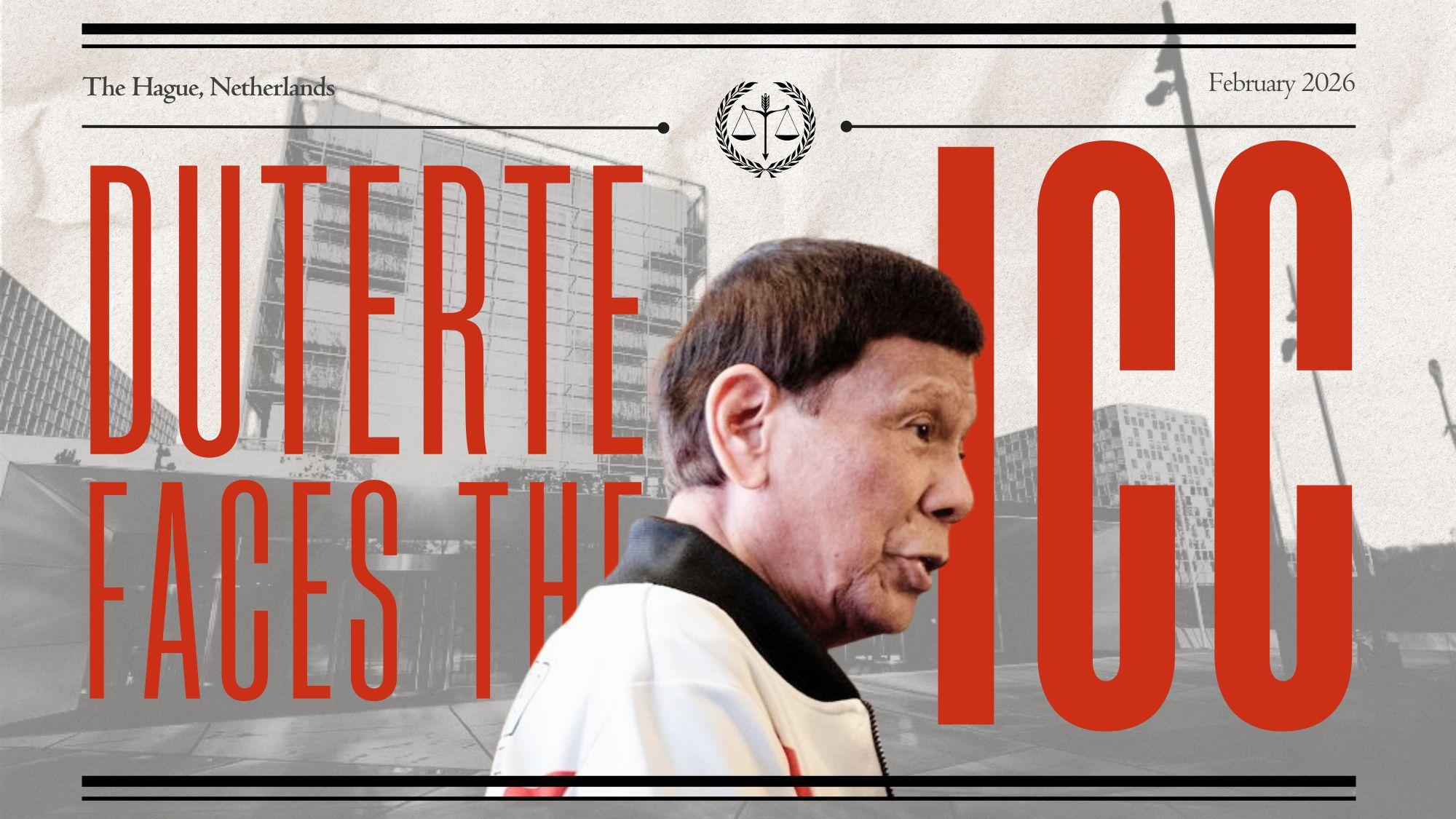
DAY IN COURT: Duterte faces the ICC
F
or the kin of alleged victims of former President Rodrigo Duterte's drug war, their crusade for justice takes a bold step forward as legal proceedings against the former Philippine leader before the International Criminal Court (ICC) in The Hague, Netherlands moves on to the next stage.
Duterte faces a confirmation of charges hearing before the tribunal's Pre-Trial Chamber I starting February 23, 2026, almost a year after his high-profile arrest in Manila on the strength of an ICC warrant.
This is a long time coming for the alleged victims' families, following a series of challenges from the Duterte legal team related to his arrest, asylum bid, fitness to stand trial, and the ICC's jurisdiction over the Philippines, among others.
The chamber's three female judges are tasked to determine whether there is sufficient evidence to establish substantial grounds to believe that Duterte committed crimes against humanity of murder and attempted murder.
If at least one charge is confirmed, the proceedings move on to the trial stage.
With the fate of the former president, the victims' families, and the Philippine political landscape hanging in the balance, GMA News Online offers "Day in Court: Duterte Faces the ICC," a special package featuring reports to inform readers about the ICC process, the key figures, what happened before, what's to come, and the country's relationship with the ICC.
For the petitioners, Duterte's day in court might just lead to a day of reckoning. —Val Veneracion/RSJ, GMA Integrated News
Read these GMA News Online reports:

Duterte's confirmation of charges at ICC: What to expect, what's next
Former President Rodrigo Duterte is set to face the International Criminal Court (ICC) Pre-Trial Chamber I for the confirmation of the charges against him, months since he was first presented before the tribunal.
According to the ICC, the Pre-Trial Chamber may decide to do the following at the close of the confirmation of charges hearing:
- Decline to confirm the charges; such a decision does not prevent the Prosecution from presenting a subsequent request for confirmation of the charges on the basis of additional evidence
- Adjourn the hearing and request the Prosecution to consider providing further evidence or conducting further investigation, or amending the charges
- Confirm the charges and commit the case for trial; upon confirmation, the Presidency of the Court constitutes a Trial Chamber responsible for the subsequent phase of the proceedings: the trial.
Duterte is facing charges for crimes against humanity over his controversial drug war, where government records showed that around 6,200 drug suspects were killed while human rights organizations say that numbers reach up to 30,000 due to unreported related slays.
Click here to read more
Speaking with GMA News Online, University of the Philippines (UP) Law Assistant Professor Michael Tiu Jr. explained that Duterte's crimes against humanity case cannot proceed to a trial without the confirmation of charges.
"Ipre-present o babasahin ng prosecution 'yung charges, similar doon kapag binabasa 'yung information in our local courts, kung ano 'yung sakdal and then they'll present evidence," Tiu said in a Zoom interview.
(The prosecution will present or read the charges, similar to when the information is read in our local courts, what the charge is, and then they'll present evidence.)
"So the standard that they have to satisfy is that there should be sufficient evidence to establish substantial grounds to believe that [the] former president committed these crimes," he added.
(So the standard that they have to satisfy is that there should be sufficient evidence to establish substantial grounds to believe that the former president committed these crimes.)
Tiu is a key figure in the UP College of Law Institute of International Legal Studies. He was recently selected as Assistant to a Commissioner at the International Law Commission in Geneva, the UP College of Law has said.
To proceed, or not
According to Tiu, should the Pre-Trial Chamber decline to confirm the charge due to insufficient evidence, the trial will not proceed.
"In which case, while it's not a dismissal, ang epekto niya parang dismissal kasi hindi matutuloy 'yung kaso. Walang paglilitis na magaganap if hindi ma-confirm 'yung charges," he said.
(In which case, while it's not a dismissal, the effect is like a dismissal because the case will not proceed. There will be no trial if the charges are not confirmed.)
"Sometimes may mga charges na hindi maco-confirm. Mayroon din iba na ma-co-confirm. Isa lang naman ang kailangan, 'di ba, para magpatuloy sa trial," he added.
(Sometimes there are charges that cannot be confirmed. There are also others that can be confirmed. Only one is needed, right, for the trial to proceed.)
He said the confirmation of charges may take place in a single day or last a few days.
Starting the trial
Meanwhile, the ICC said that should the Pre-Trial Chamber confirm the charge, it will then commit the case for trial before a Trial chamber, which will conduct the subsequent phase of the proceedings: the trial itself.
The trial will take place in The Hague, unless otherwise decided.
The ICC said the accused must be present and the trial must be held in public, except when the Chambers decide otherwise to protect the safety of victims and witnesses or sensitive information.
The accused may then make an admission of guilt or plead not guilty.
The ICC said that if the accused pleads guilty, the Trial Chamber will consider the admission together with any additional evidence and may convict the accused.
However, if it is not satisfied, the Trial Chamber may consider the admission of guilt as not having been made and the trial will continue under ordinary procedures.
Presentation of evidence
The trial will then take place, where the parties may present evidence.
"Sa proocedings ng trial, I think medyo nagmi-mirror [ang Pilipinas at ICC], meaning 'yung prosecution maunang magpresenta, tapos puwedeng mag cross-examine 'yung defense, and then defense naman pagkatapos," Tiu said.
(In the proceedings of the trial, I think [the Philippines and ICC] somewhat mirror each other, meaning the prosecution presents first, then the defense can cross-examine, and then it's the turn of the defense afterwards.)
According to Tiu, the presentation of evidence will be different in the ICC compared to the Philippines, wherein hearsay and other types of evidence are inadmissible.
"Dito, kasi hindi ito strictly civil law, hindi din ito common law—, parang halu-halo 'yung mga legal tradition sa ICC, puwede 'yung mga hearsay [at] hindi kailangan ng corroboration all the time," he said.
(Here, since this is not strictly civil law, nor is it common law—, it's like a mixture of legal traditions in the ICC, hearsay can be allowed [and] corroboration is not always required.)
Assessing the evidence
Due to this, Tiu said the proceedings will "boil down to credibility and probative value."
"Maraming puwedeng tingnan 'yung Korte tapos bahala na siya 'kung mabigat ba 'yung weight o pinaniniwalaan ba niya 'yung evidence," he said.
(There are many things the Court can look at and then it will decide whether the weight is substantial or whether it believes the evidence.)
So far, the ICC Prosecutor has submitted 12 batches of evidence, each containing items that range from hundreds to thousands.
More than 300 drug war victims have also applied to participate in the case.
Voice of victims
Meanwhile, another difference in the trial proceedings between the ICC and the Philippines, according to Tiu, is the legal representative of victims in the ICC.
He said victims may present observations during the trial.
"'Yung victims, through their common legal representatives, pupuwede sila mag-file ng mga observations. So kung mayroon silang—, halimbawa, may pinag-aawayan na isyu ang prosecution at defense, pupuwede magsumite 'yung common legal representative ng kanilang mga pananaw doon sa mga pangyayari," he said.
(The victims, through their common legal representatives, can file observations. So if, for example, there's an issue between the prosecution and the defense, the common legal representative can submit their views on those matters.)
How long will the trial last?
Tiu, meanwhile, said trials in the ICC may last from one to two years. He said he expects Duterte's trial to end within a year should the ICC focus on it.
According to the international tribunal, the promulgation of the sentence will be made in public and if possible, in the presence of the accused, victims, or their legal representatives.
Compensating the victims
If the accused is found guilty, the ICC may also provide reparations to victims. Victims may receive this individually or as a group.
"Magpre-presenta din 'yung prosecution and the common legal representative of victims nu'ng either mag-agree sila na sa lahat ng kaso ng murder ito 'yung kailangan matanggap ng pamilya o dahil sa isang kaso na ito, mas malala 'yung nangyari sa kanya… so magkakaiba sila ng amount," Tiu said.
(The prosecution and the common legal representative of victims will also present whether they agree that all victims in the murder cases should receive this amount, or that in a particular case, because something worse happened to the victim, the amount should be different… so the amounts may vary.)
Based on a video explainer of the ICC, this includes the giving of monetary compensation, rehabilitation, or medical support.
Who pays?
However, Tiu said the accused will solely shoulder the reparation and will not be passed down to his children.
"I suppose mahahagip din 'yung mga assets nila, 'di ba kasi magmamana naman sila. Pero hindi ito mapapasa kasi hindi naman sila 'yung nilitis," he said.
(I suppose their assets will also be affected, right, since they would inherit. But this will not be transferred because they are not the ones on trial.)
Tiu also said that if the assets of the accused are not enough, the ICC has a trust fund for the reparation of victims.
Duterte was arrested on March 11 at the Ninoy Aquino International Airport in Manila after arriving from Hong Kong. Shortly after, he was transferred to ICC in The Hague.
His allies and children have filed various petitions with the Supreme Court over his arrest and transfer, arguing that the ICC has no jurisdiction in the country.
The Philippines withdrew from the Rome Statute, which established the ICC, in March 2019 during the Duterte administration. —Joahna Lei Casilao/VDV, GMA Integrated News
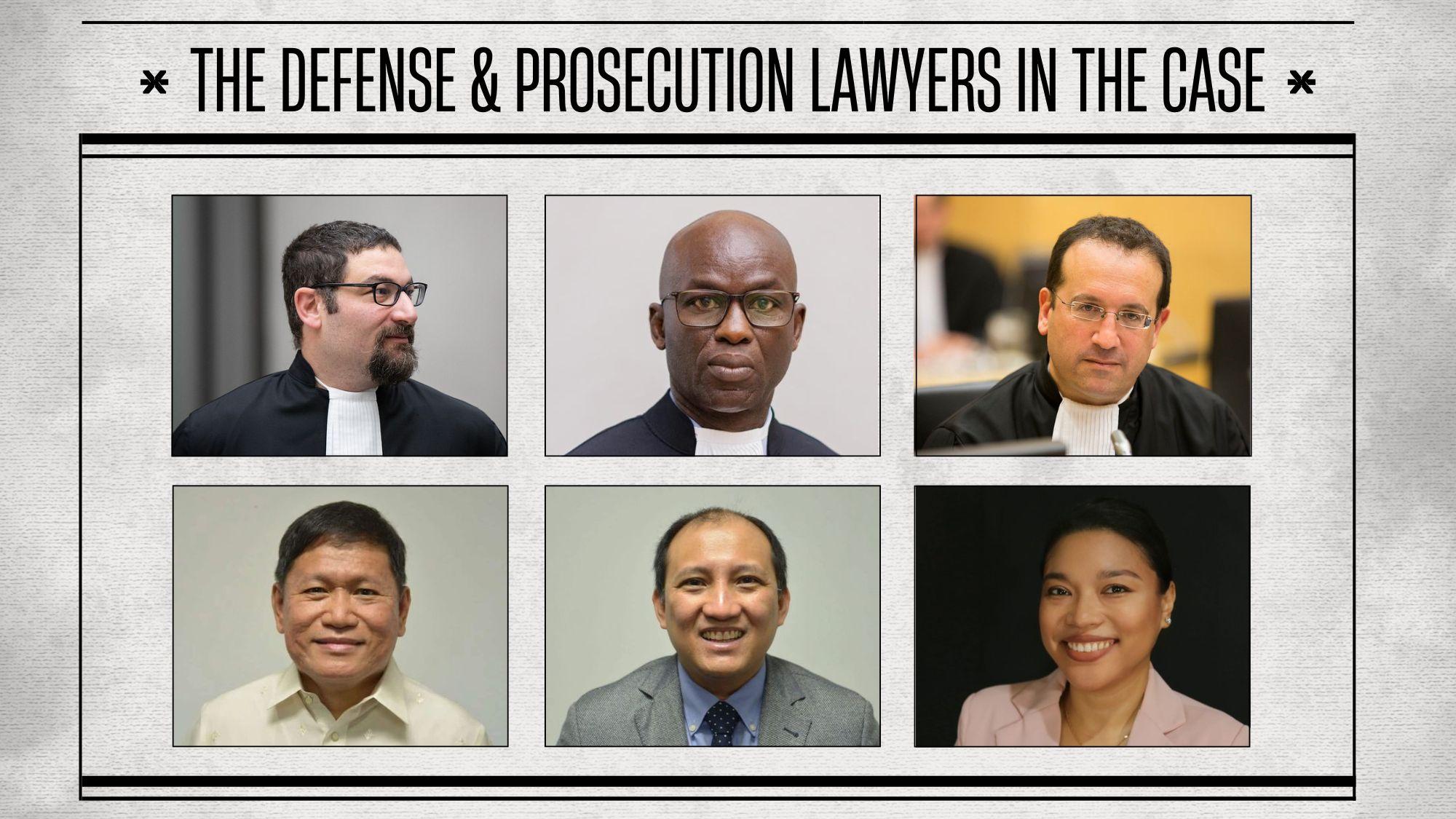
Who are the defense, prosecution lawyers in Duterte's ICC case?
The progress of former President Rodrigo Duterte’s trial before the International Criminal Court (ICC) temporarily ground to a halt after the tribunal’s Pre-Trial Chamber I allowed a limited adjournment of his confirmation of charges hearing.
The judges came to the decision following a request from Duterte’s lawyers to indefinitely postpone the proceedings, underscoring the critical function of legal counsels in mapping out strategies and counter-strategies in high-profile legal battles.
On one hand is the Prosecution from the ICC, and the Defense on the other. What are their roles within the context of The Hague-based tribunal?
Click here to read more
Performing an independent and impartial evaluation, the Office of the Prosecution examines a situation under the jurisdiction of the Court where genocide, crimes against humanity, war crimes, and aggression may have been committed, and conduct investigations and prosecutions against the alleged accused.
It is headed by the Prosecutor, who is elected for a non-renewable term of nine years by the Assembly of States Parties, the Court’s legislative and oversight body.
Meanwhile, the Defense team represents and protects the rights of the accused. They are not part of the ICC personnel and exercise their duties with complete independence according to Code of Professional Conduct for counsel practicing before the Court.
The appointed counsel is responsible for forming his or her team, which includes selecting the associate counsel, legal assistants, case-managers, resource persons, and professional investigation.
When an accused wants to appoint his own lawyer, the Registry of the Court facilitates the process and provides eligible counsel.
Those interested in representing a defendant must be on the List of Counsel, which currently has over 400 lawyers from across the globe.
The Chamber can also appoint a lawyer for the defendant, like an ad hoc counsel, to present the general interest of the defense.
Find out more about the prosecution and defense teams in Duterte’s case:
PROSECUTION
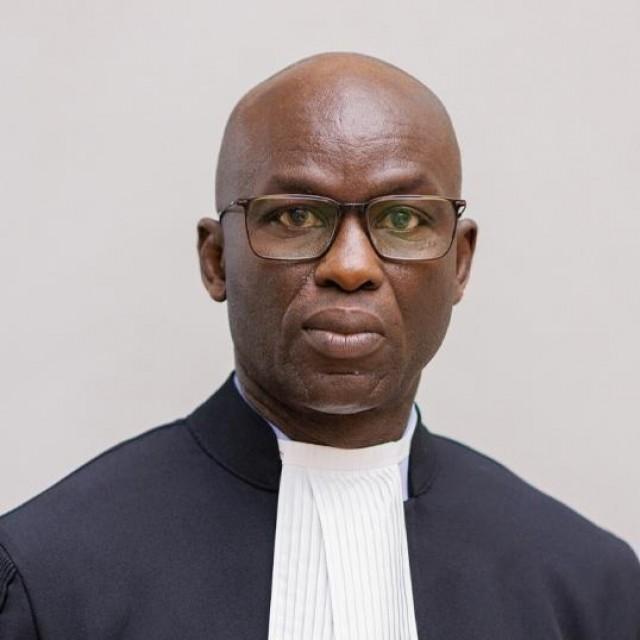
Mame Mandiaye Niang
ICC Deputy Prosecutor Mame Mandiaye Niang serves as the lead prosecutor in Duterte’s case.
Sworn as deputy prosecutor in March 2022, Niang graduated from the National School of Administration and Magistracy in Dakar, Senegal.
In the same country, Niang became prosecutor general of the Appeals Court of Saint Louis, director of Criminal Affairs and Pardons at the Ministry of Justice, junior judge at the Senegalese Supreme Court Prosecutor General’s Office, and trial attorney and magistrate at the Regional Tribunal of Dakar.
He also served as senior Legal officer, chief of Staff of the Registrar at the International Criminal Tribunal for Rwanda (ICTR).
Niang was appointed regional representative for the UN Office on Drugs and Crime in Southern Africa, covering Southern African Development Community countries.
He worked as a judge at the Appeals Chamber of ICTR and the International Criminal Tribunal for the former Yugoslavia.
Niang was a visiting lecturer in institutions like the National School for Social Workers and Specialized Educators and the Judicial Training Center of Dakar in Senegal, the University of Rwanda, and the Institute of International Law at Makerere University, Uganda.
He is also a member of the Senegalese Magistrates' Union and the Senegalese Section of the International Association of Criminal Law.
The Senegalese Magistrates' Union is an association of judicial officers in Senegal that advocates judicial independence, the rights and ethical protection of magistrates, and proper working conditions.
Meanwhile, the Senegalese Section of the International Association of Criminal Law is an organization of legal professionals in the country dedicated to criminal law and international criminal justice.
DEFENSE
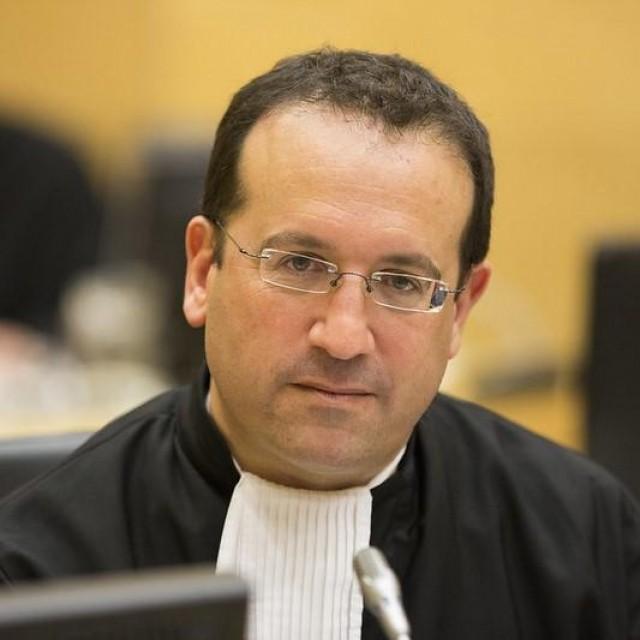
Nicholas Kaufman
On March 18, the ICC announced that British-Israeli lawyer Nicholas Kaufman was appointed as the lead defense counsel of former President Rodrigo Duterte.
Kaufman completed a law degree at the University of Cambridge and became a defense lawyer in Birmingham, England.
In 1996, Kaufman began working as a prosecutor in the Jerusalem District Attorney’s Office.
He then became a prosecutor at the International Criminal Tribunal for the former Yugoslavia in The Hague in 2003, where Serbian and Montenegrin generals were convicted for war crimes related to the attack on Dubrovnik in 1991.
Kaufman was also the legal representative for Darfuri victims in relation to the ICC case against former Sudanese President Omar al-Bashir, who faced charges of genocide, war crimes, and crimes against humanity allegedly committed in Darfur since July 2002.
Dov Jacobs
On April 7, 2025, the ICC announced that Dov Jacobs was named Duterte’s associate counsel.
He earned his law degree at King’s College in London, Panthéon-Sorbonne University, and Paris II Panthéon Assas in France.
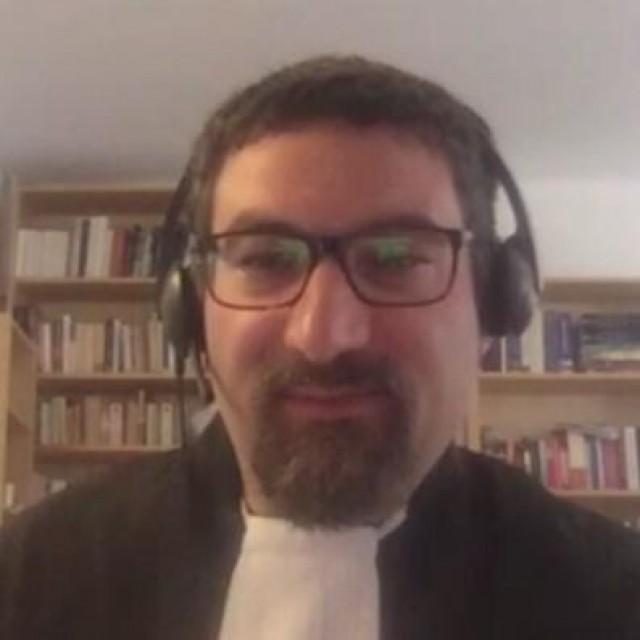
Jacobs obtained a degree in political science from Sciences Po in Paris, France and completed his doctorate at the European University Institute in Florence, France, focusing on hybrid tribunals and international criminal law.
He founded the Strategic International Legal Consulting, a law firm that provides consultancy and training services in International Law, International Criminal Law, and Human Rights.
Jacobs is also a part of the Leiden Journal of International Law editorial board at Cambridge University.
Aside from Duterte, Jacobs is also on the defense team of Seleka commander Mahamat Said, who was arrested in 2019 for alleged crimes against humanity.
Common legal representatives for victims
In a ruling issued on January 26, 2026, the ICC Pre-Trial Chamber I instructed the ICC Registry to appoint human rights lawyers Joel Butuyan and Gilbert Andres as the common legal representatives of all victims in the case.
The ICC may ask victims to choose a common legal representative whenever there are many victims for efficient proceedings. It can be a single representative or a team.
Should the victims fail to appoint common legal representation, the ICC Registrar may do so upon the judges’ request. If the victims are displeased with the appointed lawyers, however, they may request the judges to review it.
Joel Butuyan
According to GMA News Research, Joel Butuyan is the chairperson of the Center for International Law (CenterLaw) and managing partner of Buyan and Rayel law offices.
He finished his studies in economics and law at UP and masters of law at the College of William and Mary in Virginia, USA.
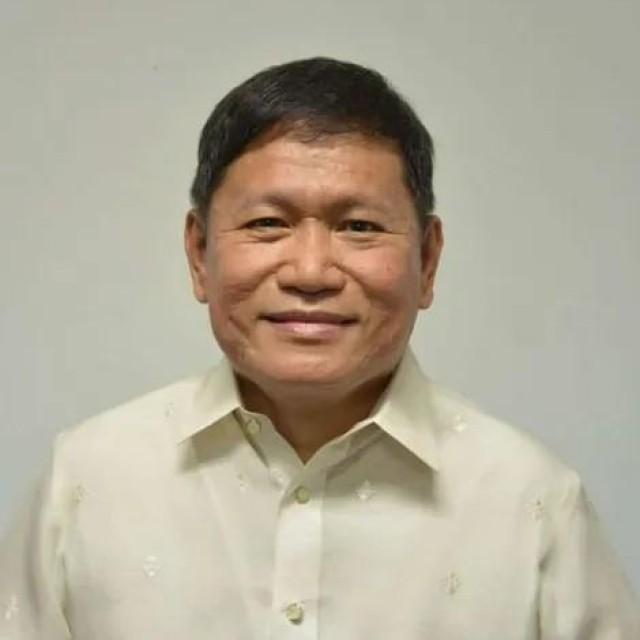
Butuyan was admitted to the practice of law in 1991 and works in criminal, civil, and commercial litigation, estate planning, banking and foreign investment, intellectual property, election law, family law, human rights, energy and environmental law, and corporate law.
He is a former consultant at the Department of Environment and Natural Resources - Environmental Management Bureau technical working group.
He was also a lecturer at the University of the Philippines (UP), Adamson University, and the University of Western Australia in Manila.
Further, Butuyan served as supervising lawyer at the UP Office of Legal Aid and Lyceum University College of Law.
Gilbert Andres
According to GMA News Research, Gilbert Andres is the executive director at CenterLaw and senior partner at the Butuyan and Rayel Law Offices.
He earned his physics degree in 1998 and later obtained his Juris Doctor in 2008 at UP.
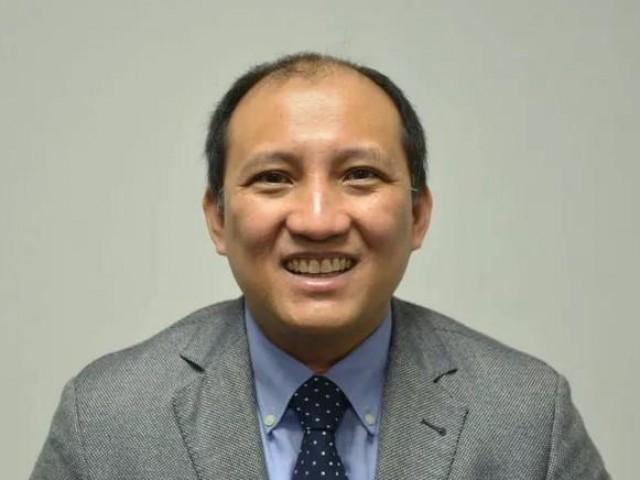
Andres began practicing law in 2009 and works in criminal, corporate, civil, property, and contract law, as well as international human rights and humanitarian law, public and private international law, media law, constitutional law, and internet freedom.
He served as a legal officer in the Media Defence Southeast Asia from 2012 to 2014.
Andres also became a lecturer at the Lyceum of the Philippines University College of Law, Adamson University College of Law, De La Salle-College of Saint Benilde's School of Hotel, Restaurant and Institution Management.
He was a university research associate at the UP Institute of International Legal Studies from 2006 to 2008, and a full-time physics teacher at Philippine Science High School from 1999 to 2004.
Filipino representation
In an interview with reporters on September 8, 2025, ICC Assistant to Counsel Atty. Kristina Conti said the victims in the Duterte case would nominate common legal representatives, whose applications will be assessed.
"The names nominated by the victims in their application forms will be screened and processed by the registry to determine who the victims are selecting as their representative," Conti said.
Conti said in a separate message to GMA News Online that the common legal representative should be able to understand the victims.
"As mentioned in the report of the Victims Participation and Reparations Unit or VPRS, many of the victims are asking for a lawyer who can understand them when they are speaking or explaining their side," Conti said.
Meanwhile, Duterte’s defense team has objected to the appointment of Butuyan and Andres, whom they accused of “judicial trolling.”
In denying this, the ICC Pre-Trial Chamber I said majority of the applicants wish to be represented by Butuyan and Andres. It also noted that both are eligible to be appointed as legal representatives of the victims.
The defense team, however, asked the chamber to revoke the appointment of Butuyan, Andres, and a third lawyer, Nicolene Arcaina, as common legal representatives for the victims.
Who is Kristina Conti?
Based in Manila, lawyer Kristina Conti has been a voice in the ongoing discourse regarding Duterte’s ICC case.
ICC Assistants to Counsel such as Conti provide legal research and assist in the preparation and presentation of arguments to ensure effective representation of clients.
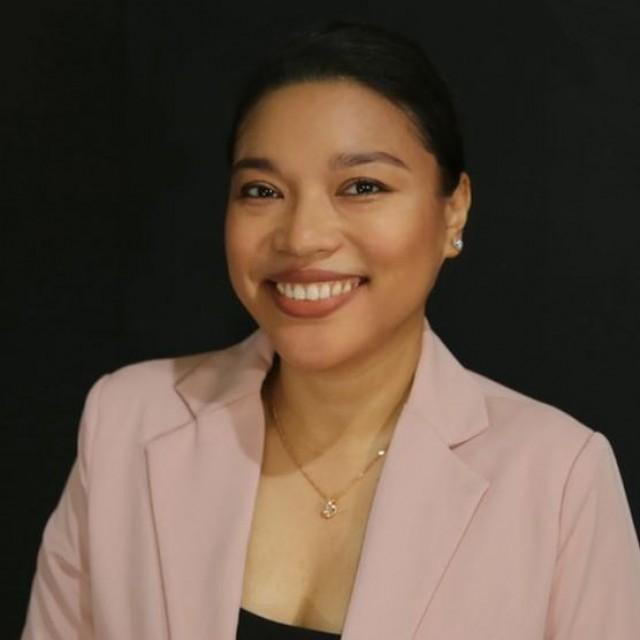
To qualify as an ICC Assistant to Counsel, he or she must be a lawyer with five years of relevant experience in criminal proceedings, possess specific competence in international or criminal law and procedure.
Conti finished journalism and later earned her law degree at the University of the Philippines.
From 2016 to 2023, Conti served as an associate at the Public Interest Law Center, where she gave legal support for marginalized communities and political prisoners.
She is the secretary-general of the National Union of Peoples' Lawyers (NUPL) - National Capital Region, which has asked the ICC to look into the drug war.
She is a member of the Manlaban sa EJK, an alliance that coordinates legal challenges to extrajudicial killing and other human rights violations under the Duterte administration.
Conti is also a part of the Concerned Lawyers for Civil Liberties, a network of lawyers opposed to violations of people’s civil liberties and constitutional rights.
She serves as treasurer of the Confederation of Lawyers of Asia and the Pacific, an organization that promotes peace and people’s lawyering, human rights, and self-determination of the peoples of the region.
In 2014, Conti handled the case of the late Andrea Rosal, a former political prisoner and daughter of the late rebel spokesperson Gregorio "Ka Roger" Rosal.
Andrea was pregnant during her arrest and gave birth while in detention. Her baby died two days later, while she spent 18 months in detention before the charges of kidnapping and murder against her were dismissed.
Conti was also part of the legal team of the mothers of university students Sherlyn Cadapan and Karen Empeño, who disappeared in 2006.
The case eventually led to the conviction of retired Major General Jovito Palparan for kidnapping and serious illegal detention of the two students.
In 2024, Conti became a Fisher Family Summer Fellow at Stanford University’s Center on Democracy, Development, and the Rule of Law, in which she attended a three-week on-campus forum for civil society leaders where she received academic and policy training.
The following year, Conti was the fifth nominee of the Bayan Muna party-list during the 2025 Philippine election.
ICC disqualifies Khan from Duterte case
The ICC appeals judges have disqualified Karim A. A. Khan KC, the original lead prosecutor in Duterte's case, from the proceedings due to a possible conflict of interest.
This developed after Duterte’s defense sought to disqualify Khan in August, because he represented the Philippines Human Rights Commission (PHRC) in naming the former president as a top suspect in the drug war.
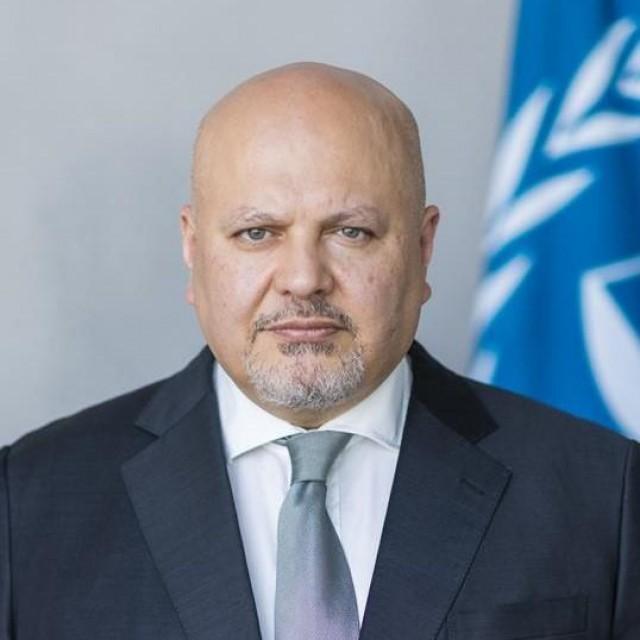
Khan previously took a leave after the United Nations Office of Internal Oversight Services launched its investigation on his alleged sexual misconduct.
This led Niang and Nazhat Shameem Khan to assume leadership, management, and administration of the prosecutor's office.
“With regard to the Situation in the Philippines, Deputy Prosecutor Mame Mandiaye Niang retains leadership over this situation and the case against Mr Rodrigo Roa Duterte,” ICC said in a statement sent to GMA News Online.
“The Office of the Prosecutor reaffirms its commitment to the continued effective implementation of its mandate to deliver justice for victims of Rome Statute crimes, across all situations and cases globally,” it added.
In a Viber messenger, Conti said the prosecution team will be from officials or lawyers inside the ICC court.
“Niang will step up as deputy. The prosecutorial team will be from officials/lawyers inside the court,” Conti told GMA News Online.
“Victims can be represented by external counsel parang private prosecutors sa PH cases (just like private prosecutors in Philippine cases),” she added.
Victims’ voices
A total of 303 drug war victims sought to participate in the pre-trial proceedings against Duterte.
On September 8, the ICC postponed Duterte’s confirmation of charges hearing scheduled on September 23, after his camp said that he was "not fit to stand trial."
The defense team said the former president is unable to recall events, places, timing, and even members of his close family.
Duterte was arrested on March 11 for his alleged crimes against humanity in connection with the killings under his war on drugs when he was mayor of Davao City and when he was president of the Philippines.
Government records showed that there were over 6,000 drug suspects killed in police operations during the drug war, but human rights organizations reported that the death toll may have reached 30,000 due to unreported incidents.
Three ICC female judges signed Duterte’s warrant of arrest, namely Judges Iulia Motoc, Reine Alapini-Gansou, and Maria del Socorro Flores Liera. —Mariel Celine Serquiña/VDV/RSJ, GMA Integrated News
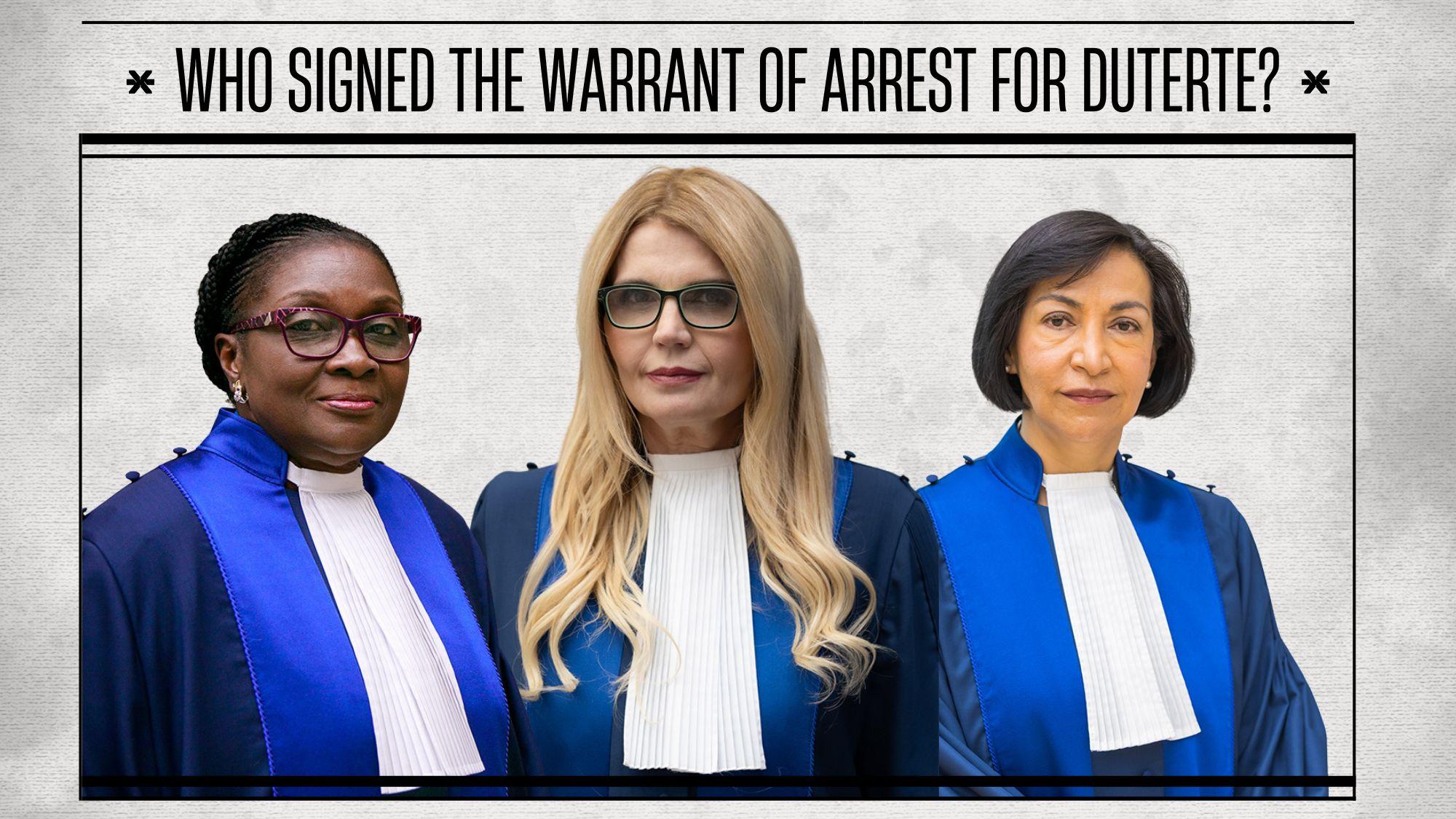
Meet the three female ICC judges who signed the warrant of arrest for Duterte
Three female judges of the International Criminal Court (ICC) signed the warrant of arrest for former President Rodrigo Duterte for crimes against humanity.
They are Judge Iulia Motoc, presiding judge, Judge Reine Alapini-Gansou, and Judge Maria del Socorro Flores Liera.
Get to know them below.
Click here to read more
Judge Iulia Motoc
The presiding judge of the pre-trial chamber of the ICC, the Romania-born Motoc earned her Bachelor of Laws degree from the University of Bucharest in 1989.
She also obtained her Master’s degree as well as her PhD in International Law from the University Paul Cezanne, Aix-Marseille III in 1991 and 1996, respectively.
The Romanian judge also has a habilitation in law degree from Paris-Sud University (Paris X1) and a PhD in Philosophy from the University of Bucharest.
Apart from that, Montoc was a Senior Fellow at the New York University School of Law (2003-2004) and Yale University School of Law (2004-2007).
Before joining the ICC, Motoc served as a judge at the Constitutional Court of Romania from 2010 to 2013 and at the European Court of Human Rights (ECHR) from 2013 to 2023, where she dealt with complex cases including. corruption and sexual violence, genocide, crimes against humanity, and war crimes.
Motoc also worked with the United Nations, where she served as the vice president of the UN Human Rights Committee as well as president of the UN Sub-Commission on Promotion and Protection of Human Rights.
She also served as a UN Special Rapporteur for the Democratic of Congo reporting crimes against humanity and war crimes. She is also a member of the Institut de Droit International.
She also co-drafted the UN Report on free, prior and informed consent of indigenous people and the UN Guidelines on Extreme Poverty and was a UN Special Rapporteur on Genetics and Human Rights.
Her expertise in human rights doesn’t end there as she was also a member of the Advisory Committee on the Framework Convention for the Protection of National Minorities and European Union Agency for Fundamental Rights and a Member of the Management Board.
Reine Alapini-Gansou
Reine Alapini-Gansou is a Beninese judge of the ICC since 2018.
Alapini-Gansou holds a joint post-graduate degree (DEA) from Maastricht, Lomé, and Bhutan universities, as well as a degree in Common Law from the University of Lyon 3.
Additionally, she has a Master's in Business Law and Judicial Careers from the National University of Benin in West Africa. She has also earned multiple diplomas in international human rights law from institutions such as the African Institute of Human Rights, the René Cassin Institute, and the International Development Law Organization (IDLO).
Before joining the ICC in 2018, Alapini-Gansou dedicated 12 years to the African Commission on Human and Peoples' Rights (ACHPR), serving as its Chair from 2009 to 2012 and as the Special Rapporteur on the situation of human rights defenders in Africa from 2005 to 2009 and again from 2012 to 2017.
She has contributed to several United Nations commissions of inquiry into human rights violations and chaired the joint working group on special procedures between the UN and the African Commission on Human and Peoples' Rights. In 2011, she was appointed as a judge at the Permanent Court of Arbitration.
Alapini-Gansou was admitted to the Benin Bar in 1986 and later worked with the Association Avocats Sans Frontières (ASF) Belgium on the "Justice for All in Rwanda" project in 2001. She is also a member of the International Criminal Bar.
While at ICC, the Beninese served as the ICC Pre-Trial Division President from 2019 to 2020.
Aside from being a judge, she has been a professor at the University of Abomey - Calavi, in Benin.
Maria del Socorro Flores Liera
Flores Liera has been an ICC judge since 2021.
The Mexican judge obtained her law degree from the Universidad Iberoamericana and the Faculty of Law of the Universidad Nacional Autónoma de México, specializing in public international law.
Before joining the ICC in 2021, she had a distinguished career in Mexico's Foreign Service, including serving as the Permanent Representative of Mexico to the UN and other international organizations in Geneva from 2017 to 2021. She was also Vice-President of the Human Rights Council in 2020 and is a member of the Mexican Branch of the International Law Association.
As a member of the Mexican delegation, Flores Liera played a key role in the creation of the International Criminal Court (ICC) from 1995, including negotiating the Rome Statute and the adoption of the Elements of Crimes and Rules of Procedure. She also served as Chairperson of the Drafting Committee at the 33rd International Conference of the Red Cross and Red Crescent.
Move by Duterte camp
Duterte’s camp has since moved to have two of the three—Alapini-Gansou and Flores Liera—removed from the case, citing alleged bias.
But the ICC has repeatedly rejected these efforts.
On May 6, 2025, the ICC Pre-Trial Chamber denied Duterte’s request to excuse the two judges from ruling on jurisdiction. In its decision, the chamber stressed that only judges themselves may seek to be excused, and that defense parties cannot preemptively request such disqualification.
The matter was later elevated to the full plenary of ICC judges. On July 3, 2025, the plenary ruled unanimously that there was no bias or appearance of partiality on the part of Alapini-Gansou and Flores Liera, affirming that they had fulfilled their duties in accordance with the Rome Statute.
Alongside these rulings, the ICC has been preparing for the participation of victims in the proceedings. In April 2025, the Registry recommended the adoption of an “A-B-C Approach” to streamline applications while ensuring protection and dignity for victims.
Prosecutor Karim Khan has also submitted 139 pieces of evidence in support of the case, covering categories such as murder during Duterte’s term and his potential modes of liability.
The case now moves closer to trial, with judges Motoc, Alapini-Gansou, and Flores Liera remain assigned to the proceedings. — Jade Veronique Yap and Sherylin Untalan/LA/KG, GMA Integrated News
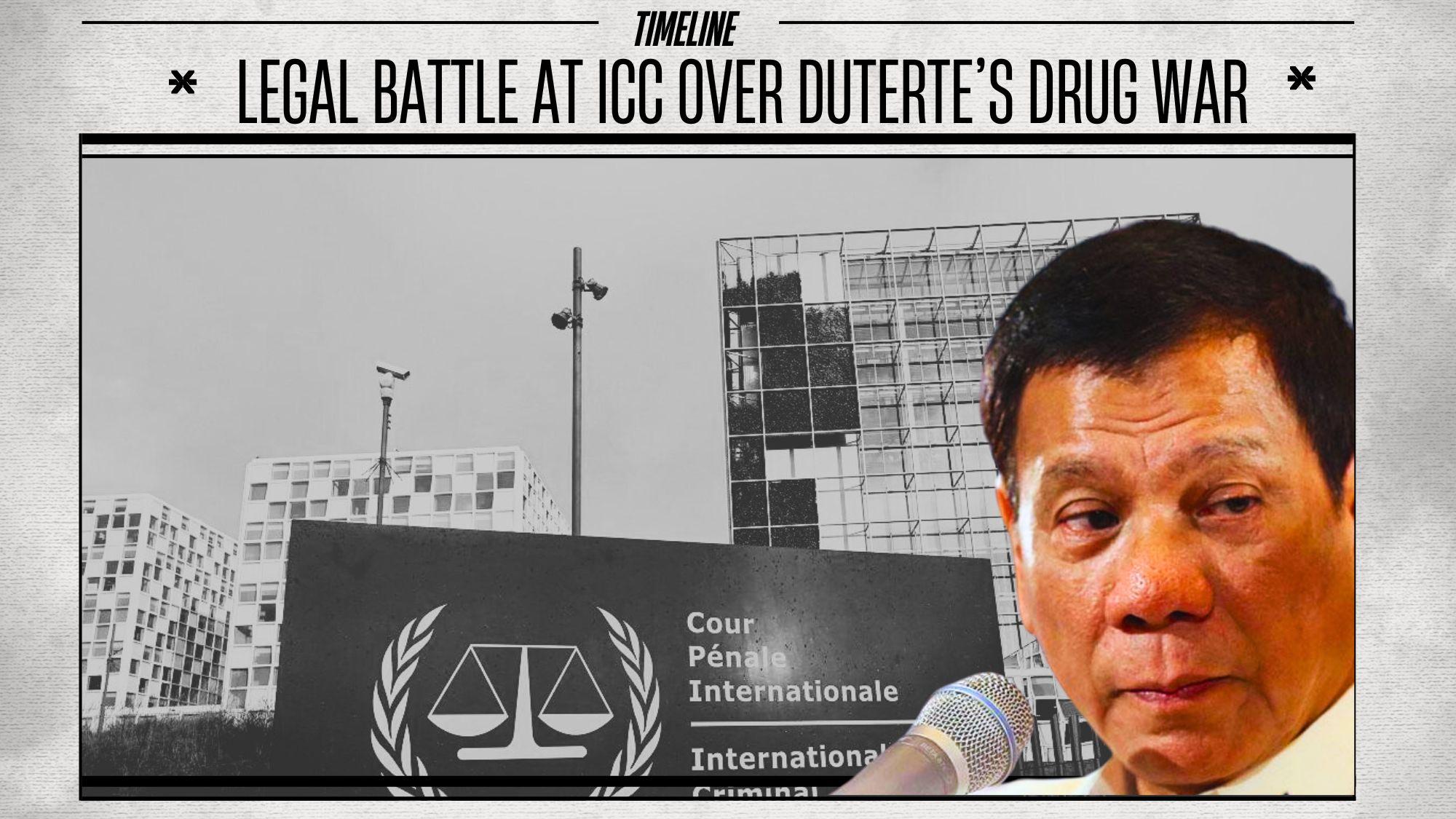
TIMELINE: Legal battle at ICC over Duterte's drug war
The International Criminal Court (ICC) Pre-Trial Chamber I denied in January 2026 former President Rodrigo Duterte's request for indefinite adjournment and deemed him fit for trial.
GMA News Online looked back on Duterte's first appearance before the international tribunal and the legal developments that took place after.
March 14, 2025 — Duterte's first appearance before the ICC took place following his arrest in Manila. He was allowed to attend the session through a video link as he was tired after flying to The Netherlands from the Philippines.
The Pre-Trial Chamber read to Duterte the charges against him. He was also read his rights under the Rome Statute.
The proceedings began at 2:34 p.m. and ended at 2:59 p.m.
Meanwhile, the Chamber set the confirmation of charges on September 23, 2025.
March 19, 2025 — British-Israeli lawyer Nicholas Kaufman was appointed as Duterte's defense counsel. Kaufman's appointment was confirmed on March 17.
March 21, 2025 — The Pre-Trial Chamber ordered both the prosecution and the defense to disclose the amount and types of evidence they plan to present, along with the prescribed timeline.
Click here to read more
In the Prosecution's First Communication of the Disclosure of Evidence, the ICC Office of the Prosecutor "disclosed to the defense 181 items organized under Pre-Confirmation INCRIM package 001, listed in Confidential Annex A."
ICC Prosecutor Karim Khan said the items compromised the material cited in the warrant of arrest against Duterte, except items notified to the chamber and the defense in the prosecution's related applications.
April 4, 2025 — Kaufman said Duterte's core defense team has been finalized for the proceedings, and that former presidential spokesperson Harry Roque was not part of it.
April 7, 2025 — Duterte's team urged the ICC to adopt strict standards for verifying the identities of victim applicants, such as limitations to the types of identification documents accepted.
Citing potential risks of fraud and procedural delays, the defense team argued that the court should require a "national identity card and/or a passport containing an up-to-date photograph. In the absence thereof, the defense submits that the Pre-Trial Chamber should require those identification documents accepted in the staggered fashion mandated by the social security system of the Republic of the Philippines."
ICC-listed lawyer Joel Butuyan, counsel for some of the families of the drug war victims, criticized this, saying the victims come from among the "poorest of the poor" and do not have passports, driver's licenses, SSS, GSIS, or any professional license.
April 18, 2025 — The Pre-Trial Chamber accepted the documents proposed by the Registry as proof of the identity for victim applicants in the case and those acting on their behalf.
For applicants whose proof of identity is a declaration signed by two witnesses, the chamber said it would decide whether to accept such documents on an ad hoc basis, upon receipt of the Registry's assessment and recommendations.
May 1, 2025 — Duterte's camp asked the Pre-Trial Chamber for the partial excusal of Judge Reine Adélaïde Sophie Alapini-Gansou and Judge María del Socorro Flores Liera on the issue of jurisdiction due to "the possibility of perceived bias."
They said this may arise out of the judges' prior ruling on substantially the same issue in the situation in the Philippines.
Further, the former president's lawyers also submitted a "Defence Challenge with Respect to Jurisdiction" to the ICC.
According to Duterte's lawyers, the preconditions for the exercise of jurisdiction in the Situation of the Philippines were not met at the time the Pre-Trial Chamber authorized the opening of an investigation on September 15 2021.
His camp maintained that, "The Philippines' withdrawal from the Rome Statute became effective on 17 March 2019. When the former Prosecutor filed her request, and the Pre-trial Chamber issued its decision, more than two years later."
May 6, 2025 — The Pre-Trial Chamber denied Duterte's appeal to excuse Alapini-Gansou and Flores Liera from ruling on jurisdiction of the tribunal over his case.
The chamber noted that a judge's excusal can only be sought by the concerned judge before the ICC Presidency, as opposed to disqualification which the parties may request.
May 12, 2025 — Duterte's camp raised its appeal to disqualify Alapini-Gansou and Flores Liara from handling his case on the issue of jurisdiction to the ICC Presidency.
May 14, 2025 — The Office of the Prosecutor requested an extension in the deadline to disclose materials from witnesses cited in the warrant of arrest against Duterte.
May 21, 2025 — The Pre-Trial Chamber granted the request of the prosecution to extend the deadline of the submission of several documents related to the case.
June 9, 2025 — The Office of the Public Counsel for Victims asked the ICC to dismiss Duterte's challenge on jurisdiction, saying the Philippines' withdrawal has no legal effect as the Prosecutor's preliminary examination started even before the withdrawal took effect.
Meanwhile, the ICC plenary of judges convened and rejected Duterte's request for Alapini-Gansou and Flores Liera to be disqualified from deciding his challenge of the jurisdiction of the court with regard to the case.
June 12, 2025 — ICC prosecutors asked the tribunal to deny Duterte's challenge to the international tribunal's jurisdiction over his case.
June 13, 2025 — Duterte's camp asked the ICC for him to be released to an undisclosed country. Duterte's camp argued that the former president is not a flight risk. They also cited humanitarian considerations for the interim release, saying that Duterte is already 80 years old.
June 23, 2025 — The Office of the Prosecutor asked the ICC to deny Duterte's request for interim release, arguing that Duterte's continued detention is necessary to ensure his appearance during trial.
The prosecutor's office said Duterte does not accept the legitimacy of the legal proceedings against him. It noted Duterte's previous remarks against the ICC, as well as the petition he filed before the Supreme Court against the cooperation of the Philippine government with the ICC.
The prosecution also said Duterte's counsel and family have claimed that he was kidnapped and vowed to return him to the Philippines.
June 25, 2025 — The principal counsel of the Office of the Public Counsel for Victims in the ICC requested the tribunal to reject Duterte's plea for interim release.
July 1, 2025 — The prosecution team submitted its 11th batch of evidence.
July 4, 2025 — In its full decision, the ICC plenary found that no bias arises with respect to the two judges that Duterte's camp sought to disqualify from his case. It found that Alapini-Gansou and Flores Liera acted in accordance with their duties at all times.
Meanwhile, the ICC Prosecutor submitted its 12th batch of evidence in the case, which contained 1,253 items organized into 10 packages.
The packages were labeled as contextual evidence; murder under the Davao Death Squad during Duterte's mayoral period; murder under barangay clearance operations during his presidency; and high-value target murders during presidency, among others.
July 23, 2025 — The ICC Pre-Trial Chamber granted the request of Duterte's defense team to suspend its decision on his request for interim release until his defense lawyers have collated all the needed supporting information.
August 7, 2025 — The former president's camp asked the Appeals Chamber of the ICC to disqualify Khan from the case on the ground that he "failed to disclose a grievous conflict of interest."
Duterte's counsels claimed that Khan had previously represented the alleged victims of the Duterte administration's drug war as a private lawyer and "seemingly exploited" the information he had gathered when he became chief ICC prosecutor in June 2021.
Khan, for his part, said that "no grounds exist" that would warrant his removal.
August 18, 2025 — The Duterte camp asked the ICC Pre-Trial Chamber I for an indefinite adjournment of all the legal proceedings.
August 19, 2025 — Duterte reiterated his request for an interim release.
August 20, 2025 — The Victims Participation and Reparations Section (VPRS) received 303 application forms of drug war victims seeking to participate in the pre-trial proceedings against Duterte. The victims and their representatives are clustered into Groups A, B, and C.
August 24, 2025 — Duterte's defense team withdrew its request to disqualify Khan.
August 28, 2025 — The ICC Prosecution filed its response to the Duterte camp’s request for indefinite adjournment. Prosecutors requested to have their own medical expert assess Duterte’s health.
September 6, 2025 — The applicants of 15 drug war victims to participate in the case have been transmitted to the Pre-Trial Chamber. The registry said the applications were assessed by its VPRS.
September 8, 2025 — The ICC Pre-Trial Chamber I announced that the confirmation of charges hearing was postponed as Duterte was "not fit to stand trial."
His camp later said that Duterte's "progressively deteriorating medical situation" has affected his ability to assimilate the evidence and to give instructions.
September 16, 2025 — Duterte’s legal team submitted a new defence notification asking the ICC Pre-Trial Chamber I to allow the former president's interim release as the hearing has been postponed.
Prior to the filing, Duterte's daughter, Vice President Sara Duterte, said she was able to talk to him over the phone. She said her father was "okay," and that they spoke about the flood control projects controversy, and even his love life. She later claimed that a third country has agreed to host the former president.
September 18, 2025 — ICC prosecutors recommended three medical experts specializing in forensic psychiatry, neuropsychology, and behavioral neurology to assess Duterte’s condition.
September 22, 2025 — The ICC released the redacted version of the "Document Containing the Charges" against Duterte, which was filed on July 4.
The charges, proposed by the ICC Prosecution against Duterte, involves 78 victims in 49 incidents of murder and attempted murder during his war on drugs as crimes against humanity when he was Davao City mayor and as president.
On the same day, the ICC also released the public redacted version of the prosecution's Pre-Confirmation Brief on the charges, which mentioned the names "Dela Rosa" and "Aguirre."
The first names of Dela Rosa and Aguirre were not mentioned, but the brief, already heavily redacted, referred to Dela Rosa as the PNP chief.
Senator Ronald "Bato" Dela Rosa was the first chief of the Philippine National Police (PNP) under the Duterte presidency. Moreover, although no first name was mentioned, Duterte's first secretary of justice was Atty. Vitaliano Aguirre.
September 25, 2025 — Duterte’s camp sought to disqualify an expert female neuropsychologist on a panel intended to assess the former president, noting that she was under active suspension.
The chamber replaced her with a male doctor, whose identity remained withheld.
September 27, 2025 — Duterte's camp notified the ICC that the Philippine government appears willing to accept a decision that would allow him temporary liberty while he faces charges related to the drug war.
Lead defense counsel Nicholas Kaufman cited Palace Press Officer Undersecretary Atty. Claire Castro's remark that the Marcos administration would abide by the court's decision regarding the request for temporary release.
However, Castro promptly called out Kaufman for "twisting" some facts, insisting that the Marcos administration has no hand in Duterte's ongoing ICC trial, particularly his interim release request, but "no matter what the ICC decides, the administration would still respect it."
September 29, 2025 — Duterte’s camp submitted medical reports to the ICC. It said the reports of the medical professional appointed by the ICC Detention Centre's Medical Officer corroborated the findings of their camp's intended expert neuropsychologist that Duterte was suffering from "cognitive impairment."
This is in relation to their earlier request indefinite adjournment of the confirmation of charges hearing.
September 30, 2025 — The ICC Registry reported that the ICC Detention Centre's medical officer is not authorized to assess Duterte’s fitness for trial. It said the medical officer’s mandate is limited to oversight of the physical and mental health of detained persons.
October 10, 2025 — The ICC made public the Pre-Trial Chamber’s decision rejecting the interim release request of Duterte. The decision was dated September 26, 2025.
The Pre-Trial Chamber found that Duterte’s detention continued "to remain necessary under article 60(2) of the Statute based on each of the requirements set by article 58(1) of the Statute."
Included in the decision was Duterte's contention against his arrest and detention, his family's demand that he should be brought back to the Philippines, and the vice president's remarks on breaking her father out of ICC detention. It also cited Duterte’s contacts and influence in the Philippines which may help him abscond, and the possible risk against witnesses.
Further, the chamber said claims that Duterte is suffering from cognitive impairment does not affect its decision on his detention. It also rejected the Duterte’ camp’s argument that he should be released for humanitarian reasons.
For its part, Duterte's camp said it filed an appeal to the ICC decision "a week ago."
October 14, 2025 — The ICC appeals judges granted the Duterte camp's request and disqualified Khan due to a possible conflict of interest.
The appeals chamber said that Khan might appear to be biased due to his previous role, where he represented the Philippines' Human Rights Commission in naming Duterte as a top suspect, and so was disqualified from the case.
October 17, 2025 — The Pre-Trial Chamber I ordered a medical examination for Duterte to determine his fitness to stand for trial amid the Duterte camp’s request for indefinite postponement.
October 23, 2025 — the Pre-Trial Chamber I rejected Duterte’s challenge to its jurisdiction. The tribunal also struck down the defense's request to postpone the issuance of its decision on the challenge to its jurisdiction.
October 28, 2025 — Duterte’s team asked the ICC Appeals Chamber to reverse the ruling that affirmed the tribunal’s jurisdiction over the former president, and find that no legal basis exists for the continuation of the proceedings against him.
His camp also asked the chamber to order his immediate and unconditional release.
October 29, 2025 — The ICC Appeals Chamber tasked Judge Luz del Ibañez Carranza to preside over the appeal filed by Duterte’s camp on the ICC’s jurisdiction.
November 5, 2025 — The Duterte camp disclosed 13 items of evidence on November 3 to the Office of the Prosecutor and the Office of Public Counsel for Victims (OPCV).
November 7, 2025 — Duterte’s camp asked the Pre-Trial Chamber I to disqualify a male doctor from checking whether the former president is fit for trial.
The defense noted the doctor's alleged lack of experience and his posts on social media. It also provided undisclosed examples of his "sickening and offensive" reposted tweets, and replies to tweets, that supposedly demonstrate his "manifest lack of professionalism."
The doctor had replaced the female neuropsychologist who was previously removed from the panel for being under suspension.
November 14, 2025 — The Pre-Trial Chamber I appointed a new expert to join the medical panel for Duterte’s fitness check. At the same time, the ICC revoked the appointment of another panel member and restricted her access to documents about Duterte's case.
Meanwhile, in a separate filing, Duterte’s team again asked the Appeals Chamber to "order his immediate and unconditional release."
November 21, 2025 — the ICC Appeals Chamber scheduled the delivery of its ruling on Duterte’s appeal for his interim release request on November 28.
November 28, 2025 — The ICC Appeals Chamber denied Duterte's appeal on the rejection of his request for interim release.
December 8, 2025 — The Office of the Prosecutor and the OPCV asked the ICC Appeals Chamber to dismiss Duterte’s appeal on an earlier ruling that that upheld the ICC’s jurisdiction over him.
December 10, 2025 — Duterte’s team asked that it be allowed to reply to the response of the ICC Prosecutor on its appeal over the tribunal's jurisdiction.
December 16, 2025 — The ICC Appeals Chamber invited the ICC prosecutors and the OPCV to submit their additional observations on the former president’s appeal on the ruling on his jurisdiction.
Meanwhile, the ICC Appeals Chamber rejected the defense request to reply to the Deputy Prosecutor’s earlier response to the Appeals Brief lodged by Duterte’s lawyers.
December 18, 2025 — The OPCV asked the ICC Pre-Trial Chamber I to rule on Duterte’s fitness to stand trial, noting that there are no obstacles barring him from exercising his rights.
December 21, 2025 — Duterte’s defense team asked the ICC to order the issuance of an independent medical report to prove that his deteriorating health makes him physically incapable of fleeing or obstructing justice.
January 6, 2026 — The ICC Pre-Trial Chamber I denied Duterte's request for the disclosure of the communication between the ICC Registry and the panel of experts assessing his fitness to stand trial.
January 8, 2026 — The ICC Pre-Trial Chamber I denied the request of Duterte's lawyers for an independent expert report on his risk factors.
January 9, 2026 — The ICC Pre-Trial Chamber I rejected Duterte’s request to be able to appeal the court’s earlier denial of his bid to disclose the communications between the ICC registry and the panel of experts assessing his fitness to stand trial.
On the same day, the Duterte camp submitted a joint report by his own medical experts to support their assertion that his condition has deteriorated and warrants his release from detention.
January 26, 2026 — The ICC Pre-Trial Chamber I denied Duterte’s request for indefinite adjournment and deemed him fit for trial. It said it is satisfied that the former president has the ability to understand the charges against him and is able to effectively exercise his procedural rights.
The chamber scheduled the commencement of the confirmation of charges hearing on February 23, 2026.
Meanwhile, it appointed ICC-accredited lawyers Andres Butuyan and Gilbert Andres as the legal representatives of the victims of the drug war. The chamber also rejected Duterte’s opposition to the appointment of the two lawyers.
January 27, 2026 — The ICC Pre-Trial Chamber I adopted the schedule for the confirmation of charges hearing. It said the confirmation of charges will run from February 23 to February 27.
February 2, 2025 — Duterte’s defense lawyers asked the ICC Pre-Trial Chamber I that they be allowed to appeal its ruling denying their request for indefinite adjournment.
They were given until February 5, 2026 to file their appeal.
February 5, 2026 — The ICC Registry notified the ICC Pre-Trial Chamber I on the appointment of the legal representatives of the victims in the case.
February 6, 2026 — Duterte’s team asked the ICC Pre-Trial Chamber to allow it to add more items to its list of evidence.
February 10, 2026 — The ICC Pre-Trial Chamber I granted Duterte’s request to add more evidence and ordered the defense and the prosecution to “file an update list of evidence” by January 13, 2026.
February 11, 2026 — The Duterte camp asked the ICC Pre-Trial Chamber I to direct the ICC Registry to revoke the appointment of lawyers Joel Butuyan, Gilbert Andres, and Nicolene Arcaina as representatives of the victims.
Duterte’s lawyers said they were seeking the disqualification on the grounds of an impediment to representation and due to alleged conflict of interest.
February 12, 2026 — ICC Prosecutors objected to Duterte’s request to allow it to appeal the ICC Pre-Trial Chamber I’s decision that deemed him fit for trial.
The prosecutors argued that Duterte’s lawyers mearely disaagreed with the ruling and did not raise any “appealable issue.”
February 13, 2026 — ICC authorized the participation of 500 victims in Duterte's crimes against humanity case.
February 14, 2026 — The ICC released a document listing the charges filed against Duterte, and named his alleged co-perpetrators: Senator Ronald "Bato" dela Rosa, Senator Christopher Lawrence "Bong" Go, and former police officials Vicente Danao, Camilo Cascolan, Oscar Albayalde, Isidro Lapena, former NBI director Dante Gierran, former Justice secretary Vitaliano Aguirre II, and other members of the PNP and high-ranking officials.
— Joahna Lei Casilao/ VDV, GMA Integrated News
----------------------------
Meanwhile, below is a timeline regarding the filing of the first complaint against Duterte up to his arrest and transfer to the ICC in The Hague, Netherlands.
TIMELINE: The Philippines and the ICC
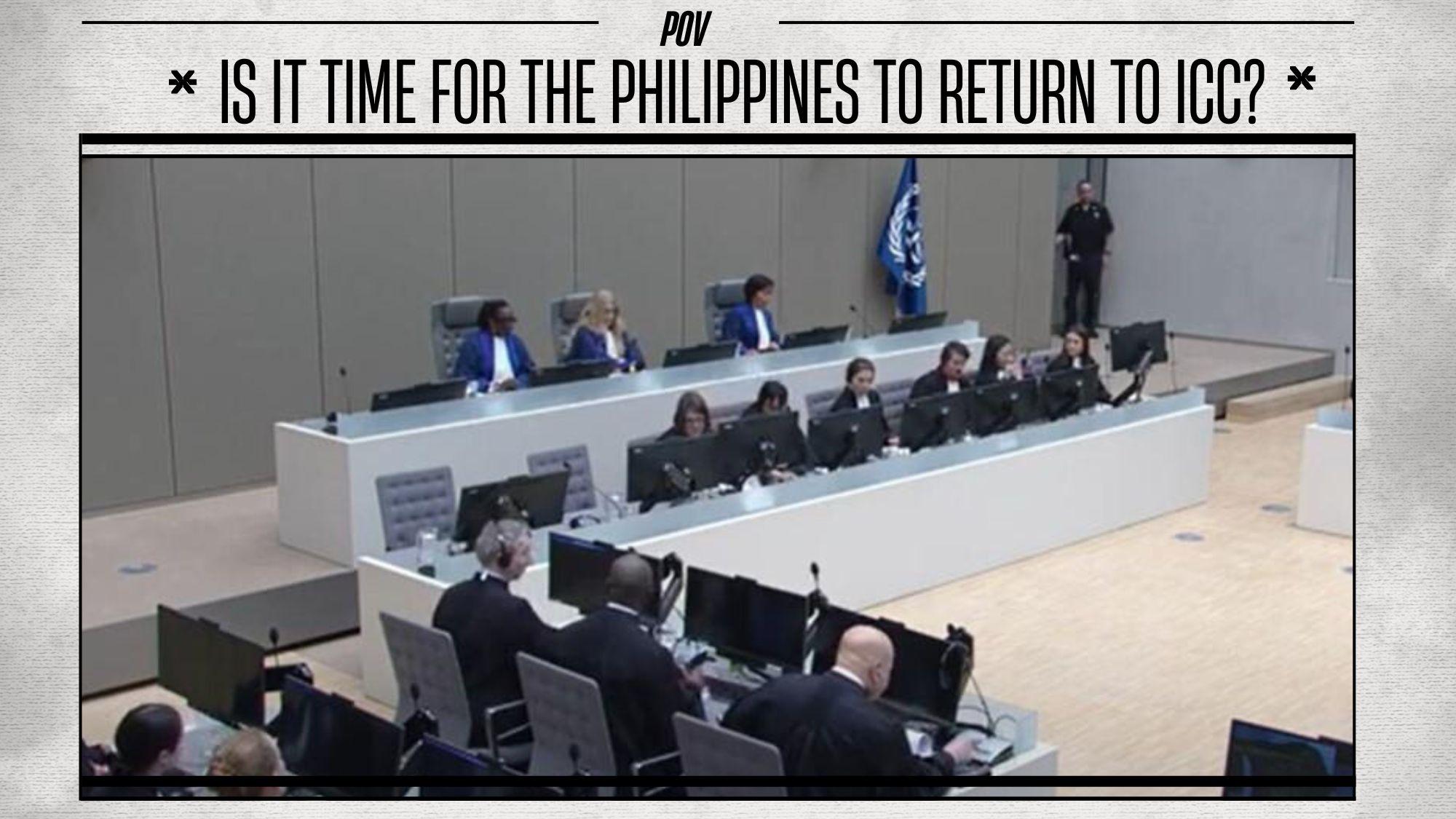
POINTS OF VIEW: Is it time for the Philippines to return to ICC?
Former President Rodrigo Duterte announced in 2018 that the Philippines was pulling out of The Hague-based International Criminal Court (ICC), after the tribunal began a preliminary probe into his administration's drug war.
The ICC Appeals Chamber's denial of Duterte's appeal for interim release, and the ICC Pre-Trial Chamber I's rejection of his lawyers' legal challenge, reinforce the principle that the Philippines' withdrawal from the Rome Statute does not exempt him from the court's jurisdiction over the alleged crimes against humanity when the Philippines was still a member.
With the latest developments in the case of the former president, how urgent is it for the Philippines to return to the ICC?
Click here to read more
For Michael Tiu Jr., assistant professor at the University of the Philippines (UP) College of Law, the Philippines should rejoin the ICC, adding that he believes the government should never have left in the first place.
"'Yung punto naman talaga ng ICC ay mayroong dapat managot, right, sa international crimes. 'Yung idea ng international crimes, katulad ng crimes against humanity ay napaka-shocking niya sa conscience," he said when asked if he believes the government should rejoin.
(The real point of the ICC is that someone must be held accountable, right, for international crimes. The idea of international crimes, such as crimes against humanity, is very shocking to the conscience.)
"Halimbawa 'yung nangyari sa Holocaust o 'yung nangyari dito sa Pilipinas. Na kahit hindi ka taga-Pilipinas, kapag tinitignan mo 'yung nangyari, parang maapektuhan ka bilang tao. So dapat may napapanagot," he added.
(For example, what happened in the Holocaust or what happened here in the Philippines. That even if you are not from the Philippines, when you look at what happened, you will somehow be affected as a human being. So there must be accountability.)
Tiu raised that in situations where the perpetrators or the accused are high-ranking government officials that cannot be prosecuted by their countries, the victims should have a venue that they can approach.
"Walang makaka-escape kasi mayroong ICC na pupuntahan 'yung mga biktima. So I think importante 'yan kung gusto natin 'yung rule of law, gusto natin 'yung hustisya sa international and domestic sphere," he said.
(No one can escape because there is the ICC where the victims can go. So I think that is important if we want the rule of law, if we want justice in the international and domestic sphere.)
'Separated from the rest'
Meanwhile, Ateneo Policy Center senior research fellow Michael Henry Yusingco said the country's withdrawal from the Rome Statute, which is technically a global treaty, means that the Philippines is no longer interested to take part in the global effort to hold certain individuals accountable for their crimes.
"Therefore, the withdrawal from the Rome Statute fundamentally means that the Philippines is no longer part of this global effort. That we have separated from the rest of the international community in its desire to provide a court of last resort, i.e., the ICC, to the victims of crimes against humanity," he said.
On the urgency of the Philippines to rejoin the ICC, Yusingco said that it would help the country to be in good standing with the international community.
"Correspondingly, the question of rejoining the Rome Statute is essentially about the Philippines expressing once again a commitment to ensure that perpetrators of crimes against humanity have their day of reckoning in a court of law. So clearly, the answer to this question should be a resounding Yes. Most especially given the current global climate where we see victims of crimes against humanity online and on television every single day," he said.
"In sum, the decision to rejoin the ICC is really about whether the Philippines would still want to adhere to the principles and objectives of the Rome Statute," he added.
"It is a matter of our country aiming to be a member in good standing of the international community. A decision not to rejoin simply means a rejection of both."
'Measure of justice'
For her part, ML party-list Representative Leila De Lima, one of Duterte's staunchest critics, said the country's withdrawal was a "self-serving act" by the former Philippine leader.
"Rejoining the ICC is a crucial step towards upholding human rights, justice, and accountability. In cases of serious international concern—such as crimes against humanity, war crimes, genocide and aggression—and when our domestic legal system is unable or unwilling to investigate, prosecute and try those atrocities, ICC can serve as a 'safety valve' and back-up plan," she said.
"It is a measure of justice, an assurance to the Filipino people that there will be available remedies, both domestic and international, that can effectively confront the most egregious crimes," De Lima added.
'Necessary move'
Akbayan party-list Representative Chel Diokno believes that rejoining the ICC will give hope to the families of the victims of extrajudicial killings during Duterte's reign.
"Rejoining the International Criminal Court is a necessary move as it can serve as the final avenue to reclaim justice and uphold accountability," he said.
"Now, with former Pres. Rodrigo Duterte facing possible long-term detention under the jurisdiction of the ICC, the families of the victims are finally seeing a glimmer of hope that justice will be served—not just for them, but for the nation."
Despite Duterte's pullout, with the withdrawal taking effect in 2019, a Supreme Court ruling in 2021 said the Philippines has the obligation to cooperate with the ICC despite its withdrawal from the Rome Statute, noting that the exit does not affect criminal proceedings pertaining to acts that occurred when a country was still a state party.
The ICC judges said in their October 23 decision, the Philippine government continued its engagement with the court despite the country's withdrawal.
Further, the Pre-Trial Chamber I judges argued that Article 127(2) of the Statute provides that "the Court may exercise its jurisdiction over any matter which was already under consideration by the Court prior to the date on which the withdrawal became effective."
'Absolutely no urgency'
For his part, Israelito Torreon, who serves as a legal counsel to some members of the Duterte family, said the Philippines does not need to rejoin the ICC.
"There is absolutely no urgency, nor any valid reason, for the Republic of the Philippines to return to the International Criminal Court. In fact, any move to rejoin the ICC at this time would constitute a grave betrayal of Philippine sovereignty and a direct assault on our Constitution," he said.
He also noted that the Philippines has "a functioning, independent, and capable judicial system."
"Our courts are more than able to investigate, prosecute, and try any alleged wrongdoing, including any offense committed during the anti-illegal drugs campaign. The Department of Justice, the Office of the Ombudsman, and the regular courts remain open to any legitimate complainant. No victim has ever been denied access to justice in our country," Torreon added.
The Duterte family's counsel added that rejoining the ICC would lead to "unacceptable"consequences like "surrender of the sovereign right of every Filipino, including future presidents and law enforcers, to be tried only by Philippine courts," and "exposure of our police and military to endless foreign prosecution for doing their constitutional duty."
PH justice system 'quite capable'
On the other hand, University of Asia and the Pacific Law School dean Jeremy Gatdula echoed that the Philippines's justice system is capable of handling such cases.
"I will still maintain that the Philippines is better off not being a part of the ICC and we prosecute our own, that we learn how to prosecute with regard to our own issues. As I have said, I have emphasized this, this is setting aside, or apart from the case of President Duterte which is a special case, and I think that has its own merit," he said.
"For me, our justice system is quite capable of handling cases like this. We have to remember that our justice system is solid enough to have been able to look at, for example, the cases of two presidents and even one chief justice."
Government records showed that there are over 6,000 drug suspects killed in police operations. Human rights organizations, however, estimate the death toll may have reached 30,000 due to unreported incidents.
Duterte entered the Hague Penitentiary Institution or the Scheveningen Prison on March 13, 2025, where he is being held while awaiting trial. —Vince Angelo Ferreras and Joahna Lei CasilaoVDV/RSJ, GMA Integrated News
— GMA Integrated News

