

 GMA Brandtalk
 Tracking
 Archives

COP30: PH CSOs urge gov't to support transition roadmap away from fossil fuels as climate summit remains deadlocked
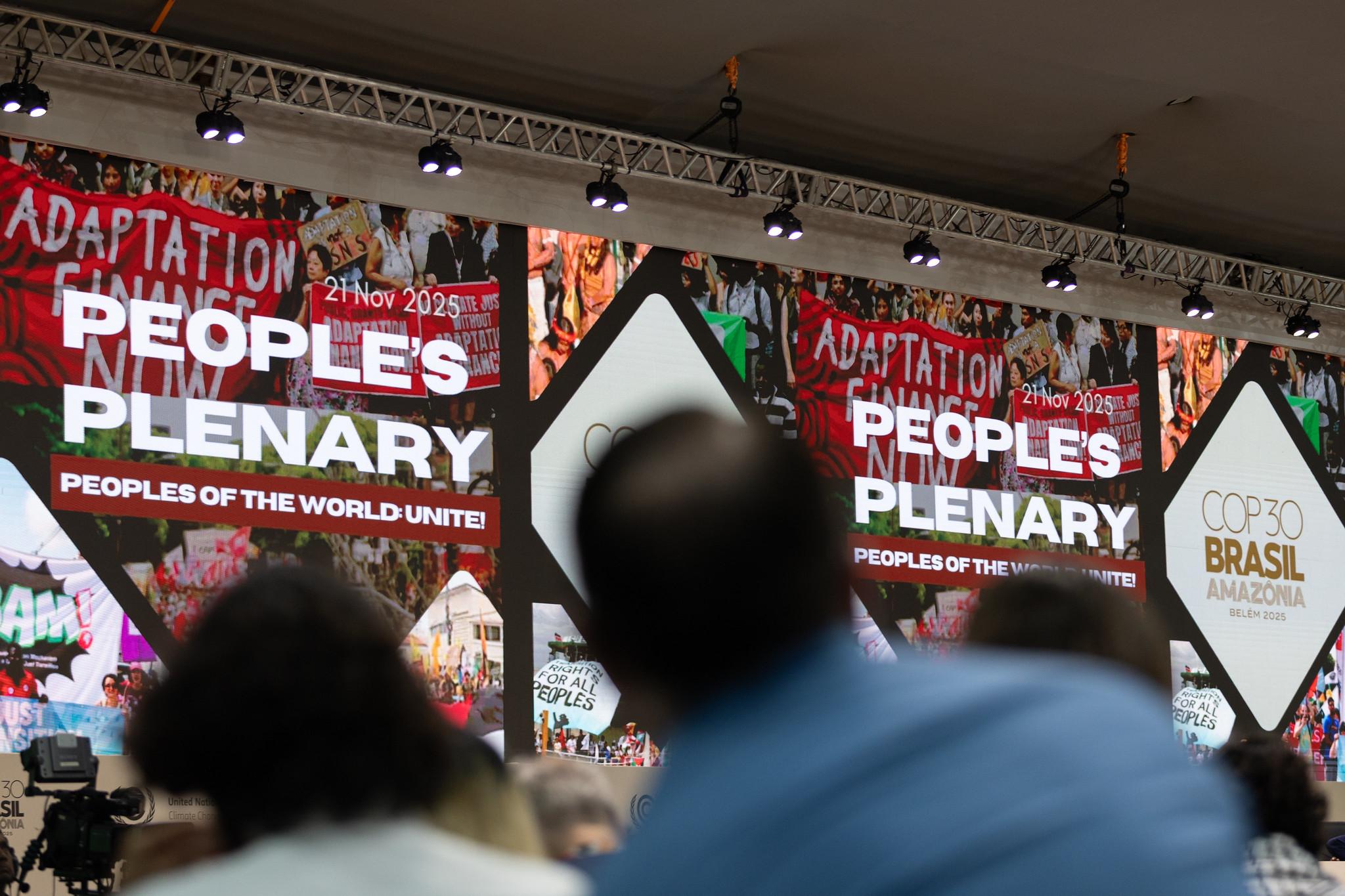
COP30 in Belem, Brazil is blowing past its Friday deadline, with countries in deadlock over fossil fuels.
"This cannot be an agenda that divides us," COP30 President André Corrêa do Lago told delegates in a public plenary session before releasing them for further negotiations.
"We must reach an agreement between us."
However, the rift over the future of oil, gas and coal underscored the difficulties of landing a consensus agreement at the annual conference, a perennial test of global resolve to avert the worst impacts of global warming.
A draft text for a deal, released by Brazil before dawn Friday, contained no reference to fossil fuels, dropping entirely a range of options on the subject that had been included in an earlier version.
The earlier version, which contained a roadmap to transition away from fossil fuels, is supported by 87 countries including Australia, Belgium, Brazil, Denmark, Germany, Netherlands, South Korea, Spain, Fiji, Vanuatu, to name a few.
The Philippines is not on the list of supporters of the roadmap.
"The Philippine government has been quiet on one of the most critical issues being discussed at COP30: laying the path forward for transitioning from fossil fuels. The same government, which has been developing a national just transition plan and boasting about its drive for renewable energy development, has not joined the other countries in demanding for a roadmap to truly begin the era of fossil fuels," Aksyon Klima Pilipinas (AKP) said in a statement.
Yeb Saño, national director of climate activist and executive director at Sentro para sa Ikauunlad ng Katutubong Agham at Teknolohiya (SIKAT, Inc.), describes the delegation's silence as "a diplomatic and moral failure."
"The silence from the Philippine delegation on the fossil fuel phaseout roadmap at #COP30 in Belem is deafening, especially given what our people have just endured this very month," he said.
"While the Philippine delegation sits in silence here in Belem, our people are still wading through the floodwaters of Typhoons Tino and Uwan back home. We have buried hundreds of our countrymen this month alone. To refuse a roadmap for phasing out fossil fuels is not 'diplomacy’, and it is utterly mind-boggling. It is a betrayal of every Filipino who lost a home or a loved one. We cannot claim to be the face of climate vulnerability and moral leadership while sitting on the fence and allowing the fossil fuel apparatus to persist," Saño added.
For Asian Peoples' Movement on Debt and Development (APMDD) coordinator Lidy Nacpil, "a roadmap with clear targets, timelines, indicators of what climate finance is needed and where it’s going to come from–with a very clear just transition dimension–is urgently needed."
The burning of fossil fuels emits greenhouse gases that are by far the largest contributors to global warming.
Back in 2015 at COP21, some 196 nations signed the monumental Paris agreement to limit warming to 1.5C. Ten years on, ahead of COP30, the UN said the world will likely miss the 1.5C.
Says AKP, "A global transition from coal, oil, and gas is more than just a matter of energy security in the Philippines. It means slowing down global warming that is now all but guaranteed to surpass 1.5°C for the short-term. It means avoiding more extreme impacts for our country, already one of the most vulnerable to the climate crisis. It means protecting our communities that have had enough of being battered by one typhoon after another, at times in rapid succession with no time to prepare or recover."
Supporting a fossil fuel transition roadmap will "also reflect the national government’s genuine commitment to pursuing accountability from historical polluters and fossil fuel corporations, similar to the accountability that still eludes a nation that has its resources stolen due to corruption in anomalous flood control projects," it said.
"It is illogical for the Philippines to not champion the call for a global transition from fossil fuels, while it still demands finance for loss and damage caused by these same dirty energy sources," the AKP statement continued.
The Philippines hosts the board of Loss and Damage.
In Belem, John Leo Algo of AKP said he has communicated the incompatibility of the Philippines' positions — demanding finance for loss and damage while not supporting the fossil fuel transition roadmap — to Department of Environment and Natural Resources Assistant Secretary Noreen Uy, who is also the onsite head of the Philippine delegation at Belem.
GMA News Online has already reached out to the Department of Energy for comment.
COP30 has been mired in controversies from logistical nightmares of hosting the world's biggest climate summit in the Amazonian city of Belem to a fire disrupting the summit's penultimate day of negotiations. More than
More than 1,600 fossil fuel lobbyists were in attendance, outnumbering all country delegations in Belem, save for host country Brazil. They outnumber Philippine delegation, 50 to 1, a study by Kick Big Polluters Out said.
At a press conference on Friday morning, Panama negotiator Juan Carlos Monterrey said leaving fossil fuels out of the COP30 deal risked turning the talks into a "clown show".
"Failing to name the causes of the climate crisis is not compromise. It is denial," he said.
Three sources said the Arab Group negotiating bloc, whose 22 members include Saudi Arabia and the United Arab Emirates, told a closed-door meeting of negotiators that its energy industries were off limits in discussions.
In a statement delivered by Saudi Arabia, the group also warned that targeting its industries would collapse the negotiations, the sources said.
Saudi Arabia did not immediately reply to a request for comment addressed to the Saudi government communications office.
The European Union's commissioner for climate, Wopke Hoekstra, said the draft deal was unacceptable.
Hoekstra said the EU could "move beyond its comfort zone" on parts of the deal concerning the finance wealthy governments provide to help developing countries adapt to climate change - but only if the text's sections on action to cut planet-heating emissions were strengthened.
"We need to make sure that the shift from fossil fuels to clean energy is real and in the text," Hoekstra said, in a statement delivered during consultations on Friday.
A Brazilian negotiator told Reuters the fossil fuel language was unlikely to be reintroduced, and that the summit presidency was pressing for only small adjustments to the existing draft.
Talks Overrunning, Multilateralism Under Pressure
The two-week conference in the Amazon city of Belem had been scheduled to end at at 6pm local time on Friday but, like previous COP summits, blew past that deadline and looked set to continue late into the night.
A deal text would need approval by consensus among the nearly 200 countries present in order to be adopted.
The U.S. has declined to send an official delegation this year under President Donald Trump, who has called global warming a hoax.
Corrêa do Lago said the exit of the world's largest economy meant uniting around COP30 was crucial to ensure the multilateral process survives.
"The world is watching," he said.
Climate Finance and Trade
The draft also called for global efforts to triple the financing available to help nations adapt to climate change by 2030, from 2025 levels.
However, it did not specify whether this money would be provided directly by wealthy nations, or other sources including development banks or the private sector.
That may disappoint poorer nations that want stronger guarantees that public money will be spent on this area.
Investments in adaptation - such as improving infrastructure to cope with extreme heat or worsening storms - are often vital for saving lives but offer little financial return, so it is difficult to attract private finance.
The draft deal would also launch a "dialogue" on trade at upcoming U.N. climate talks, involving governments and other actors like the World Trade Organization.
That would be a win for countries including China that have long demanded that trade concerns be part of the world's climate summit. But it may be uncomfortable for the European Union whose carbon border levy has faced criticism from emerging markets including India, China and South Africa. — with reports from Reuters

