

 GMA Brandtalk
 Tracking
 Archives

EU drops 2035 combustion engine ban as global EV shift faces reset
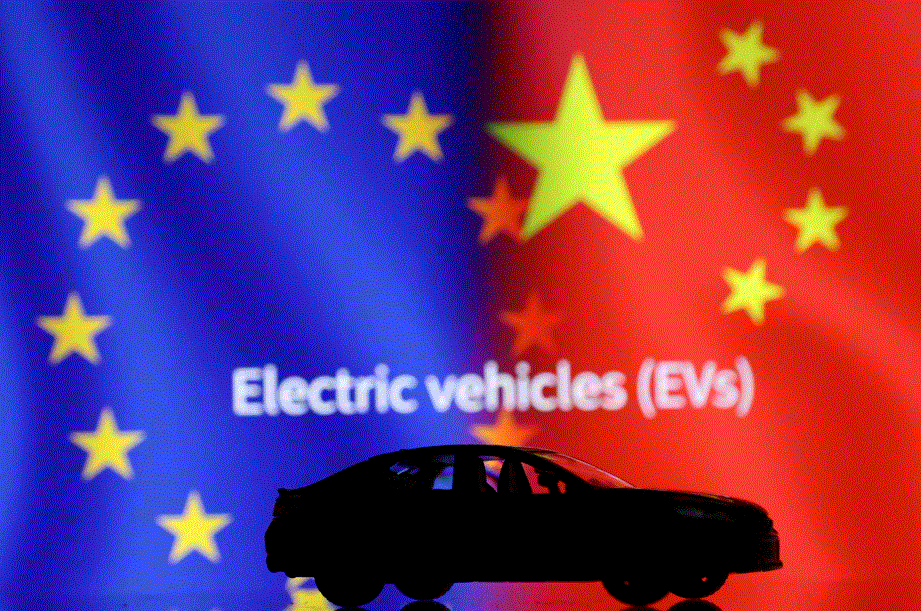
STRASBOURG —The European Commission unveiled a plan on Tuesday to drop the EU's effective ban on new combustion-engine cars from 2035 after pressure from the region's auto sector, marking the bloc's biggest retreat from its green policies in recent years.
The move, which still needs approval from EU governments and the European Parliament, would allow continued sales of some non-electric vehicles. Carmakers in regional industrial powerhouse Germany and in Italy had sought easing of the rules.
The EU executive appears to have bowed to calls from carmakers to keep selling plug-in hybrids and range extenders that burn fuel as they struggle to compete against Tesla TSLA.O and Chinese electric vehicle makers.
"Opening up the market to vehicles with combustion engines while compensating for emissions is pragmatic and in line with market conditions," said Germany's Volkswagen VOWG.DE, Europe's biggest carmaker by volume.
It added that the draft proposal for new CO2 targets was "economically sound overall", and lauded support for small electric vehicles and more flexible targets for 2030.
Dominic Phinn, head of transport at non-profit group Climate Group, countered that the measures were a "tragic win" for the traditional industry over electric cars.
"The watering down of the petrol and diesel-engine phase-out flies in the face of leading companies across Europe, who are investing billions in electric fleets and desperately need the stability it provides," he said.
Under Tuesday's proposal, EU targets would shift to a 90% cut in CO2 emissions from 2021 levels, instead of current rules that all new cars and vans from 2035 have zero emissions.
Automakers would need to offset the remaining emissions by using lower-carbon steel made in the EU and synthetic e-fuels or non-food biofuels such as agricultural waste and used cooking oil. The plan also gives automakers a three-year window from 2030 to 2032 to cut car CO2 emissions by 55% from 2021 levels, while the 2030 target for vans would be eased to 40% from 50%.
EU climate climb-down as Ford scraps EVs
The EU move follows on the heels of U.S. carmaker Ford Motor F.Nannouncing on Monday a $19.5 billion writedown as it axes several EV models, in response to the Trump administration's policies and weakening EV demand in the United States.
Brokerage Jefferies, however, said that the EU picture was more complex even if there was a global "reset" for EVs.
"The reality is more nuanced: we are likely to see a shift from a clean, all or nothing cut-off, to a more flexible compliance system, marking a turning point in Europe's transition story," it said.
"It's clear the global auto sector is entering a reset moment rather than a straight line to electrification."
European carmakers including Volkswagen and Fiat owner Stellantis STLAM.MI have also flagged soft EV demand and urged looser targets and lower fines for missing them. Automotive lobby ACEA called the moment "high noon" for the sector.
German manufacturers are under particular strain as they lose ground in China to local rivals and face growing competition at home from Chinese EV imports. EU tariffs on Chinese-built EVs have offered only limited relief.
Hildegard Mueller, president of German auto industry body VDA, said the moves didn't go far enough to support the industry and put new requirements on carmakers in terms of green steel and renewable fuels.
"The EU had promised to examine the realities, analyse them and, on that basis, introduce flexibility and adjustments. That has not happened – Brussels has disappointed with its draft proposal," she said.
"In times of increasing international competition, in times when European economic power is crucial, this overall package from Brussels is fatal."
EU lagging China in EV race
The EV industry warned that easing emissions targets could undermine investment, including in critical charging infrastructure, and leave Europe falling further behind China in the shift to cleaner driving.
"Moving from a clear 100% zero-emissions target to 90% may seem small, but if we backtrack now, we won't just hurt the climate. We'll hurt Europe's ability to compete," said Michael Lohscheller, CEO of Swedish EV manufacturer Polestar.
William Todts, executive director of clean transport advocacy group T&E, said the EU was playing for time while China was racing ahead.
"Clinging to combustion engines won't make European automakers great again," he said.
The Commission also outlined plans to boost EV uptake in corporate fleets, which account for about 60% of new car sales in Europe. National targets for 2030 and 2035 would be set based on GDP per capita, leaving countries to decide how to meet them.
Industry groups have cited Belgium's tax breaks for EV company cars as a model.
The Commission further proposed creating a new regulatory category for small EVs, subject to lighter rules and eligible for extra credits towards CO2 targets if made in the EU. —Reuters

