

 GMA Brandtalk
 Tracking
 Archives

US captures Venezuela's Maduro after strikes, Trump says
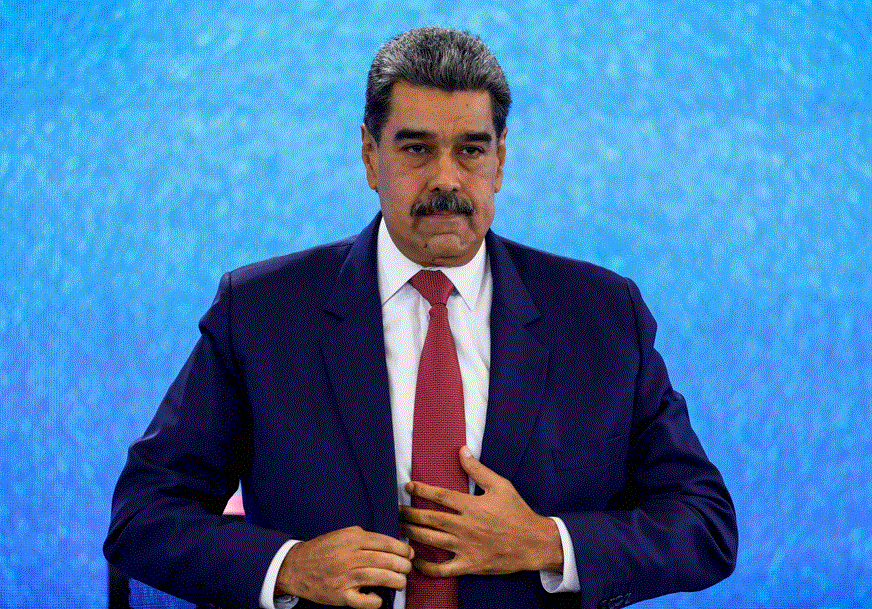
WASHINGTON - The US attacked Venezuela and deposed its long-serving autocratic President Nicolas Maduro on Saturday, President Donald Trump said, in Washington's most direct intervention in Latin America since the 1989 invasion of Panama.
"The United States of America has successfully carried out a large scale strike against Venezuela and its leader, President Nicolas Maduro, who has been, along with his wife, captured and flown out of the country," Trump said in a Truth Social post.
Ahead of the overnight strikes, the US had accused Maduro of running a "narco-state" and rigging the 2024 election, which the opposition said it won overwhelmingly.
The Venezuelan leader, a 63-year-old former bus driver handpicked by the dying Hugo Chavez to succeed him in 2013, has denied those claims and said Washington was intent on taking control of his nation's oil reserves, the largest in the world.
The US has not made such a direct intervention in its backyard region since the invasion of Panama 37 years ago to depose military leader Manuel Noriega over similar allegations.
Venezuela's ruling "Chavismo" movement, named for Maduro's revered predecessor, said civilians and military personnel died in Saturday's strikes but did not give figures.
Maduro may face criminal charges in US
Trump said the operation was carried out "in conjunction with US Law Enforcement," promising more details at an 11 a.m. (1600 GMT) press conference at his Mar-a-Lago resort in Florida.
Maduro was captured by a team that included elite US special forces, including the US Army’s Delta Force, a US official told Reuters. Republican US Senator Mike Lee said Secretary of State Marco Rubio had told him Maduro would stand trial on criminal charges in the United States.
Rubio "anticipates no further action in Venezuela now that Maduro is in US custody," Lee wrote on X.
Maduro was indicted in US federal court in 2020 on narco-terrorism and other charges for running what prosecutors called a scheme to send tonnes of cocaine to the US through an alleged "Cartel de Los Soles". He has always denied that.
"They will soon face the full wrath of American justice on American soil in American courts," Attorney General Pam Bondi said on X about Maduro and his wife.
In the Panama case, Noriega ended up in prison for 20 years.
Venezuela's Vice President Delcy Rodriguez, who could take charge of government, said she did not know the whereabouts of either Maduro or his wife and demanded proof of life.
Defense Minister Vladimir Padrino condemned the intervention. "In the unity of the people we will find the strength to resist and to triumph," he said in a video message.
Another senior official, Interior Minister Diosdado Cabello, appeared on a street wearing a helmet and flak jacket, urging people not to cooperate with the "terrorist enemy."
With Rodriguez potentially taking the presidency but Padrino and Cabello having significant influence over the powerful military, Venezuelans were nervously guessing what might come next. Analysts say military backing had helped keep Maduro in power so long despite his unpopularity on the streets and significant evidence that he lost national votes.
Action in Venezuela recalls past US interventions
The Venezuelan opposition, headed by recent Nobel Peace Prize winner Maria Corina Machado, said it had no official comment. It says Maduro has repeatedly cheated it of power in elections, as well as crushing street protests and jailing opposition figures.
Maduro has mocked Machado as being in Trump's pocket.
Her whereabouts, after recently fleeing Venezuela in disguise to pick up her Nobel prize, were unknown.
One source close to the opposition, who asked not to be named, said Maduro's removal was an "inside job" aided by Venezuela's military. "For now no more military action, but this was a message to the rest of the members of Venezuela's government - look what the United States is capable of, get out now and negotiate," the source said, without offering evidence.
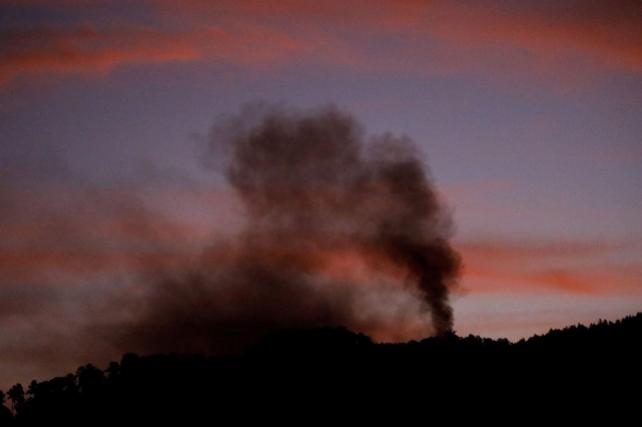
In the early hours of Saturday, explosions rocked Caracas and elsewhere, prompting Maduro's government to declare a national emergency and mobilize troops. It said attacks also took place in the states of Miranda, Aragua and La Guaira.
Blasts, aircraft and black smoke could be seen across Caracas from about 2 a.m. (0600 GMT) for roughly 90 minutes.
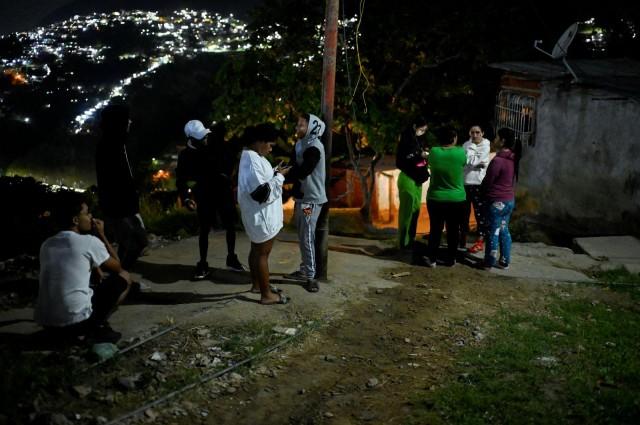
Residents expressed shock and fear as they captured video of billowing smoke and bright orange flashes in the sky. “My love, oh no, look at that,” said one woman in a video, gasping at blasts in the distance.
Carmen Marquez, 50, a resident of the eastern part of the capital, said she went to her roof and could hear planes at different altitudes, though she could not see them.
"Flare-like lights were crossing the sky and then explosions could be heard. We’re worried about what’s coming next. We don’t know anything from the government, only what the state television says," she said.
A local media outlet allied with the ruling Socialist Party said explosions had taken place near the Fuerte Tiuna and La Carlota military bases. State TV images of La Carlota showed what appeared to be a destroyed tank and buses.
While various Latin American governments oppose Maduro and say he stole the 2024 vote, direct US action revives painful memories of past interventions and is generally strongly opposed by governments and populations in the region.
Trump's action recalls the Monroe Doctrine, laid out in 1823 by President James Monroe, laying US claim to influence in the region, as well as the "gunboat diplomacy" seen under Theodore Roosevelt in the early 1900s.
'New dawn, the tyrant is gone,' US official says
"A new dawn for Venezuela! The tyrant is gone," US Deputy Secretary of State Christopher Landau wrote on X.
The streets of Venezuela appeared relatively calm as sun rose on Saturday. Soldiers patrolled some parts and some small pro-Maduro crowds began gathering in Caracas.
Others, however, expressed relief.
"I'm happy, I doubted for a moment that it was happening because it's like a movie," said merchant Carolina Pimentel, 37, in the city of Maracay. "It's all calm now but I feel like at any moment everyone will be out celebrating."
Venezuelan allies Russia, Cuba and Iran were quick to condemn the strikes as a violation of sovereignty. Tehran urged the UN Security Council to stop the "unlawful aggression."
Trump had sought a "blockade" of Venezuelan oil, expanded sanctions against the Maduro government and staged more than two dozen strikes on vessels the US alleges were involved in trafficking drugs, killing more than 110 people.
It was unclear under what legal authority the latest US strikes were carried out.
Trump’s move risks a backlash from the US Congress, which has the constitutional right to declare war, and from his own political base, which favors an “America first” policy and largely opposes military intervention abroad.
Venezuelan state-run energy company PDVSA's oil production and refining were normal and its most important facilities had suffered no damage according to an initial assessment, two sources with knowledge of the company's operations said.
MST Marquee analyst Saul Kavonic said oil prices were likely to jump on the near-term risk to supply but that the US strike could be bearish in the medium term if a new Venezuelan government results in sanctions being lifted and renewed foreign investment. — Reuters

