

 GMA Brandtalk
 Tracking
 Archives

More repatriation flights as Middle East airspace closure strands thousands
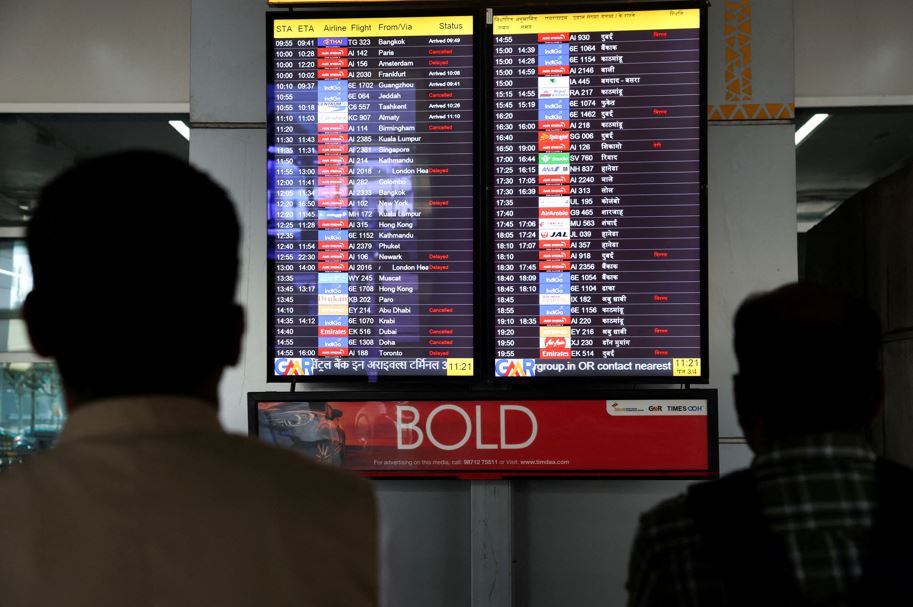
LONDON/DUBAI/HONG KONG —Repatriation flights were due to depart from the Middle East on Wednesday as governments rushed to bring home tens of thousands of citizens stranded by the intensifying U.S. and Israeli conflict with Iran.
Commercial air traffic remained largely absent across much of the region, with major Gulf hubs - including Dubai, the world's busiest airport for international passengers - largely shut for a fifth straight day, in the biggest travel disruption since the COVID-19 pandemic.
Industry experts say that even if a ceasefire were declared immediately, normal service would not return overnight. Airlines would still need time to reposition aircraft, reassign crews, rebuild schedules and secure clearance to resume flying safely.
The first repatriation flights for Britain and France were due to leave on Wednesday, while the United Arab Emirates opened safe air corridors to allow some citizens to return home. Under normal circumstances, thousands of commercial flights would depart the region each day.
New Zealand said a total of ?121 repatriation flights were expected to depart Dubai International Airport on Wednesday.
Governments rush to evacuate
Some marooned tourists and expatriates have also tried to make their own way out.
"We're doing this cautiously," said French Finance Minister Roland Lescure. The French government said several repatriation flights were planned for Wednesday for its citizens, around 400,000 of whom are in the region.
Polish Prime Minister Donald Tusk said he had authorized the use of military aircraft to support the evacuation of Polish citizens from the Middle East.
Britain's Foreign Office said Foreign Secretary Yvette Cooper had spoken with the head of Emirates and was due to speak with British Airways later on Wednesday about flight plans out of Dubai, as Britain leans on commercial airlines to help bring its citizens home. The office said a charter flight would leave Oman on Wednesday evening.
Italy's foreign ministry said it had deployed additional staff to Oman and the United Arab Emirates to support the repatriation of Italian citizens.
The Czech Republic has organized three government evacuation flights from Oman, Jordan and Egypt, bringing home 175 people, with more operations planned. Airline Smartwings is also operating return flights from Oman and Dubai, according to the CTK news agency and a government official.
Slovakia said it had evacuated 127 people — mostly Slovak citizens, along with four Czechs and one Kazakh national — on two flights from Jordan that landed on Tuesday, and was preparing additional missions.
Airlines reroute, extend suspension
With airspace severely constrained, airlines have been forced to reroute flights, carry extra fuel or make additional refuelling stops to guard against sudden diversions or longer flight paths through safer corridors.
Qantas QAN.AX added one A380 flight from Sydney to London to help 485 customers get from Australia to Europe on Saturday. It is also adding a refuelling stop in Singapore to its normally non-stop Perth-London flights to allow it to carry an extra 60 passengers amid high demand.
Several carriers have also extended flight suspensions. Emirates, the world's largest international carrier, said routes to and from Dubai remained suspended until March 7, though it was operating a limited schedule from Dubai International and Al Maktoum International.
Air France AIRF.PA said it had extended its suspension of flights to and from Dubai and Riyadh until March 6, and prolonged the halt on services to Tel Aviv and Beirut until March 8.
Costs rise, shares swing
Oil prices have surged, lifting airlines' fuel bills and raising the risk of higher fares if longer routes persist.
Most major U.S. airlines no longer hedge fuel, leaving them exposed to fluctatution in oil prices. A Morningstar analyst estimated Asian carriers ANA9202.T, Cathay Pacific0293.HK, and Singapore AirlinesSIAL.SI have hedged about half of their jet fuel needs.
Wizz Air WIZZ.L said on Wednesday that the Middle East conflict would cut its net profit for fiscal year 2026, driven by suspended regional routes and broader economic weakness linked to the Iran crisis.
The Gulf is also a major hub for air cargo, adding further strain to global trade routes already under pressure after disruptions to Red Sea shipping.
Airline shares were less volatile on Wednesday after double-digit percentage drops in the past few days, which wiped tens of billions of dollars from airlines' market value.
Lufthansa LHAG.DE closed up 1.5%. BA-owner IAG ICAG.L rose 2%, having fallen more than 13% in the past three days. Qantas ended down 2.7%, extending its losses for the week to more than 10%, while Korean Air Lines 003490.KS fell 7.9% after dropping 10.3% on Tuesday.
Shares of U.S. carriers United Airlines UAL.O, Delta Air Lines DAL.N, American Airlines AAL.O and Southwest Airlines LUV.N gave up early gains and turned lower. —LDF, GMA Integrated News

