

 GMA Brandtalk
 Tracking
 Archives

US officials predict Iran war's end soon; Tehran claims it can outlast foes
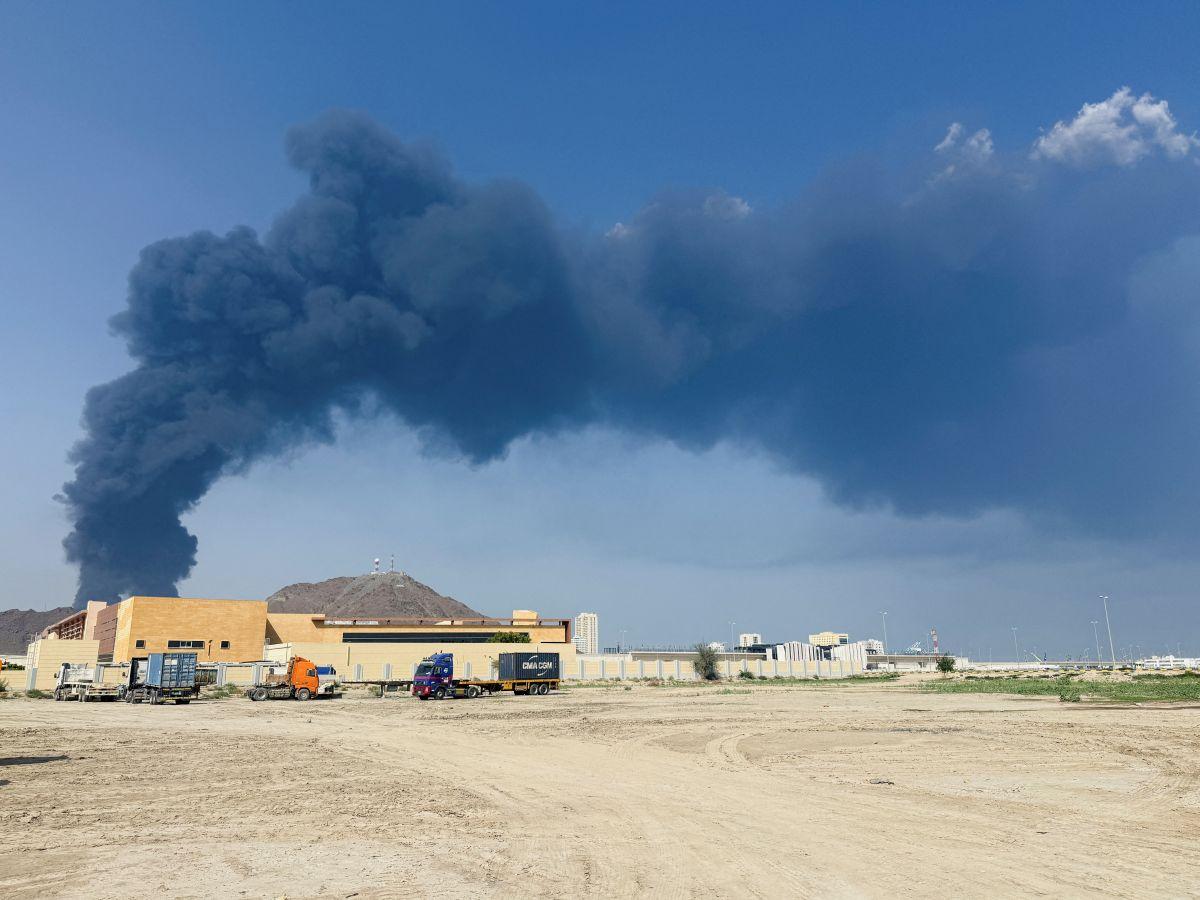
DUBAI/JERUSALEM/PALM BEACH, Florida — US officials responding to economic uncertainty over high oil prices predicted on Sunday that the US-Israeli war on Iran would end within weeks and that a drop in energy costs would follow, despite Iran's assertion that it remains "stable and strong" and ready to defend itself.
US President Donald Trump threatened more strikes on Iran's main oil export hub Kharg Island over the weekend and said he was not ready to reach a deal to end the war which has shut off the vital Strait of Hormuz and shaken up global energy markets.
The Trump administration plans to announce as early as this week that multiple countries have agreed to form a coalition to escort ships through the narrow waterway but they are still discussing whether those operations would begin before or after hostilities end, the Wall Street Journal reported, citing unnamed US officials. The White House did not immediately respond to a request for comment.
Trump, who on Friday said the US Navy would "soon" start escorting oil tankers, has said Iran wants to negotiate, but Iranian Foreign Minister Abbas Araqchi on Sunday disputed that claim.
“We have never asked for a ceasefire, and we have never asked even for negotiations," Araqchi told CBS' "Face the Nation" program. "We are ready to defend ourselves for as long as it takes.”
With crude oil prices hovering around $100 a barrel, Trump administration officials insisted that all signs point to a relatively quick end to the conflict.
"This conflict will certainly come to the end in the next few weeks — could be sooner than that ... and we'll see a rebound in supplies and a pushing down of prices after that," U.S. Energy Secretary Chris Wright told ABC's "This Week" program.
Meanwhile, Araqchi sought to project an image of strength.
"It's not a war of survival. We are stable and strong enough," Araqchi told CBS. "We don't see any reason why we should talk with Americans, because we were talking with them when they decided to attack us, and that was for the second time."
With the war entering its third week, Trump said on Saturday that US strikes had "totally demolished" much of Kharg Island and warned of more, telling NBC News on Saturday, "We may hit it a few more times just for fun."
The comments marked a sharp escalation from Trump, who had previously said the US was targeting only military sites on Kharg, and dealt a blow to diplomatic efforts to end a war that has spread across the Middle East and killed more than 2,000 people, most in Iran and Lebanon.
Washington has brushed aside attempts by Middle Eastern allies to open talks, three sources told Reuters, and Iran's Revolutionary Guards said on Sunday they had fired more missiles at Israel and three US bases in the region.
But Israel and Lebanon are expected to hold talks in coming days aimed at securing a ceasefire that would see Iran-backed Hezbollah disarmed, two Israeli officials said. Lebanon was sucked into the war when Hezbollah opened fire at Israel, saying it was to avenge the killing of Iran's supreme leader, and Israel has responded with a fierce offensive.
War, energy crisis look set to persist
With global air transport heavily disrupted and no clear end in sight, Iran's ability to choke off traffic through the Strait of Hormuz, the conduit for a fifth of global oil and liquefied natural gas, has emerged as a decisive threat to the global economy.
Although some Iranian vessels have continued to pass, the passage has been effectively closed for most of the world's shipping since the United States and Israel attacked Iran on February 28 at the start of an intensive bombing campaign that has hit thousands of targets across the country.
The International Energy Agency on Sunday said oil from its emergency reserves will begin flowing to global markets soon, with member countries pledging to make available 411.9 million barrels.
Trump on Saturday called on China, France, Japan, South Korea, Britain and other countries impacted by the choking off of oil supplies through the Strait of Hormuz to join efforts to reopen shipping lanes.
On Sunday, British Prime Minister Keir Starmer spoke to Trump about the need to reopen the Strait, a Downing Street spokeswoman said.
The Financial Times reported that European Union foreign ministers would discuss expanding the EU's regional Aspides naval mission, which protects shipping against Houthi attacks in the Red Sea, to include the Strait of Hormuz. German Foreign Minister Johann Wadephul said he was skeptical about such a move.
French President Emmanuel Macron said in a post on X that in a call with Iranian President Masoud Pezeshkian he had urged the restoration of freedom of navigation in the Strait of Hormuz and an immediate end to attacks against countries in the region, whether directly or through proxies.
France has been seeking to assemble a coalition to secure the strait once the security situation stabilizes, while Britain is discussing a range of options with allies to ensure the security of shipping, officials have said.
Israel, Israel exchange fire
Iran's Revolutionary Guards said it had fired more missile and drone barrages at targets in Israel and at U.S. military bases in the region, where Saudi Arabia said it had intercepted 10 attacks.
Israel said its jets hit more targets in western Iran, including headquarters of the Revolutionary Guards and Basij militia forces in the city of Hamadan.
A source briefed on Israel’s military strategy told Reuters that Israel had begun targeting roadblocks and bridges it believed Revolutionary Guards commanders were using. Iranian security forces detained dozens of people accused of sharing information with Israel, Iranian media reported. — Reuters

