

 GMA Brandtalk
 Tracking
 Archives

Lost remains of French musketeer d'Artagnan may have been found in Dutch church
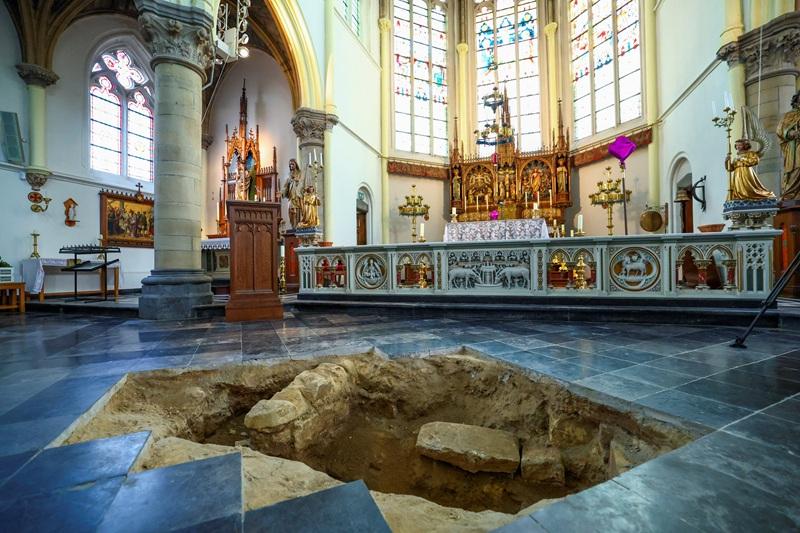
AMSTERDAM, Netherlands - The skeleton of famed French musketeer Charles de Batz de Castelmore d'Artagnan may have been found in front of a church altar in the Dutch city of Maastricht, church officials and an archaeologist said on Wednesday.
Workers discovered a grave containing human remains beneath tiles after part of the floor of St Peter and Paul Church subsided in February, triggering a race to identify the skeleton through DNA testing.
"This has truly become a top-level investigation, in which we want to be absolutely certain — or as certain as possible — whether it is the famous musketeer, who was killed here near Maastricht," archaeologist Wim Dijkman told Reuters.
The church had previously been identified as a possible resting place of the 17th-century soldier. The DNA retrieved from a jawbone is now being tested against that of descendants.
Felled by a musket ball
A fictionalized version of d'Artagnan was the hero of Alexandre Dumas' 1844 novel "The Three Musketeers," a hot-headed teenager who becomes the fourth musketeer. But d'Artagnan was a real historical figure.
Like his fictional counterpart, d'Artagnan served French "Sun King" Louis XIV and eventually became captain-lieutenant of the musketeers. He was killed during the French siege of Maastricht in the Franco-Dutch War on June 25, 1673, after being struck in the throat by a musket ball.
The church stands near the site where the French army camped. Although d'Artagnan was celebrated as a hero, transporting his body back to Paris in the summer heat would have been difficult.
Deacon Jos Valke said there were additional clues, including a coin that has been dated from 1660 and part of a lead bullet found at the burial spot.
A contemporary letter said d'Artagnan had been buried in consecrated ground. "Well, under an altar - it couldn't be much holier than that," Valke said.
"When you add it all up, then, it seems plausible to us. But of course nothing is certain yet." — Reuters

