

 GMA Brandtalk
 Tracking
 Archives

Zelenskiy says G7 agreed Russia is not winning war, discussed more sanctions
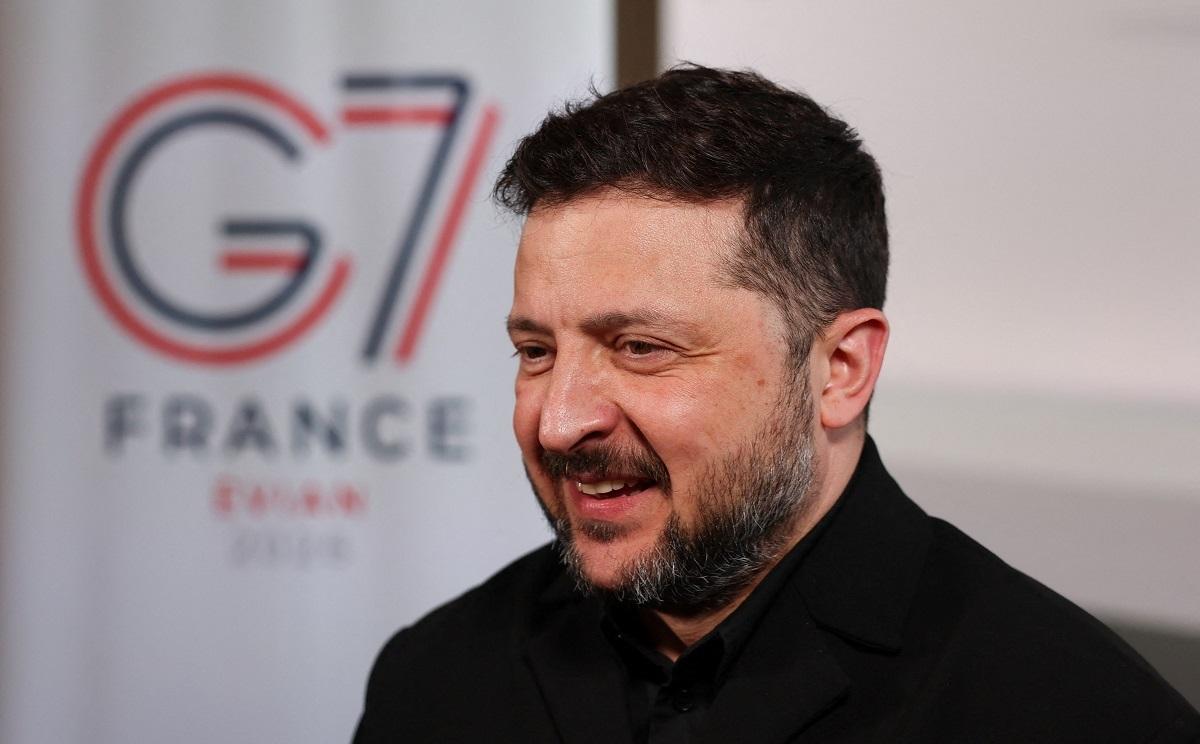
KYIV — Ukrainian President Volodymyr Zelenskiy said on Tuesday the Group of Seven leaders agreed at a summit in France that Russia was not winning its war in Ukraine, and they discussed additional sanctions to bring Moscow to the negotiating table.
Speaking by video link in an interview at the Reuters NEXT Europe summit in London, Zelenskiy said he had detected a shift in mood among the G7 leadership: an understanding that Russia had lost the initiative on the battlefield and was deliberately targeting civilian infrastructure.
"We had unanimity that Russia is not winning and they are losing a lot of people, that they have to make a deal as quickly as possible, and they don't have the initiative in their hands," he said in a conversation with Reuters editor-in-chief Alessandra Galloni.
At a morning session in the French resort of Evian-les-Bains, G7 leaders had discussed additional sanctions targeting Russia's oil exports, its banking sector and its military production, Zelenskiy said.
Ukraine would maintain its long-range drone and missile strikes on Russian energy and military targets, Zelenskiy said, but more political pressure was needed to push Russian leader Vladimir Putin towards a peace deal.
"He doesn't want to stop the war. He has to be under more pressure," Zelenskiy said, adding that Russian losses on the battlefield—which Ukraine estimated at around 35,000 killed or wounded per month—were not swaying Putin.
Russia has denied this figure.
"I think that President [Donald] Trump can do it, maybe only him," he said, adding that European leaders also wanted to play a role in the negotiations.
Zelenskiy calls for meeting with Putin before winter
Zelenskiy, who is due to hold bilateral talks with Trump later on Tuesday, said he hoped the U.S. leader could convene direct negotiations with Putin in a neutral country such as Switzerland, Turkey or somewhere in the Middle East.
"It's a very important thing to try to organize a meeting before the winter," Zelenskiy said, noting that last winter had been terrible for Ukraine after Russian strikes wreaked havoc on its electricity and power.
"We don't want to go through the same winter again. And Russia has to know... they will also not have a simple one."
In recent weeks, Putin has rebuffed Zelenskiy's offer of face-to-face talks, saying that he saw no reason for them, and insisted that Ukraine must make territorial concessions as the price for peace.
Pressuring Putin
An interim deal reached between the US and Iran this week to end the Middle East war is good news for Ukraine, Zelenskiy said, because it will lower oil prices and weaken Russia's ability to fund the conflict.
While some people around Putin are pressuring the Kremlin leader to launch a larger mobilization of Russian troops, Zelenskiy added, a majority of Russians understand that their country is not winning the war.
A day after Russian drones hit one of Ukraine's most historic monasteries in Kyiv, Zelenskiy said there was now unanimous understanding within the G7 that Russia was deliberately targeting civilian infrastructure.
Zelenskiy said Trump had responded positively to his request to increase supplies of US-made Patriot air defense missiles to Ukraine—the only weapon in Ukraine's arsenal capable of stopping Russia's ballistic missiles.
"This is a big challenge because the production is not so big as our needs," Zelenskiy said.
The US produces roughly 600 Patriot interceptors a year—which many experts estimate is below Russia's ballistic missile output. Many experts also assess that two Patriot missiles are required to guarantee an interception.
Zelenskiy said he had discussed with Trump the possibility of the U.S. granting licenses to Kyiv to produce Patriot missiles in Ukraine. Zelenskiy said he had also held meetings with senior executives at Raytheon, which makes the interceptors.
"We want to increase their production, if they will be ok and if President Trump will support this idea," Zelenskiy said, adding that the US leader was "positive."
Europe, meanwhile, needs to step up its own efforts to manufacture a missile defense system capable of taking down ballistic rockets, and at a cheaper cost, Zelenskiy said. — Reuters

