

 GMA Brandtalk
 Tracking
 Archives

Trump claims non-US citizen voting is rampant; the numbers tell another story
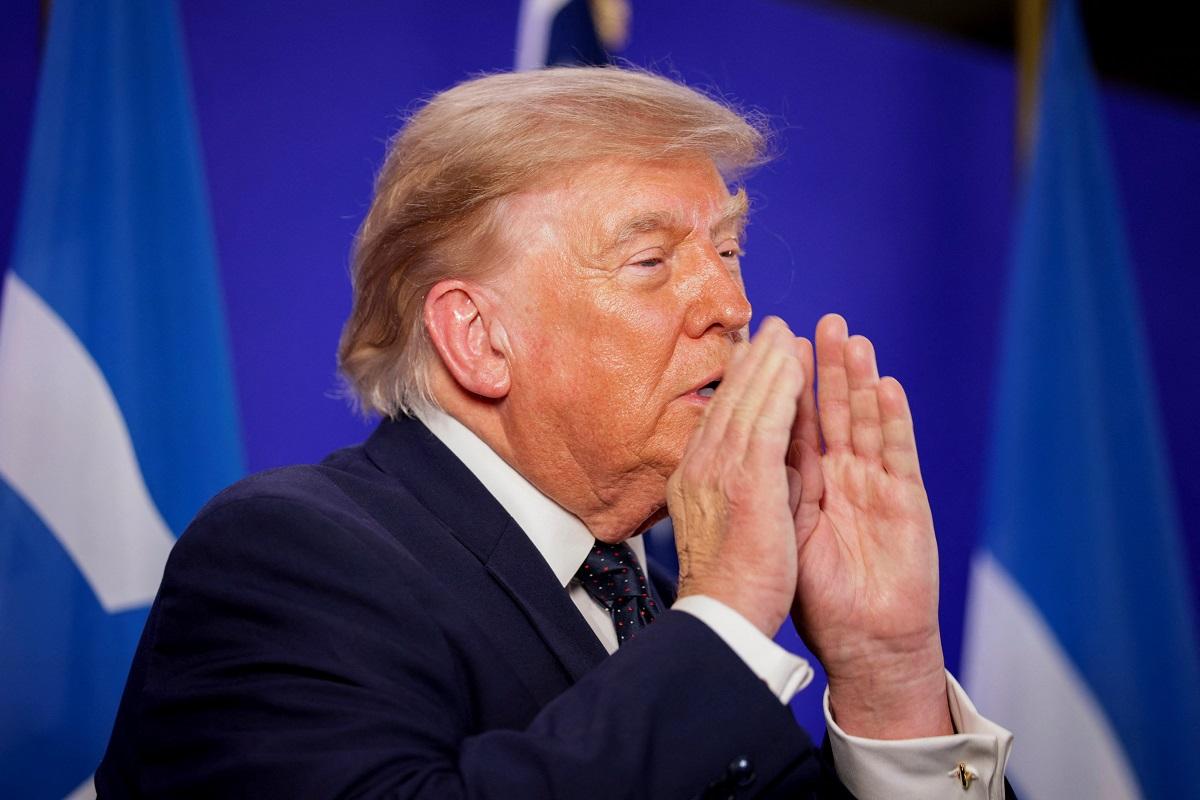
According to US President Donald Trump, America is a hotbed of voting fraud—and foreigners are major culprits.
He has portrayed noncitizen voting as part of a broad Democratic Party conspiracy to dilute Republican power. He has claimed on social media that “Crazed” Democrats allow unvetted migrants to enter the US “SO THEY CAN VOTE, VOTE, VOTE.” He has called for elections to be nationalized due to the danger of noncitizens casting ballots. And he has described illegal voting by noncitizens as so widespread that “cheating is rampant in our elections.”
He has offered little evidence for his allegations of widespread fraud, however, including his claim in a primetime speech on Thursday that 278,000 noncitizens are registered to vote.
Now, a new Reuters analysis of federal court data undercuts Trump’s assertion that a conspiracy of noncitizen voting is afoot in America.
Case records show that federal prosecutors have charged just 129 people under a federal "voting by aliens" statute created by Congress in 1996, Reuters found. More than two-thirds of those prosecutions—86—have been filed during Trump’s five-and-a-half years in office. In none of the cases did prosecutors allege a coordinated effort to influence an election. And no defendant was accused of being paid to vote. Instead, many appear to stem from voter confusion, miscommunication with election officials or administrative errors.
One of the people swept up in Trump’s crackdown is Dora Damatta‑Rodriguez. The 72-year-old Panama‑born grandmother had lived in the US for decades before casting a ballot in the 2016 election. She told Reuters she hoped her vote would make life better for her four children and 15 grandchildren, all US citizens.
“I wasn't sneaking in,” she later told a judge, according to a transcript. “I believe I was doing it by the law.”
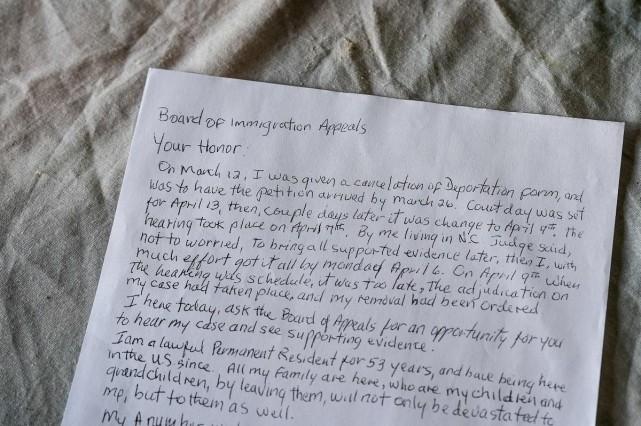
She wasn’t. Damatta, who entered the US legally in 1973 with her American husband, was convicted in a North Carolina federal court in 2019 of illegal voting. She had three decades-old misdemeanor convictions, which the judge ruled were too old to be considered in sentencing her for the voting offense.
She spent 13 days in jail and was told by immigration authorities the matter was settled. But last year, the Trump administration revisited her case. She was deported to Panama in June.
Damatta told the federal judge she had registered to vote at the local elections office using a driver’s license which, state officials told Reuters, carried a designation for noncitizens. She assumed election workers knew she wasn't a citizen and took their acceptance of her voter-registration application as proof she could legally vote. “I was very happy, because I'm very patriotic, even though I'm not an American.”
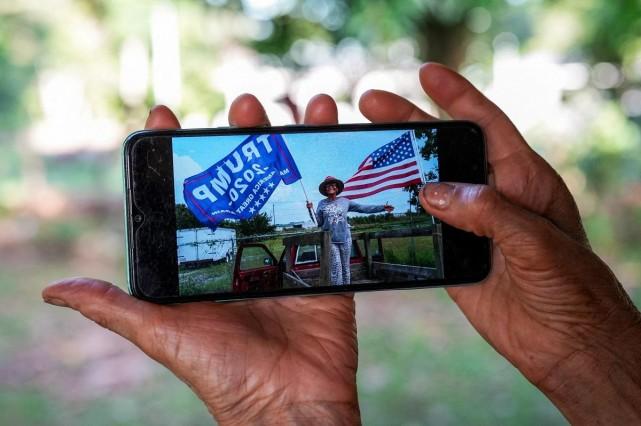
She said she cast her ballot for Trump. In an interview, she said she saw him as a businessman, not a politician, who would put the country on a better track. And she still supports him. “I like how he cares about America,” she said. “He's going to get for America what America needs."
Her case is one of 73 convictions or guilty pleas in the federal noncitizen-voting cases since 1996 identified by Reuters. Among the 62 defendants whose immigration status could be determined, 49 were lawful permanent residents like her.
The pace of such prosecutions spiked in the opening stretch of Trump’s second term, Reuters found.
Over the past 18 months, the Trump administration has brought at least 39 voting-by-aliens prosecutions, more than any other president at this point in office in at least a quarter century, court records show. The cases are part of a broader enforcement effort: US Department of Homeland Security agents have launched voter-fraud investigations into more than 325 people across at least six states, mostly on suspicions of noncitizen voting, according to records obtained by Reuters through public information requests.
In response to questions for this story, the White House said noncitizen voting cases are “plentiful” and that Trump is committed to keeping voter rolls accurate and limited to eligible citizens. Such measures are necessary to protect the integrity of US elections, it added. “Noncitizens voting is a crime,” White House spokesperson Abigail Jackson said. “Anyone breaking the law will be held accountable.”
Trump’s focus on noncitizen voting is part of a multi-front push to remake US elections in ways the president himself has said could cement Republican power for generations.
The administration has sued more than two dozen states that have refused to turn over their confidential voter rolls for federal review. It has weakened federal election-security programs designed to detect cyber threats and foreign influence operations. It has seized ballots and demanded sharp restrictions on mail-in voting. And this month, it ousted the leaders of the federal agency that helps oversee voting systems and threatened to prosecute state and local election administrators who allow noncitizens to vote.
Calling on Congress to pass the SAVE America Act, which would require proof of citizenship to register to vote and photo identification to cast a ballot, Trump said on July 3 the bill would ensure Republicans “will not lose an election for a hundred years.” Critics in both parties say SAVE would disenfranchise new citizens or anyone else who doesn’t have ready access to birth certificates and other documents verifying citizenship.
Eight election officials and voting-rights experts told Reuters Trump's focus on noncitizen voting fuels unfounded fears of fraud and could lay the groundwork for challenges to November's midterm results. A June report by New York University’s Brennan Center for Justice, a voting rights organization, estimated that even a modest error rate in nationwide citizenship checks could result in tens of thousands of voters being mistakenly identified as noncitizens.
Some said the effort is part of a broader voter-suppression campaign ahead of November’s midterm elections, which will determine control of the US Congress.
“The administration is using a sledgehammer to address the issue,” said Pam Anderson, the Republican nominee for Colorado’s secretary of state in 2022 and former election official who served as president of the statewide county clerks’ association. She said she had “grave concerns it will have a depressive effect on turnout.”
During his second term, Trump has directed agencies to revisit old and new noncitizen voting cases, in some instances seeking deportation years after the criminal cases were resolved, as in Damatta's case.
To be sure, some experts believe that existing safeguards could limit aspects of Trump’s campaign. Danielle Lang, an attorney at the nonpartisan Campaign Legal Center, a voting rights group, said election laws, courts and America’s decentralized, state-run electoral system check the president's power. “There are a number of restrictions that are there to protect voters,” Lang said.
Election officials from both parties say noncitizen voting happens. But they add that it’s on a scale so small that it has no significant impact on election results. “All evidence suggests that it occurs extremely infrequently,” Al Schmidt, Pennsylvania’s top election official and a Republican, said in an interview, citing his 15 years of experience in local and state elections.
How mistakes became crimes
Behind Trump's claims of widespread and intentional fraud lies a different reality: Many of the people prosecuted said they believed they were voting legally.
Among the 73 people convicted or who pleaded guilty to the federal charge of "voting by aliens," 40 believed they had a legal right to vote, according to court records and interviews.
Thirty-two of those said they had been signed up to vote by mistake, encouraged to register, or reassured by election officials that they were eligible. Eight said they believed permanent residents could vote or took their successful registration as proof that they could. Reuters could not determine whether the remaining 33 defendants knowingly broke the law.
Party affiliation could be established for 34 defendants: 11 were Democrats, nine Republicans and 14 had no party affiliation. The small numbers and mixed affiliations suggest the cases were not part of any coordinated effort to benefit a single party.
Forty-nine were lawful permanent residents and 13 were living in the US illegally; immigration status could not be determined in the remaining 11 cases.
Reuters attempted to reach all 73 defendants and spoke with them or their representatives in 39 cases. Nearly all requested anonymity, citing fears of further legal consequences.
Cases were identified through a review of federal court records and a database maintained by the Federal Judicial Center, the federal courts' research agency. Reuters limited its analysis to federal prosecutions because states rarely bring such cases and use differing criteria.
Of the 129 federal prosecutions under the voting-by-aliens statute, the charge was dismissed in 30 cases and remains pending in 26. In addition, Reuters found at least seven other noncitizen-voting cases brought under a broader election fraud law, six of them in the past year. Five resulted in convictions and two remain pending.
Damatta traces her error to September 2016. That month, she registered to vote in North Carolina after watching an online video that she interpreted as saying immigrants could legally vote. Reuters could not identify the video. Two years later, she was arrested after North Carolina officials auditing voter rolls identified her as a noncitizen voter.
She was sentenced in 2019 after pleading guilty, spent nearly two weeks in jail and faced a $500 fine. At sentencing, she maintained that she believed she was eligible, though the judge said she likely knew she could not legally vote.
The case appeared closed. Then, in December 2025, immigration authorities detained Damatta during a passport check at Houston’s airport as she prepared to fly to Europe on vacation. After pulling up her 2019 conviction for noncitizen voting, they put her in detention and began deportation proceedings as part of Trump’s immigration crackdown.
While in custody in Texas, she prepared to contest her case at an April 9 hearing. But when the day arrived, she learned that the court already had ordered her removal. She was deported to Panama in June.
“It feels like I was executed in Texas,” she said by telephone from a small town in Chiriqui province in Panama where she’s now living.
In response to questions about Damatta's case, Homeland Security said she was a "criminal illegal alien" who entered the US illegally through Mexico in 2009. Court records from her 2019 voting case, however, show she was a lawful permanent resident. Her lawyer told the court she had been living legally in the US for more than four decades, and an image of her green card shared with Reuters shows she obtained permanent resident status in 1973 as the spouse of a US citizen.
The Homeland Security statement also said she had a criminal record that included alien smuggling, disorderly conduct and driving under the influence. Federal and state court records, however, show no convictions or prosecutions of her for those offenses. The records reviewed by Reuters showed three older misdemeanor convictions—for shoplifting in 1982, driving without a proper license in 1995 and larceny in 1997—which the judge in her voting case ruled were too old to be considered at sentencing.
After Reuters presented Homeland Security with findings contradicting its allegations, the agency repeated the claims without providing evidence.
The circumstances that led some noncitizens to vote often began with mundane encounters: a conversation with a county clerk, a voter-registration drive or a misunderstanding left uncorrected for years. One man told a judge that a Florida motor vehicle office clerk incorrectly informed him that he could vote because he was married to a US citizen.
Another testified that a canvasser urged her to register even after she disclosed she was not a citizen, suggesting it could help her path to naturalization. At least three said in legal documents that they used government-issued identification when they registered and were never told they were ineligible. They later cast ballots in federal elections and were penalized years afterward.
The defendants came from at least 33 countries, including Mexico, South Korea, Japan, Poland, Israel, Nigeria and Canada.
A 66-year-old Ohio man who emigrated from Germany as a child and never became a US citizen told Reuters he was registered to vote while getting license plates at a Bureau of Motor Vehicles office near Cleveland years ago. When he said he wasn’t eligible, an official brushed it aside, telling him he could register as long as he had standard identification, he recalled.
He went on to vote in 12 elections between 2009 and 2024. He also requested an absentee ballot for Ohio's 2020 Republican primary, voting records show.
“I didn’t even know what the hell I was signing up for,” said the man, who spoke on condition of anonymity amid the immigration crackdown.
A widening net
Under Trump, federal law enforcement officials have been directed to prioritize prosecutions and deportations for noncitizen voting, according to executive orders, public statements by senior officials and an internal Homeland Security memo. Some Republican-led states such as Ohio and Texas—both of which have competitive US Senate races this year—are enthusiastic partners.
In Ohio, the office of Republican Secretary of State Frank LaRose, a Trump supporter, partnered with Homeland Security agents last year to help search for voter fraud in the state. In October, LaRose referred 167 names of alleged noncitizen voters to the US Justice Department for possible prosecution.
Since then, Homeland Security agents have requested voting files in Ohio for at least 308 people, according to emails the agents sent to local election boards that were reviewed by Reuters. Most—or 214 of them—never cast a ballot, according to voting records. Among the rest, 64 voted and 20 attempted to vote but had their ballots rejected. Reuters couldn’t determine voting histories for 10 others.
Homeland Security interviewed at least 12 of the people whose records it sought in Ohio, including lawful permanent residents and naturalized citizens, and initiated deportation proceedings against at least two of them this year, according to two immigration lawyers in Ohio.
LaRose’s office is “very proud” of its efforts on voter rolls, it said in a statement. “We’re working with law enforcement every day to hold accountable those who try to cheat the system, including noncitizens who cast illegal votes.”
In Texas, at least five counties have received Homeland Security subpoenas or other requests for voter records, according to interviews with election officials, voting records and emails between local officials and Homeland Security agents obtained through records requests.
A Homeland Security agent told Roxzine Stinson, the election administrator in heavily Republican Lubbock County, that the agency planned to seek voter records from election offices across Texas, Stinson said in an interview. She declined to comment further or disclose how many voters were covered by the subpoena her office received this year.
In Texas' Webb County, on the Mexico border, election administrator Jose Luis Castillo said Homeland Security has sought records for 10 suspected noncitizen voters since April. Only one appeared to have cast a ballot, he said—once, in 2014, after being inadvertently registered at a driver's-license office.
Castillo questioned the value of the search. "We aren't finding what they think is out there." He has no party affiliation, he said in an interview.
In Massachusetts, Homeland Security’s review of voter rolls identified a Canadian national who lived in the state and voted in Democratic primaries and other federal, state and local elections dating to 2008. State officials were already investigating the case, however, and had filed a complaint in April before the Justice Department charged the man in May with voting as an alien following a joint probe with Homeland Security.
Court records show federal agents were combing voter rolls in other Massachusetts communities for additional suspected noncitizens. The Canadian and his lawyer did not respond to requests for comment.
In an interview, William Galvin, Massachusetts' Democratic secretary of state, said he supports prosecuting noncitizen voting but was skeptical about deploying federal investigative power at that scale. “If you are going to comb through five million voters on the chance you might find a noncitizen, is that a good allocation of resources?” he said.
Homeland Security did not respond to questions about its operations in Ohio, Texas and Massachusetts.
Violations of the 1996 statute criminalizing “voting by aliens”—18 USC 611—are misdemeanors punishable by up to one year of imprisonment and a maximum $100,000 fine. But penalties historically have been mostly modest, often fines or probation. Judges typically do not have the option of ordering deportations in criminal cases. Expulsions are initiated separately by immigration authorities.
While Trump frequently cites noncitizen voting cases as evidence of fraud, legal scholars say the offense differs from fraud as the term is commonly understood. Fraud typically involves intentional deception. But under the federal statute, prosecutors need only show that a person was not a citizen and cast a ballot. They do not need to prove the person intended to deceive election officials or knowingly violate the law.
“It's misleading,” University of Idaho College of Law professor Benjamin Cover said of equating noncitizen voting with fraud. “There's no fraud element in the statute.”
Erroneous flags
The crackdown is also sweeping up an unknown number of legitimate voters.
To find suspected noncitizen voters, federal investigators have relied heavily on a national database—Systematic Alien Verification for Entitlements, or SAVE. It was created in 1986 to verify the immigration status of applicants for public benefits such as food and housing.
The Trump administration expanded SAVE last year, adding new data sources and encouraging states to use it for large-scale reviews of voter rolls. Justice Department lawyers acknowledged in court that the system could incorrectly flag some naturalized US citizens, but argued the risk was too small to justify stopping its use.
At least 18 Republican-led states adopted the revamped system. Then, in June, a federal judge in Washington barred its use for voter verification, ruling that the changes made the system less accurate and risked disenfranchising eligible voters. A ruling this month by a federal court in Florida ordered Homeland Security to restore use for four Republican-led states. The conflicting rulings have yet to be resolved.
Texas ran its nearly 19 million registered voters through SAVE last year and identified 2,724 people across 177 counties who, state officials said, needed to prove their citizenship. The secretary of state ordered counties to notify those voters and give them 30 days to provide documentation or face suspension from the rolls. Data collected by the Texas Association of County Election Officials from 40 counties showed that, as of May, about 100 people had provided proof of citizenship, while more than 900 did not respond and had their registrations suspended. Reuters could not determine whether any of those suspended were noncitizens.
The Texas Secretary of State's office said counties are responsible for reviewing voters flagged through SAVE and that many are still evaluating the data.
In Indiana, officials last year identified 1,611 people they said had not been citizens upon obtaining driver's licenses or other state identification documents, and gave them 30 days to prove their eligibility or face removal from the voter rolls. The group represented a tiny fraction—0.03%—of Indiana's 4.8 million registered voters in 2024, and many appeared to be naturalized US citizens, Reuters found. The office of Indiana Secretary of State Diego Morales, a Republican, did not respond to a request for comment.
One was Lucinda Delgado, a 39-year-old mother of three in Indianapolis. She emigrated from the Dominican Republic in 1993 at age seven, became a citizen in 2021 and registered to vote in 2025. Under Indiana law, voters don’t register a party affiliation.
In March, after receiving a letter from her local election board demanding proof of citizenship within 30 days, she sent a copy of her naturalization certificate. Delgado remained on the rolls and has yet to decide who to support in November’s election. Still, she worries about older voters and others who may struggle to navigate the paperwork or quickly locate documents needed to prove their eligibility.
“They’re never going to be able to vote,” she said. — Reuters

