






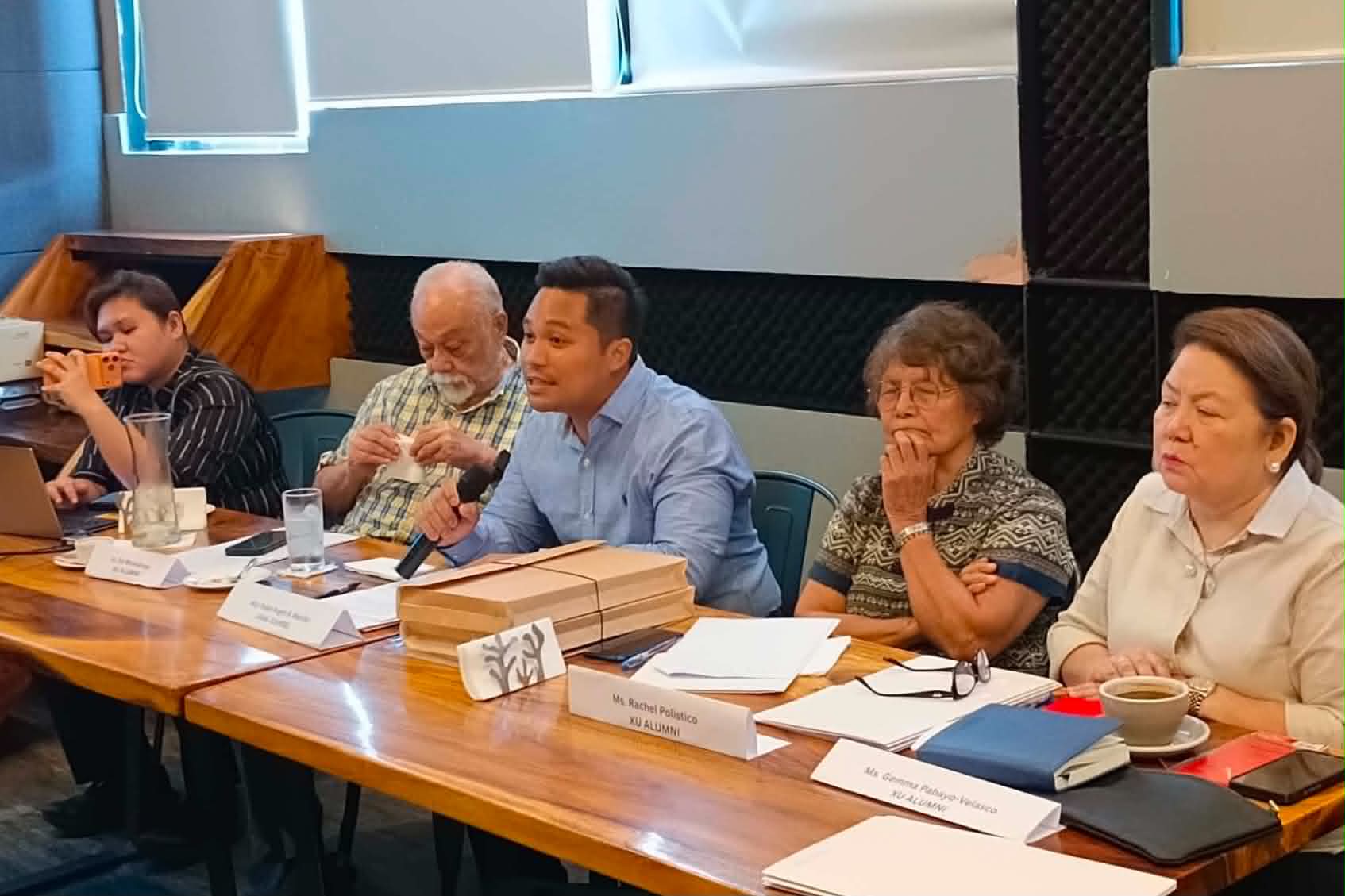
A group of Xavier University (XU) alumni and concerned citizens has welcomed the move of the Department of Environment and Natural Resources (DENR) to hold a formal hearing on the development of XU’s Manresa property in Barangay Carmen, Cagayan de Oro City.
The group’s legal counsel, Atty. Ralph Metrillo, expressed support for DENR’s swift action.
“As citizens, there is nothing more encouraging than seeing public officials act with urgency and fairness to protect the public interest and uphold the rule of law,” Metrillo said.
Metrillo said DENR has the legal right to enforce the terms of the 1958 Land Grant.
“This is a matter for the courts to decide. The law must take its proper course,” he added.
On Monday, May 18, 2026, DENR directed XU and real estate developer, Cebu Landmasters, Inc., to appear at the formal hearing at the DENR Cagayan de Oro City office on May 26, 2026, as the agency investigates the Manresa property development.
The investigation centers on whether XU has violated the terms attached to the land grant it received decades ago.
Metrillo who first raised concerns about possible violations in the development is also required to attend the hearing.
Since July 2024, Metrillo has written to both the Office of the Solicitor General and DENR Central Office, claiming that XU’s land was acquired under specific conditions set by law.
It can be recalled that DENR has ordered XU and real estate developer, Cebu Landmasters, Inc. (CLI), to explain the project on May 11, 2026 and provide documents within 15 days.
The agency cited DENR Administrative Order No 2016-31 and Commonwealth Act No. 141, also known as the Public Land Act, noting that the land may have originated from a grant under the law.
The school and the developer are asked to clarify the legal and factual basis for the property’s present commercial or development use, and to submit any proclamation, law, administrative issuance, conversion order, or other government authority allowing such use.
XU and CLI issued a joint statement earlier maintaining that the project partnership is legal and that the development of what it called as Masterson Campus of the Future will not be delayed.
“The modernization of Jesuit education in Mindanao will not be delayed by external noise or legally untenable claims,” the statement said.
XU said it has held title to the land for nearly 70 years and that all administrative restrictions tied to the property expired in 1968.
The university added that the property is protected under the Torrens system, which it described as the highest legal standard of land ownership in the Philippines.
XU and CLI also maintained that the title is “indefeasible” and said they have already submitted a counter-position paper to DENR to address opposing claims.
XU plans to develop 14.6 hectares of land to help fund the construction of a 21-hectare “Campus of the Future” that will include a 28-hectare forest reserve.
However, Metrillo said the central issue in the case is that XU received the land without undergoing public auction – a process normally required for land sales – precisely because it qualified under Section 70 of the Public Land Act.
“XU benefited from this special provision to make the process easier, but it cannot now choose to ignore the conditions that came with it,” Atty. Metrillo explained. “That is not how the law works.”
He explained that no subsequent amendments to the Public Land Act apply in this case. He added that even regulations allowing corporations to use land for commercial purposes – such as PD 763 – do not override the original terms.
“These later provisions apply only to transactions after the initial grant. Section 70 is a special provision that takes precedence over a general one. Since XU is the original grantee, the rules that applied in 1958 remain fully in force today,” Metrillo said.