






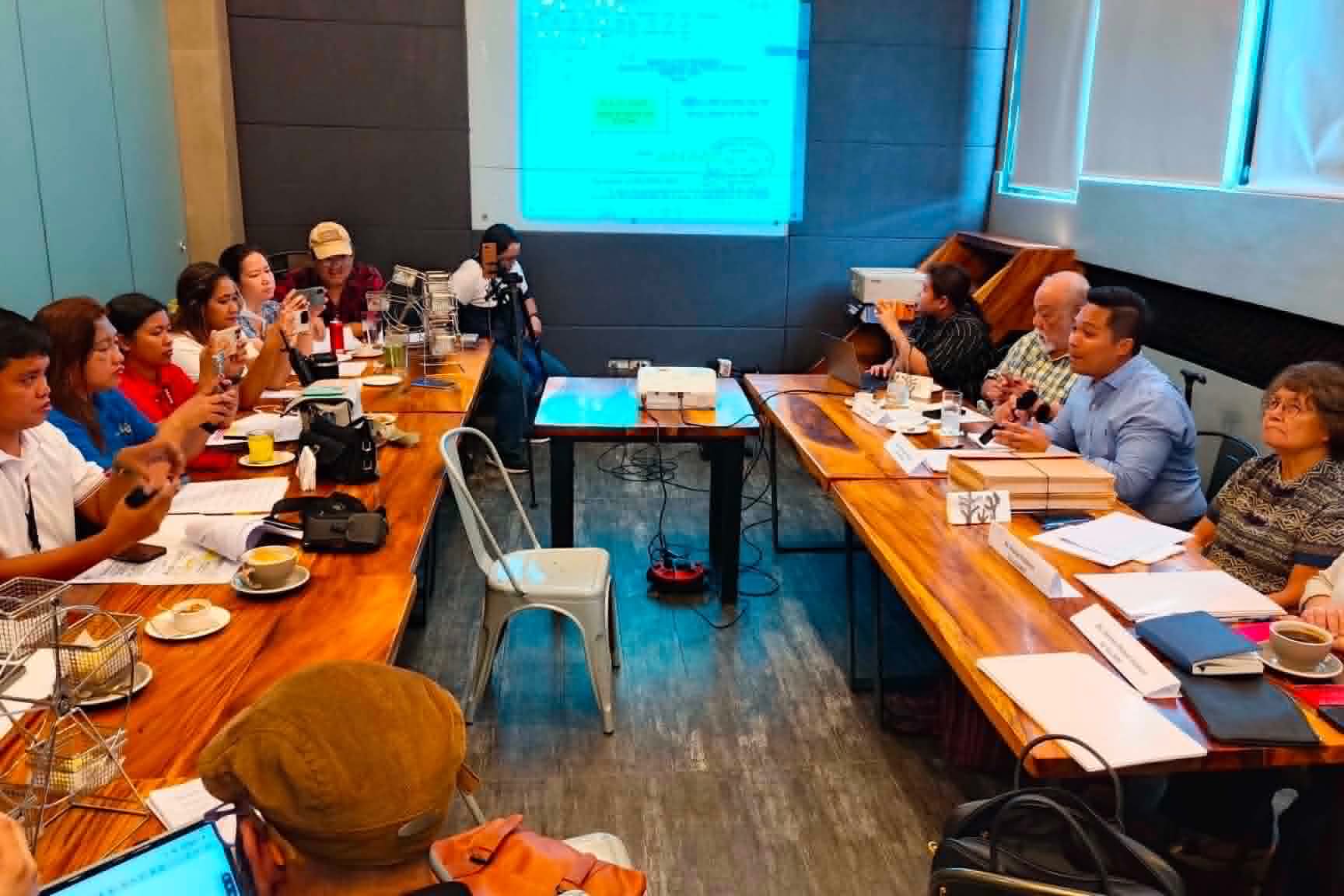
A group of Xavier University (XU) alumni and concerned citizens has filed a supplemental position paper to the Department of Environment and Natural Resources (DENR) disputing the claims of the school regarding the development of its Manresa property in Cagayan de Oro City.
XU plans to develop 14.6 hectares of land to help fund the construction of a 21-hectare “Campus of the Future” that will include a 28-hectare forest reserve along Masterson Avenue.
On May 18, 2026, the group’s legal counsel, Atty. Ralph Metrillo, submitted the paper that seeks to counter the legal claims of XU and its partner real estate developer, Cebu Landmasters, Inc. (CLI).
Earlier, XU and CLI issued a joint statement saying that the project partnership is legal and that the development will not be delayed.
XU and CLI claimed that the title is indefeasible and that the property is protected under the Torrens System, which it described as the highest legal standard of land ownership in the Philippines.
The school also maintained that it has held the land for nearly 70 years and that all administrative restrictions tied to the property expired in 1968.
However, in the supplemental position paper filed by Metrillo, the lawyer said the registration of a patent under the Torrens System does not erase the conditions and limitations imposed on the grantee.
Metrillo explained that XU, as the current registered owner, remains bound by the Sales Patent issued in 1958 and cannot claim to be an innocent third party.
“The patent is the contract between the grantee and the State. XU, as the current registered owner of the property, is privy to the Sales Patent issued in 1958. It is not an innocent third party and is therefore bound by it,” Metrillo said.
The paper also clarified that while Section 121 of Presidential Decree 763 liberalized restrictions for corporations acquiring properties through secondary sale, it did not amend or remove the specific restrictions under Section 70 imposed on the original grantee.
Metrillo said Section 121 is a general provision while Section 70 was identified as a special provision that continues to bind XU.
“Section 121 is a general provision, while Section 70 is a special provision. The amendment to Section 121 did not amend, lift, or remove the restrictions imposed on the original grantee,” Metrillo added.
On the issue of expiration, the group argued that Sales Patents issued under Section 70 do not expire after 10 years. Instead, only patents issued under Section 22-32 of the Public Land Act carry such a limitation.
Metrillo said records from DENR-CENRO confirmed that XU’s patent was issued under Section 70, making its obligations enforceable beyond the 10-year period.
“It is therefore wrong for XU to claim that in 1968, all administrative restrictions expired,” Metrillo said.
The dispute over the alleged commercial development of the Manresa property has drawn public attention amid legal concerns on land originally granted for educational purposes.
DENR has earlier ordered XU and CLI to explain the development and attend the formal hearing on Tuesday, May 26, 2026.