






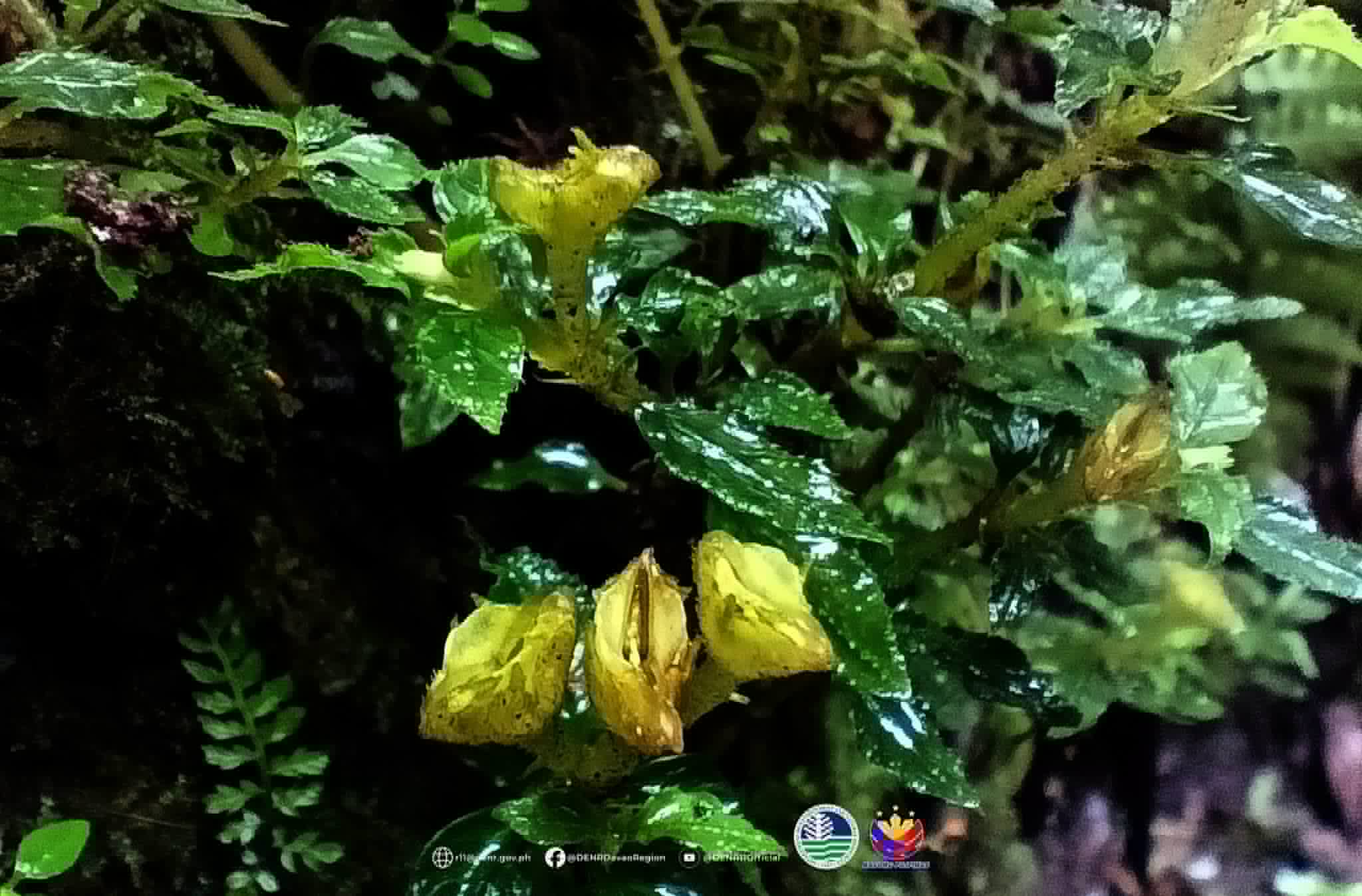
A rare flowering plant has been rediscovered at Mt. Apo Natural Park about 122 years after it was last documented in the area.
Members of the monitoring team from the Protected Area Management Office (PAMO) discovered the plant during routine wildlife monitoring activities.
According to the Department of Environment and Natural Resources-Davao (DENR-11), the team noticed a tiny flowering plant that drew their attention despite its very small size while they were retrieving camera traps along a forest trail.
DENR-11 said after examination, the specimen was identified as “Ophiorrhiza biflora,” a Philippine endemic species first collected at Mount Apo in October 1904 by American botanist Edwin Bingham Copeland.
DENR-11 added that “Ophiorrhiza biflora” belongs to the Rubiaceae family, which includes coffee, gardenia, mussaenda, and santan.
It has also been recorded in Benguet and Negros, but DENR-11 said the specimen in Mt. Apo represents the first successful photographic documentation of the species, marking a significant milestone in Philippine botanical research.
DENR-11 also said the rediscovery is considered highly significant as it confirms the continued survival of a Philippine endemic species that had not been documented in Mount Apo for more than a century.
“It also reinforces Mount Apo Natural Park's status as one of the country's important biodiversity hotspots and further strengthens its bid for UNESCO Global Geopark recognition,” DENR-11 said.
The discovery comes after the documentation of another rare plant species called “Agalmyla calelanensis,” in 2025, which was originally recorded in Mount Apo in 1909.
“These remarkable discoveries underscore the enduring richness of Mount Apo's forests and highlight the importance of sustained biodiversity monitoring, scientific research, and habitat protection in conserving the Philippines' unique natural heritage,” DENR-11 said.