





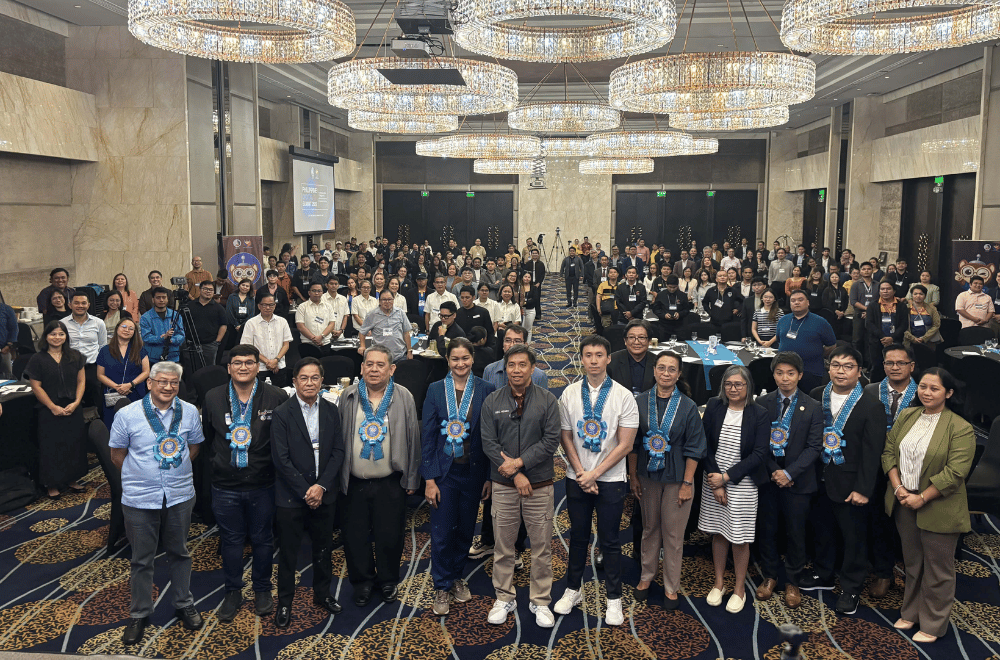
Government officials, broadcast networks, technology providers, and industry stakeholders gathered in Mandaue City, Cebu, for the Philippine Digital TV Summit 2026, where the Department of Information and Communications Technology (DICT) outlined its roadmap for Digital Terrestrial Television Broadcasting (DTTB), including the phased Analog Switch-Off (ASO) and the rollout of the Emergency Warning Broadcast System (EWBS).
DICT Secretary Henry Aguda said the Philippines is moving toward a broadcasting standard that many countries adopted more than a decade ago.
"Digital TV kasi 'yun yung standard ngayon na mapupuntahan. In fact, 10 to 15 years ago, nag-digital TV na yung mga ibang bansa," Aguda said.
He said digital broadcasting provides clearer picture and sound quality because it is less susceptible to signal noise compared with analog television.
"Pag digital ka na, mas clear, mas maganda," he said.
Aguda added that one of the most significant benefits of digital television is its ability to deliver emergency alerts directly to viewers.
"Pag digital ka, puwede ka namang singit ng mga emergency broadcast warning... pagka nagkaroon ng storm advisory, mabro-broadcast na siya ngayon sa mga nanonood," he said.
While the transition has formally begun, Aguda emphasized that analog television will not be phased out immediately.
"Yung mga areas na gumagamit pa ng analog TV, bibigyan sila ng time to migrate out... Simula pa lang naman ito," he said, adding that the government aims to identify communities that still rely on analog television before implementing a full switch-off.
DICT Undersecretary for Policy and Legal Sarah Maria Q. Sison acknowledged that affordability remains one of the biggest hurdles, saying around 1.1 million households are still not ready to migrate to digital television.
She said household readiness currently stands at around 80% in Mega Manila, 72% in Davao, and 65 percent in Metro Cebu, with the government coordinating with regional offices and seeking additional funding to support the transition.
"It is a priority of DICT that no Filipino is left behind and left offline," Sison said.
"Not one day will pass that a Filipino will not have access to information," she added.
Sison said the government continues to study lessons from Japan's digital migration while preparing procurement programs for digital receiver boxes and strengthening public awareness campaigns ahead of future regional switch-offs.
GMA READY
Representing GMA Network, Senior Vice President and Head of Engineering Group, Engr. Elvis Ancheta, said the broadcaster is already prepared to support the government's migration timeline.
"We are ready... We have over 36 DTV stations nationwide," Ancheta said.
Ancheta said GMA is also ready to transmit Emergency Warning Broadcast System messages once government agencies begin issuing alerts.
"We are ready to distribute the EWBS... we're just waiting for the input," he said.
He added that the technology allows emergency alerts to be targeted only to affected localities, ensuring viewers receive warnings relevant to their area.
"It's efficient... It's real-time. It's better than SMS," Ancheta said.
Officials said the transition to digital television is expected to improve viewing quality, optimize the use of broadcast frequencies, and strengthen disaster preparedness while supporting the country's broader digital transformation efforts.