






For years, one stereotype has followed student gamers: that every hour spent playing is an hour taken away from studying. Another is that students from the regions have to work twice as hard to compete on the global stage.
Reya Nikole Maryella Siojo's story challenges both.
The valedictorian of Philippine Science High School – Cordillera Administrative Region Campus (PSHS-CARC) from La Union is headed to Harvard University on a full scholarship that covers tuition, housing, meals, books, airfare and other living expenses.
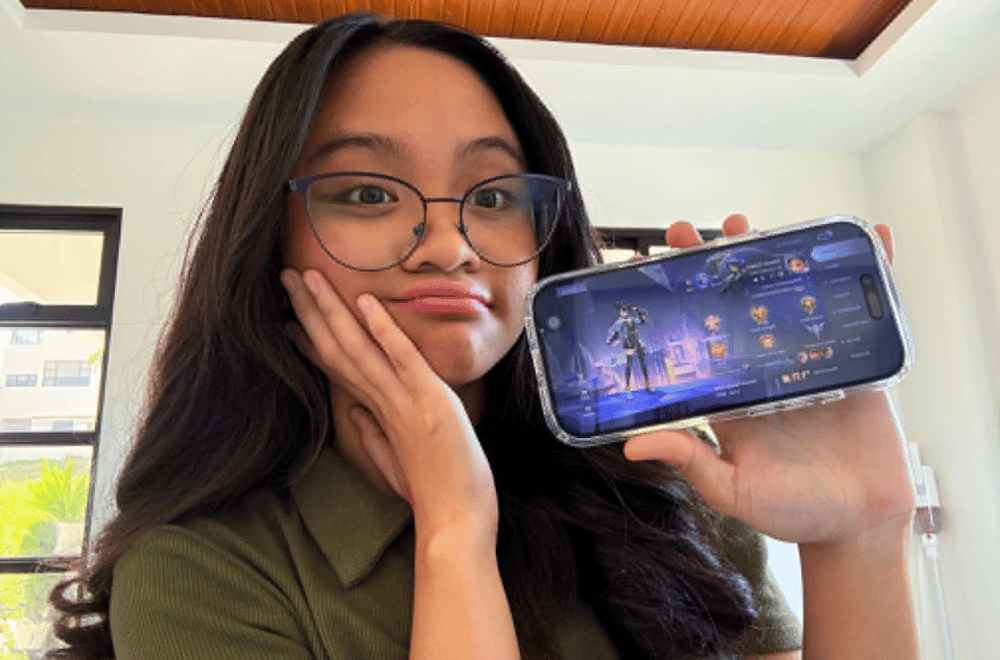
She is also an avid Mobile Legends: Bang Bang (MLBB) player.
Rather than existing in conflict, academics and gaming became two parts of the same journey — one built on discipline, balance, and knowing when each deserved her attention.
LOOK AGAIN
Ask someone to picture a Harvard scholar, and a competitive gamer is probably not the first image that comes to mind. Yet for Siojo, gaming never competed with her education. She began playing Mobile Legends during the COVID-19 pandemic after friends invited her to download the game so they could stay connected while lockdowns kept everyone apart.
"I said at first that I would delete it after a few weeks because I didn't want it to be a distraction in my studies," she said.
Instead, the game stayed. Today, she has reached Mythical Glory with 71 stars, was once ranked among the Top 4 Ruby players in La Union, and remains a fan of MPL player Salic "Hadji" Imam.
But those accomplishments have always come second to school.
"I just play for fun," she said.
NO CHEAT CODES
If there was a secret to balancing both worlds, it wasn't extraordinary intelligence, but routine. Weekdays belonged to classes, projects and exam preparation. Gaming became something to look forward to after responsibilities had been met.
"I didn't prioritize my hobbies," Siojo said.
She rewarded herself with matches after doing well in exams and turned to MLBB whenever she needed a break from reviewing. During weekends and school vacations, she allowed herself to play more. Far from distracting her, she said the game helped prevent burnout.
"It's also a way for me to connect with friends that I can't physically be with… ML is super helpful. It helps me not to get stressed,” she said.
MORE THAN A HOBBY
When Harvard asked applicants to describe themselves beyond academics, Siojo didn't hide the hobby many students might have left out. She wrote about Mobile Legends.
One supplemental essay asked applicants to share things their future roommate should know about them. Siojo mentioned being a mobile gamer and even joked that she hoped to introduce MLBB to classmates in the United States, where the game is far less popular than in Southeast Asia.
"I think it added personality to my application," she said.
She also wrote about gaming in applications to other universities and research programs. Rather than hurting her chances, she believes it made admissions officers see her as a more complete person.
"It didn't affect my image as an academic student who plays mobile games… I think it helped instead of being a negative point," she said.
Her academic credentials were already exceptional.
Aside from Harvard, she received an admission offer from Washington and Lee University, qualified for the University of the Philippines' Integrated Liberal Arts and Medicine (INTARMED) program, earned admission to National Sun Yat-sen University in Taiwan and De La Salle University, and was waitlisted by Princeton University, Amherst College, and the University of Notre Dame.
REWRITING THE PLAYBOOK
Conversations about gaming often focus on addiction, distraction, bad influence, or declining academic performance. Siojo believes the issue isn't the game itself.
"I think games aren't bad inherently… It's still up to the person if they have discipline and time management," she said.
She extends the same perspective to parents who remain skeptical of video games.
"I don't think it should be prohibited completely… It just needs to be managed," she said.
Ironically, her own family once shared those concerns. When she first started playing, her grandmother worried the game would interfere with school, while her older brother doubted she'd stick with it. Over time, however, they watched her maintain excellent grades while continuing to enjoy gaming in moderation. By the time Harvard's acceptance letter arrived, those doubts had disappeared.
THE NEXT LEVEL
Soon, Siojo will begin a new chapter at Harvard, where she plans to study chemistry while considering a double major in economics.
The university may be thousands of kilometers from home, but she hopes to bring a familiar part of her life with her, perhaps even gaming.
She believes her story ultimately isn't about proving that gaming leads to academic success, nor is it about claiming every gamer will become a Harvard scholar. Instead, it offers a reminder that passions need not be sacrificed in pursuit of excellence, as long as they are matched with discipline.
For students from the regions who wonder whether the world's top universities are within reach, or for young gamers told they must choose between their hobby and their future, Siojo's journey offers a different possibility: That students from the regions can compete with the world's best, and that gamers can also become scholars.
And that sometimes, what makes an applicant stand out is not pretending to fit a stereotype of success, but having the confidence to be themselves fully.
"Time management and self-discipline are the key… at the end of the day, we're still students," she said.