

 GMA Brandtalk
 Tracking
 Archives

ADVERTISEMENT
Filtered By: Lifestyle
Lifestyle
Chapter One: DOWNLOADING
This essay won 1st prize in the Kabataan Essay category of the 62nd Carlos Palanca Memorial Awards. A self-confessed bookworm, the author, Katrina Bonillo, discusses in this essay how she still prefers to read actual books even though e-books have become more popular and more accessible. This is because her parents have brought her up surrounded by books of all sizes.
My economics teacher in high school refers to my generation as "screenagers." We seem to get off on technology rather well, as though we can never be without them. It’s a sad, half-witted title to call us by, but she could not have justified that better. I can almost already believe that we 90’s babies have it rather easy. We seem to indulge in shouldering the e-commerce frenzy dating as far back to the day we were born, in which the knowledge of the dot-com bubble was loudly surfacing and the development of unusual gadgetries was stealthily progressing.
We not only differ from the previous generation which clawed through life with mostly books, but we also diverge from the next era which deals mainly with technology alone. I’d like to believe, that growing up, my batch of teenagers has had the best of both worlds: our parents laid down petty cash to allow us access to the best-selling writers in the paperback market yet invested in the trusty V-Tech to instill in us the logical wonders of literal talking pictures. So with the incursion of electronic books, our conflicting views about conventional education and inventive ways of learning most likely end up as never-ending debates.
I am one who "feeds his spirit with the bread of books." There is no shame in admitting that I have adorned a wall in my bedroom with shelves of priceless literature. From Andersen to Stine to King to Dickens, the world has survived different epochs which I came to read about. As an inquisitive child, I had viewed visits to the National Bookstore as a lovely stroll in the community park, where every title – novels, magazines, reference books – has to be selected and read cover to cover to earn their spot on my infamous wall. These books served as my pride as we schoolgirls spontaneously contested in collecting Goosebumps, Nancy Drew, Hardy Boys and Harry Potter. There is a riveting pleasure in seeing a forearm’s length of book binders flaunted right before your eyes.
My school textbooks, in which key contents have been highlighted for easier reference, never failed to make my traveling to and from school less comfortable. Despite the spacious schoolbag, they are usually seen tucked under the pubescent armpits on account of giving the impression that you are indeed "book-smart." In various situations, in bookstores and in libraries, flap jackets are unabashedly lifted so others can see your new John Green or David Levithan.
True story: two years ago, I artlessly participated in a writer’s open call, just for the thrill of it. The venue was filled with two hundred others, ranging from within the ages of twenty to forty, with most of them bringing along a plus-one. As a self-wary adolescent, the only thing I could uphold to barricade myself from incongruousness was to bury my nose in my WWE Magazine. And – what do you know? Someone actually noticed – the publication found me an instant friend!
Times alter as the world revolves. I have surprisingly found Booksale as an equally lovely trip to the park. Lately, more people, usually college kids who shop for their course books, have been joining me in it. A P315 Richard Bachman paperback in National Bookstore is a P170 Stephen King hardbound in Booksale. And a lot of people, including me, enjoy this kind of retail. Good books, cheap prices. Which, brings us to our next point. 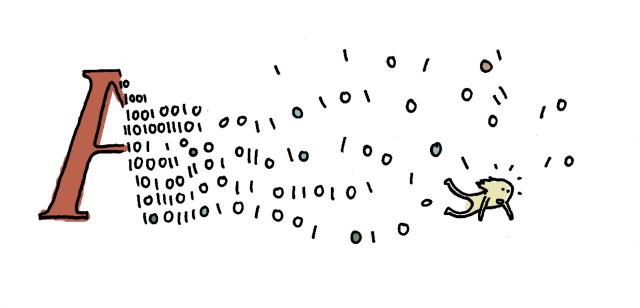
There seems to have been e-book frenzy in my mental feed for quite some time now. My sister enjoys them on her Samsung Galaxy phone, and my friend, Zane, enjoys creating them for online purchase. This is literature put up on the internet at a price cheaper than the actual text – or according to another one of my friends, for free, "provided that Google specifies." Light, efficient, original – these are the trifecta of an e-book, whose epub’s, pdf’s, rtf’s, txt’s can create a freaking library for the substantial iPad. The beauty of these electronic books, according to its very own father, Michael Hart, is that they are the "very first things we can have as much as we want other than air," ergo, making it the innovative union of literature and electronic revolution. Sounds romantic. And what with the Mr. Hart’s ironic Gutenberg Project, we can access 36,000 literary titles online for free!
Yet another true story: a college student finds her dissertation due in a month. She attends a seminar regarding the project and learns a good deal from the visiting lecturer. After the colloquium, she finds time to speak to him about his book. Unfortunately, it still isn’t available in the country, but he could put up an electronic counterpart, if she would be fine by that. Why not? The student approves, downloads the e-book, and in a span of two weeks, she finishes her thesis.
Some years back, I was introduced to my first e-book, a Tom Sawyer, which ending I never reached, thanks to the tablet‘s battery continually draining. However, it was a cool, new familiarity, in which every chapter became just a literal click away. I have downloaded very few e-books since, mostly English versions of Jose Rizal’s works, or any other document that could aid in my learning.
The deal with e-books is that they are useful, effective, and fresh in the market. How awesome will it be to walk in campus with a Nook in hand instead of an actual textbook? Don’t even get me started on traveling. Less, weight, more choices right? Is there a time possible at any given day when we’d simply call ditching the binding and padding and the entire process of publishing practical? Isn’t it reminiscent to the time audio books came into focus (remember the number of busybodies whopping for that?)?
Another true story: in early 2000, a well-known writer made publishing history when he sold his novel, "Riding the Bullet," in the electronic market. Suddenly, it was the next big thing since the Gutenberg Press with hundreds of thousands of people downloading the e-book. Clienteles, bibliophiles, and magazine companies who took no notice of him before grew interested altogether. He didn’t even intend for it to succeed as much, but he was getting recognized for that piece of art. I wouldn’t say, though, that Stephen King enjoyed the process – truth be told, no one even cared about the story!
Our curiosity gets the best and the worst in all of us. It is interesting to observe that many of those who carry a Kindle in their pocket are the ones who have not in actuality read a book before. It seems that the public’s main concern goes only to the extent that the market comes up with something new, which in Mr. King’s case, is telling a story in electronic package. My parents can tell you all about their college heydays, when they understood their textbooks with every fiber in their body and stuck to the library until the wee hours of the morning to get through their dissertations. It didn’t do them (much) damage.
I’ve since believed that putting a great piece of work on a computer screen diminishes the meaning of words. This not only chops off the entire process of publishing, which provides humans with the exquisiteness of books as they are: the nostalgic smell of ink on paper and the binding that weaken in time; it ceases the existence of Johann Gutenberg’s most wonderful contribution to this life. And, if all those were to happen, the craft of writing itself will be ebbed in fragments, and the world will be left with a cold, factual paragraph.
Inevitably, human nature will find ways to develop more innovative technology that must scream "buzzworthy" in the electronic world to get accepted in the real world. E-books are an integral part of education in the sense that people, not just writers, but of different professions – teachers, chefs, entrepreneurs, and even ordinary students – can present their craft in a different perspective. But the day that books will be dehumanized and completely abandoned by world populace, even for educational purposes, will be the day that I will lose interest in reading.
Losing my place in "To Kill a Mockingbird," spilling some apple juice on page 5 of "17 Magazine," losing a section of "The Philippine Star," or carrying with me "Grammar and Composition 4" every day for the past year certainly did not take out the enjoyment out of reading these texts. In fact, those incidents taught me to handle literary works with care. That much I can tell you.
A book is a medium of art. At this point, I don’t believe that I will ever be ready to lose its objective: an idea passed on to paper to dwell on the opinion of another’s. I’d like to believe that the reality of books is immensely powerful. Because while most can say that a particular manuscript has changed their life, I don’t think the quality and the existence of an e-book will deem the same reaction.
I’ve talked to my friends about e-books and the possible eradication of books as we know them. And while some are neutral about it, others, like me, remain indifferent. Okay, so e-books are cool. Call me old-fashioned, but this screenager very much prefers holding an actual book than a tablet. And with our generation momentarily taking on vintage cultures (60’s threads, 80’s music, and 19th century literature, among others), 70% of us will testify that we’d rather put their faith in actual books. That’s how I grew up loving words. It’s how I’d like to keep on learning.
The pleasure of reading books in itself is unique: an expenditure that one simply cannot delete or download in a handheld screen. I am one with the encouragement to read the printed word, which in all cases, is like a pillar of education that touches all aspects of our existence when exposed to its depth. Books are indeed uniquely portable magic; they only work well when we really feel the words printed on the pages. They’re good like that. This is why they are still and will forever be significant in our education. They are our culture. They are our history.
Katrina Bonillo is a 16-year-old AB Journalism freshman student at the Colegio de San Juan de Letran. Her father works as a seaman while her mother is a businesswoman. She has four siblings, including a twin sister who also studies in Letran.
Illustration by Manix Abrera
Published with permission from the Carlos Palanca Memorial Awards

