

 GMA Brandtalk
 Tracking
 Archives

Cate Blanchett, Hugh Jackman and Allison Janney talk about how they are coping with COVID-19
Los Angeles — On these days of lockdown and self-isolation, allow us to start a series of conversations with some of Hollywood’s top actors and actresses on how they are coping.
For this first part of the series, we have Hugh Jackman in New York and Allison Janney in Dayton, Ohio who are both featured in the comedy drama “Bad Education” and Cate Blanchett who is in the new TV series, “Mrs. America,” and is now living in East Sussex outside of London, ever since she and her husband, Andrew Upton, adopted daughter Edith, now 5.
Below are excerpts of our conversations with each one of them:
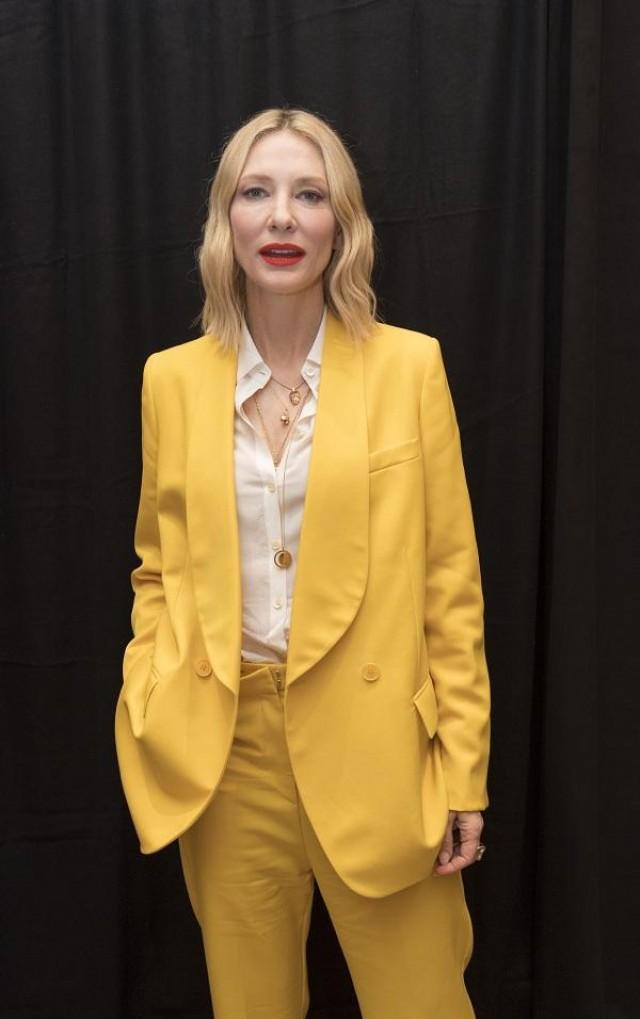
Cate Blanchett
_(1)_2020_04_19_12_25_39.jpeg)
Can you share a little bit of what this experience has been like for you all?
We are in the country where we live, but yes, we are self-isolating like everybody and it’s very difficult. And I think we are all in it together and some of us are in more perilous positions than others but I think what is revealing to all of us is that viruses don’t recognize international borders and this notion of nation building is a bit spurious really in the wake of a pandemic.
And it’s also revealing something which we need to do something about as we emerge, which is the systems we are living in are very fragile and it’s pointing out the cracks in those systems. We need to work together with our governments to make sure those systems are fixed so that their citizens are very well served should this happen again.
But I am in awe of the people who are, I was just talking to a friend in Queensland and the nurses and doctors on the front lines there and it’s terrifying for them. They have got children of their own and families of their own but they are so committed and I have profound respect and empathy for the position that they are in and gratitude for their service.
Can you talk about why the Australian government needs to step up funding to support the arts during the COVID-19 crisis?
Well it all began, with folding it into roads and rail. When people emerge from this, they are going to want to gather, they are going to want to talk about this, they are going to want to have communal experiences, and that is the foundation of human culture.
It’s painful to me that the profound talents and skills that lies in Australia, it always gets appreciated internationally, but I feel that our governments don’t really appreciate it internally.
It would be a life line to people as we emerge, on top of which, it’s a multi-million dollar industry and you talk about the multiply on set, the economic principles, it’s not just when people go to the theater, it’s the restaurants, it’s the bars, it’s the street life, it’s the taxi services, all of those things that benefit in a multiplier effect way, from the arts. So there’s a lot of tourism. That’s why people come to a country. They don’t just go to see landscapes. They also go to experience the culture. So I think it’s going to be an incredibly important industry always, but certainly as we emerge from this pandemic.
Everyone is staying at home now and watching TV. What are you watching these days?
Well television has had a profound influence on my childhood. And a lot of the television I consumed, whether it the heydays of British television and American television, I didn’t consume a lot of my own Australian television, so I’d come to that late.
But I tend to be a bit of a binge watcher, getting obsessed with certain series and I love limited series. And recently, because our youngest hadn’t seen it, we went back to the seminal days of “The Sopranos” and went back to reverse engineer that experience. That was really exciting to go back and re-experience that with our youngest son, because just of course as a viewer, you absorb these influences, but then you don’t realize how.
I watched Lars Von Trier’s “The Kingdom” again with our oldest son and I re-watched “The Decalogue,” which is one of my all-time favorite pieces of television. So I think I’ve been going backwards in time because one can commit virtual suicide, there’s so much to, the fear of missing out is so great because the amount of product at the moment is so huge. So yeah, I have been going backwards in time I think rather than going forward.
We are all at home, killing time, and finding things to do. Have you started doing something that you have always wanted to do for a long time?
I think I am not alone here, but the only opportunity in this crisis, which is so painful and so difficult for so many, is to be authentic and to take stock of where one is.
I was just talking to someone the other night about listening and being quiet and sometimes you need to just be quiet to hear the kind of the lower rumblings of what is going on between us. So we are trying to keep things very simple.
Obviously we have got four children and my eldest son’s exams have been disrupted, which as a parent, I am sure a lot of people relate to this, is just at the point where you want them to taste life and think that anything is possible for them. They are struck by these profound limitations of mobility and opportunity and it seems endless to them.
So we are just trying to keep things simple. We are going for walks when we can. A friend of ours started this thing called “Isolation Art School” on Instagram and it’s absolutely fantastic, Keith Tyson. And it’s so ground based and you go on there and it’s great and we get a lot of ideas there.
What did you tell your children about this coronavirus and how was your life changed?
None of us know how long this is going to go on for, and we said that this is a virus that would probably, because they are young and healthy, it probably wouldn’t affect them. But their grandmother is 80 years old and it probably would affect her. So we need to behave in a way to protect people like her and workers and people of the NHS and people in other countries.
Because I think the thing that we have been talking about here a lot is the way you can’t just look at the statistics in England, because you are living in England. You need to know what’s happening in France. You need to know what’s happening in Australia, America, Germany, Japan and all around the world. So we have been talking a lot about how connected we all are and how responsible we all are for each other’s well-being.
Allison Janney
_2020_04_19_12_08_34.jpg)
You look gorgeous today.
You know what, I did my hair for you. I haven’t washed my hair in about three weeks and I actually washed it. And my father looked at me and said who are you? It felt good to clean myself.
How are you doing these days?
We all are hanging there, just trying to breathe every day. And I went out running today, it was good. I tried to get out and get some fresh air and keep my head clear and look up at the sky and look at the flowers coming up in the spring. They give me hope. But anywhere I can find a little bit of hope is, it eases the pain a little.
How has your life changed in this quarantine?
You know, it has completely changed. And the silver lining in this crazy time is that I am — my mother needs me right now and I am able to be with her. And that is everything to me, to be with my mother who needs me and I am going to be with her through this pandemic and take care of her and my father too. My father is doing much better than she is, but to be able to be with her, to take care of her, is the best work that I can be doing right now and I am grateful that I was able to get here.
Where are you right now?
I am in Ohio, which is where I grew up — here in Dayton, Ohio. And I have been wanting to do more. You so want to help in more ways and I sent some videos to some friends of mine who are on the front line, doctors and nurses and sent them encouraging videos and telling them just what heroes they are and how they are going above and beyond the call of duty and putting their lives on the line for all of us. And it brings you to your knees, to think about the sacrifices that people make and that they are making during this horrible time. But the strength of humanity rises up in moments like this, it’s very moving.
Hugh Jackman

You said that we need to be connected and do things for others which is really what we are living in today.
One hundred percent — this thing has hit the entire planet. Everyone on this planet has been forced to stop and really look at things. I do think that this is an opportunity for us to reach beyond our habitual lives that we had been living and the plans I had and this is what we are doing and this is my community and this is my country.
We have to think globally and every person, I am just so humbled by doctors, nurses, firemen, policemen, garbage people and men and women who are going out every single day, risking their lives to do their jobs so that we can be at home. So in any way we can I think help, connect and reach out to people and that in a way is hopefully the silver lining on this really, really dark cloud.
This movie, “Bad Education,” is going to be seen around the world on television. Can you take us to your TV room and your relationship to TV?
The greatest thing that has happened to me in the last three months is that I got glasses. We sit down in the family room and I annoy the kids. I have an ironing board there. I do the ironing whilst I watch a lot of TV, unless it’s something that I really need to pay close attention to. And the kids sit around or they ignore us. They are 14 and 19, but I am certainly watching more TV than I normally do.
But I just got glasses and I knew I needed glasses for distance, and I was thinking TV is not distance. So for years I’ve been watching TV thinking that’s the way TV is. And I put on the glasses and I had no idea how good TV is. Because I wore them to the cinema so I also wore glasses watching TV.
And what are you watching on TV these days?
I just watched “Unorthodox” which I really, really enjoyed. I am trying to watch as much classic film as I can. I am actually doing a film class right now which I highly recommend to anyone.
You probably know Annette Insdorf, who does a lot of the moderated talks at 92nd Street Y. And she’s the professor of film at Columbia. So I do an online. She allows me to sit in on the Columbia Masters program course.
We just watched “A Separation” today and literally I just got off 15 minutes before this. We watched a 1942 film “To Be or Not to Be,” the old Carole Lombard/Jack Benny movie. So I’m trying to catch up on those movies that I would be on set and people would talk about and I would just sort of be quiet because I was embarrassed I hadn’t seen them. And I thought well there’s no better time to see it than now.
So as I watch TV, I am trying not to just mindlessly watch stuff that passes the time. However I am watching “The Test,” a documentary series. My mate the other day made me laugh. He goes, man I am watching “The Wire” and I said oh yeah “The Wire,” because he said his wife was in isolation for 40 days, she had come back from England or Australia. Yeah I am watching “The Wire” he goes, I loved it man, I watched the whole thing. I said that’s a lot of TV, and he goes, 80 hours. He goes 10 days, eight hours a day. — LA, GMA News

