

 GMA Brandtalk
 Tracking
 Archives

ADVERTISEMENT
Filtered By: Cbb
Community Bulletin Board
Maternal Health Summit aims to help mothers get better care
United Laboratories Inc. (Unilab) and the Quezon City government have partnered to hold the country's first local government unit-based Maternal Health Summit, in a bid to help reduce the incidence of maternal and child deaths in the city.
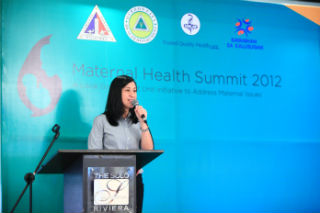
Quezon City Vice Mayor Joy Belmonte throws her full support to the Maternal Summit 2012, the first local government unit-based initiative to address maternal issues led by the Quezon City Health Department and United Laboratories, Inc.
During the summit, the Quezon City Health Department (QCHD) and the Quezon City Maternal Health Council (QCMHC) provided reports on the current maternal care situation in the city, using data from both the local government and private hospitals.
According to the QCHD, maternal mortality rates in the city have been on an increasing trend from 2008-2011, with the number of deaths in 2011 reaching 43, from 17, 32, and 33 in 2008, 2009, and 2010, respectively.
The majority of these deaths were a result of pregnancy complications during labor, delivery, and the post-partum period. The most common causes of death included post-partum hemorrhage, hypertension, maternal malnutrition, unsafe abortions, severe infections and other medical complications resulting from poor birth spacing, and other infections such as tuberculosis, diabetes, and chronic hypertension.
In terms of deaths of children under five years old, QCHD records showed that in 2010, there were 455 neonatal deaths for a mortality rate of 10.41, 908 infant deaths for a mortality rate of 21, and 361 child deaths for a mortality rate of 1.12.
Quezon City has one of the highest numbers of maternal and child deaths in the country.
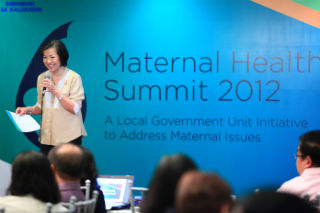
Dr. Antonieta Inumerable, Chief of the Quezon City Health Department, presented the current local maternal health situation and unveiled the components of the QC Maternal Health Program.
To help arrest these trends, the Quezon City government has tied up with Unilab for a number of intervention activities, mostly focused on the education of barangay health workers, public and private midwives, traditional birthing assistants or hilots, and mothers themselves.
Through Unilab's Bayanihan sa Kalusugan program, the QCHD has rolled out programs to strengthen the capability of the city's 62 health centers located all over its four political districts. The training provided went beyond barangay health workers to also include private and public midwives, through partnerships with the Professional Regulatory Commission and other relevant organizations. A program to help hilots transition from their current line of work to alternative means of livelihood was likewise implemented, starting with the holding of a Hilot Assembly in June 2011.
According to QCHD data, the number of home deliveries performed by hilots drastically plunged from 15,943 in 2009 to only 5,072 in 2011. This number is expected to go down even more as the Quezon City government strictly enforces City Ordinance No. 2100, S11, or an ordinance regulating the operations of birthing homes in the city.
With this ordinance, the Quezon City government ensures that private lying-in clinics and birthing homes strictly comply with the city's requirements, which can then qualify them for PhilHealth accreditation. There are currently 102 private lying-in clinics operating in Quezon City, but only 29 of them are PhilHealth-accredited.
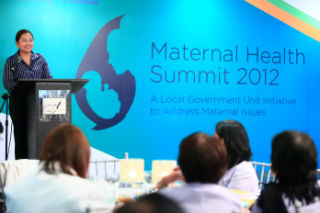
Claire de Leon-Papa, Unilab’s External Affairs Director, discussing the commitment of Unilab for the Maternal Health Summit 2012.
In support of this ordinance, Unilab and the QCHD jointly developed a city-wide referral system that will ensure that mothers going to lying-in clinics to give birth are given sufficient care and attention. Clinics and hospitals will have to fill out referral forms containing information such as the PhilHealth membership of the mother and her dependents, interventions provided, and other information relevant to the case of the pregnant mother pertaining to her delivery.
All hospitals are likewise required to submit monthly maternal death reports, which should contain the deceased patient's name, complete address, date of confinement and death, place of death, admitting diagnosis, and final diagnosis.
This referral system is a breakthrough in the country, as lack of communication, coordination, and standard protocols have contributed to the rise in the number of maternal and child deaths.
“Unilab has been working with the QCHD since 2008 to address urgent concerns on maternal and child health. It is our desire to strengthen the capability of health centers to deliver efficient health care,” said Dr. Antonieta Inumerable, Chief of the Quezon City Health Department. “Together with Unilab, the QCHD aims to develop long term and sustainable solutions to address and child health issues, where all concerned stakeholders play an active role. Lahat gagalaw, lahat may pananagutan. Only through multi-stakeholder cooperation can we really reduce the incidence of maternal and child deaths in the country.”
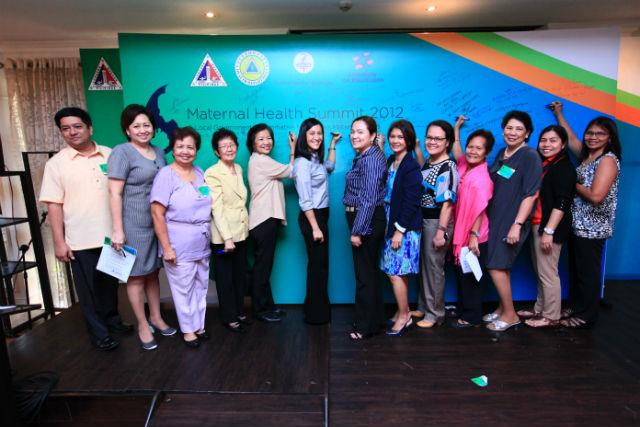
(L-R) Dr. Reinhard Dalumpines, DOH NCR Region Family Health Cluster Head; Dr. Digna Datu of Novaliches District Hospital, Ms. Rufina Jurilla of the Integrated Midwives Association of the Philippines; Dr. Remy Dequina of the PRC Board of Midwifery; Dr.Annie Inumerable, QC City Health Officer; Quezon City Vice Mayor Joy Belmonte, Ms. Claire Papa of Unilab External Affairs; Dr. Pilar Lagman-Dy of East Avenue Medical Center; Dr. Menefirda Reyes of St. Luke’s Medical Center; Dr. Alice Lim of Bernardino General Hospital; and private midwives from the QC Private Midwives Association.
Dr. Inumerable said the Quezon City government will continue to work together with public and private stakeholders such as Unilab to ensure the health of its mothers and children.
“We have taken a strong position to help protect our city's mothers. The efforts that we have started will not just fizzle out. We will continue to come up with more workable, sustainable solutions to the problem of high maternal and child mortality rates. Together with partners such as Unilab, we are confident that we can meet the Millennium Development Goal of significantly improving maternal health by 2015,” Dr. Inumerable said. Press release and photos from United Laboratories Inc.

