

 GMA Brandtalk
 Tracking
 Archives

Fairwork Philippines 2025 Report: Gig workers unprotected amid extreme weather risks
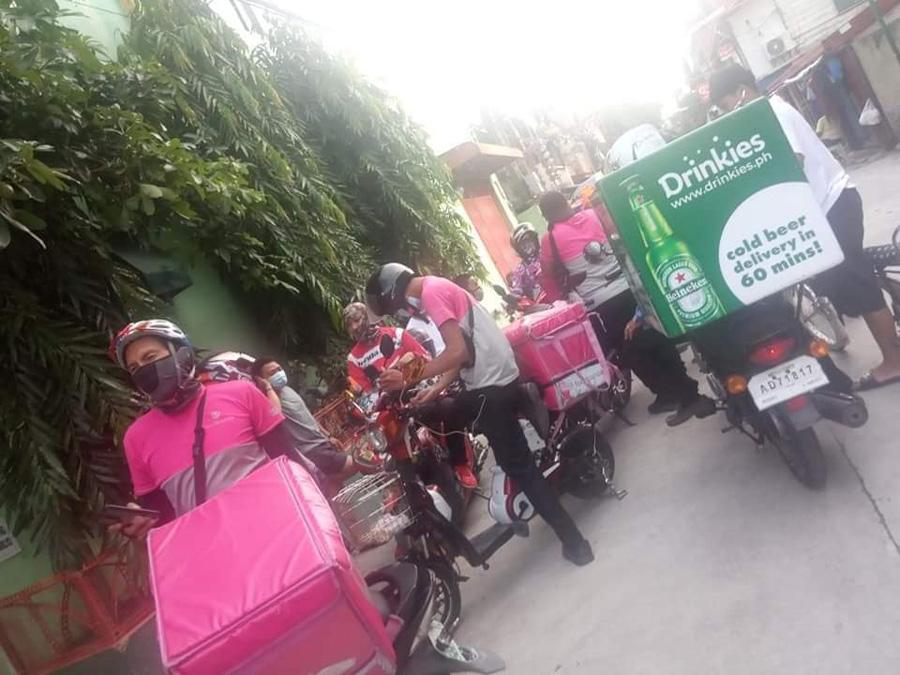
Fairwork Philippines (Fairwork PH) launched its 2025 report, “ Labour on the Edge: Riding Through Extreme Weather and Precarious Labour ” on 30 September 2025 at Room 1403, Bro. Andrew Gonzalez Hall, De La Salle University - Manila.
The Fairwork 2025 report evaluated nine major platforms in the ride-hailing and delivery sectors,
namely: Angkas, GrabCar, GrabFood/Express, Foodpanda, JoyRide Car, JoyRide MC Taxi,
Lalamove, Maxim, and Move It, against the Fairwork principles of fair pay, fair conditions, fair
contracts, fair management, and fair representation. Interviews were conducted with workers
from Metro Manila, Rizal, Cavite, Laguna, Bulacan, Pampanga, Cebu, Bohol, Davao, and Iligan.
Fairwork PH examined the growing precarity of platform work amid worsening climate
conditions in the Philippines, which has consistently ranked as the most disaster-prone country
in the World Risk Index report.
Dr. Cheryll Soriano, Principal Investigator of Fairwork PH, presented the highlights of the report,
noting that in the third research round, there remains little improvement in the working
conditions in the platform economy, with the Fairwork league table representing generally low
performance.
She said, “Platform workers across the country are exposed to harsher working conditions exacerbated by extreme heat or heavy rains and flooding, but still with limited social protection."
"All the burden, not just the basic costs such as fuel, mobile load, or vehicle maintenance—but also, given the recent typhoons and floods—to get their vehicles repaired, or to recover from illnesses and accidents, is shouldered by the workers,” she added.
The lack of support from platforms leaves workers to make do with whatever resources they can afford, especially since inclement weather tends to incentivize workers to keep accepting gigs. While platforms gain as demand increases during such conditions, workers continue to shoulder the additional costs and the risks to their lives and vehicles.
She adds, “When they can’t go out as vehicles are damaged, fall ill, or just to avoid extreme heat or waist-deep floods, workers still have to pay vehicle loans, and sometimes unforgiving boundaries to operators.”
The report further emphasized how opaque algorithmic management fails to adjust task allocation and performance monitoring during climate-related disruptions, compelling workers to continue working even under high-risk conditions. As workers persevere through harsh weather conditions, the need for social protection becomes crucial.
The International Labour Organization (ILO) agreed to negotiate binding standards for platform workers, with the Philippine government taking an active role in an upcoming convention.
Locally, protests staged and legal actions filed in different provinces have also borne some fruit
with wins in local courts.
Amid the context of such policy developments, Atty. Jayvy Gamboa, Fairwork PH Legal Consultant, summarized the report’s policy implications.
He said, “The fundamental issue—which is acknowledged even in the Labor Advisory—is whether platform workers have an employment relationship with the platform. This remains the threshold
question in the country that will shape how rights and protections are applied.”
Nonetheless, he also emphasized, “There are some lower-hanging fruits that platforms and the government can pursue to respond urgently, among them:
? Onboarding procedures, including orientation, must have a distinct module on
responding to weather events, such as proper precautionary measures as well as
localized risk mapping.
? Climate-related income support, whether framed as hazard allowances or compensation
for weather-related disruptions, is especially critical for women workers who also
shoulder caregiving responsibilities.
? Protective equipment should be provided as a standard “basic kit” at no cost to workers.
This kit could include raincoats that meet occupational safety standards (for both
passengers and workers), gloves, and boots for heavy rains or minor flooding, as well as
ventilated jackets to reduce heat exposure.
? Availability of parking spaces and waiting areas in local business establishments, with
permission for extended stays during periods of extreme rainfall or heat. Additional
provisions— such as drinking water and access to toilets.”
Overall, the team argued that there should be tailor-fit occupational safety and health considerations for platform workers that also account for the harsher weather conditions – their context of work– that will only worsen in the coming years.
The event featured a policy dialogue, bringing together government officials, workers’ leaders,
civil society representatives, the media, and academics to discuss how to move forward.
Kirk James Gonzales of the National Union of Food Delivery Riders (RIDERS), summarized their
demands, “Kung ano man pong status—empleyado man o contractor—ang mahalaga po sa amin
ay guaranteed na kita at comprehensive insurance na sagot ng platforms. Para hindi namin
kailangan magbabad sa apps at kalye ng 15-18 hours dahil sa hindi siguradong bookings at
sumugod kahit kasagsagan ng ulan o init.” (Whatever status–employee or contractor, what’s
important for us is guaranteed earnings and comprehensive insurance because of the risks we
face everyday. So that we won’t have to stay on the app and on the road for 15-18 hours due to
uncertain bookings and risk our lives during extreme weather.)
Karol Ilagan, journalist and Assistant Professor at the University of the Philippines, called for
algorithmic transparency from the platforms, lamenting that amid the growing labor population
in the app-based ride-hailing and delivery, the mechanisms of pricing and algorithmic
management that determine workers' earnings, incentives, or bookings—which essentially
impact their conditions of work—remain hidden and unscrutinized. She further said, “We should
ask who really benefits and who bears the costs in platform work”.
Professor Virgel Binghay, Fairwork PH Co-Investigator and Professor at UP School of Labor and
Industrial Relations emphasized, “[it is] urgent for the government to ensure the auditability of
the platforms’ technology-based labor management processes. As government agencies’
mandates on who should be responsible for inspecting and auditing these platforms’ labor
management mechanisms are ambiguous, we need to bring multiple government agencies into
conversation and further dialogue.”
Julius Cainglet of the Federation of Free Workers added that we can learn from the gains of the
past as we confront the issue of platform work: “We can build on our wins this year in unionizing
workers for purposes of collective bargaining.” Since the PH government is at the helm of the
Standards Setting Committee of the ILO, Cainglet said, “we can apply the lessons of the past
leadership of the country in the adoption of the International Labor Convention on Domestic
Workers, which eventually ushered in the passage of the Kasambahay (domestic workers’) Law.
This means we should make meaningful policy reforms for Filipino platform workers before we
can call on the rest of the world to do so.”
He added, “we should also consider the workers across the entire supply chain—those working in the warehouses with the poorest ventilation and dirtiest comfort rooms, as well as in the restaurants where the orders come from. The Philippines needs to step up as it chairs the ILO Standard-Setting Committee on the Platform Economy”.
Atty. Ma. Felichie Ericka P. Valeriano of the DOLE–Bureau of Working Conditions shared that the Labor Department has taken proactive steps to create international standards at the ILO and ASEAN levels to fulfill its mandate of ensuring workers' welfare.
She noted that the Philippine Labor Code, now 51 years old, urgently needs updating to address the complexities of platform-mediated work. When asked about the most urgent response needed, she emphasized the importance of passing a bill that would clarify the employment status of gig workers.
Such legislation, she explained, could facilitate easier access to benefits and social protections, and reduce the need for disputes to be filed before labor tribunals.
When asked about the most urgent response needed, she emphasized the importance of passing a bill that would clarify the employment status of gig workers. Such legislation, she explained, could enable the proper alignment of their benefits and social protections with occupational safety and health standards—including provisions such as heat stress insurance, health and accident coverage, and vehicle protection.
As the platform economy continues to expand, the looming risks posed by extreme weather
conditions in the country call for a multi-sectoral approach to promote worker-centered reforms.
Central to this is the enactment of laws that will recognize platform workers as employees,
ensuring their entitlement to statutory benefits and social protection.
For their part, platforms can promote decent working conditions by providing safety equipment, establishing clear operational guidelines during extreme weather, and offering reliable support for workers in times of emergency.
Moving forward, Fairwork PH aspires for its reports to translate into tangible changes that will
promote a fair and decent working environment for platform workers.
At a time when platform workers are helping to fill significant gaps in the transportation and logistics sectors, it is incumbent upon both the government and the platforms to ensure that these workers are not treated as disposable or left continuously at risk amid worsening weather conditions.

