

 GMA Brandtalk
 Tracking
 Archives

ADVERTISEMENT
Filtered By: Lifestyle
Lifestyle
Unmasking Japanese Noh in a time of Hollywood and reality talent searches
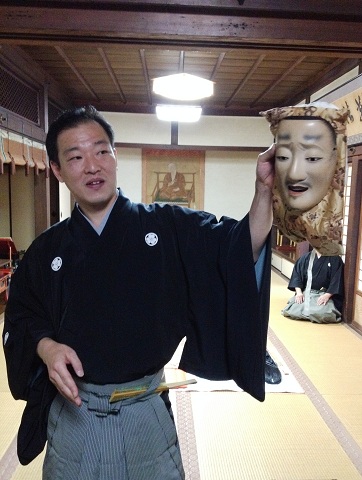
For traditional Japanese actor Kozo Nagayama, Noh is a way of life that involves discipline, humility and hard work.
It is refreshing, therefore, to watch in the time of Hollywood dominance a centuries-old performing art that highlights the acting more than the actor. So much is the focus of the traditional Japanese drama, Noh, in the performance that actors cover their faces with ancient masks, which allow them to be seemingly possessed by the characters represented by these artificial faces.
Unlike current celebrities who bank on their marketability, a Noh star is both born and made. Many of those who perform this classical musical drama do so because they joined the centuries-old family business—being descended from those who first showcased this art to shoguns over 650 years ago. This art has been passed down from generation to generation for such a long time that the United Nations has named it one of the “intangible cultural heritages of humanity.”
Forty-year-old Noh Master Kozo Nagayama, for instance, belongs to his family’s fourth generation of performers. He compares himself to the chief executive officer of a family-run business, who must make sure that his craft will be passed on to the next generation.
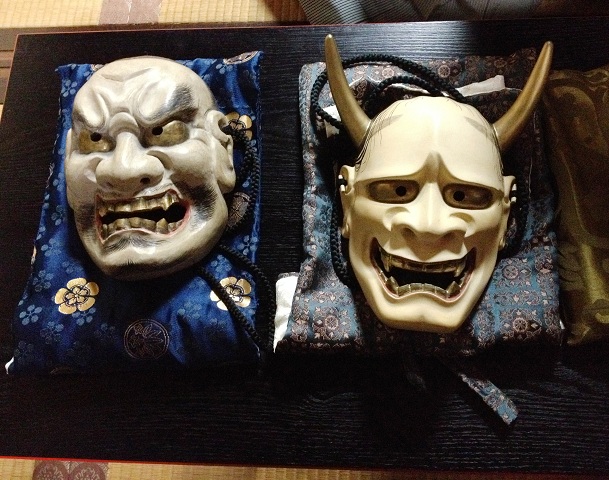
The sinister masks of traditional villains in the ancient Japanese theater form of Noh grimace up at reporters during ASEAN week in the city of Sakai in Osaka.
Nagayama and his fellow Noh actors go to the serene Takakuraji temple in downtown Sakai City twice a week to practice their performances. They try to perfect their chants, which sound deep, solemn and other-worldly. The vocals are accompanied by the high-pitched sound of the fue (flute).
During a full Noh performance, eight people form the chorus group, and three different drums are used to heighten the tension of the atmosphere.
The Noh performers also rehearse their movements, which are very calculated and refined. A particular mask also calls for very specific movements, adding to the complexity of this craft. A mask depicting the face of the devil, for instance, requires sharp and aggressive movements to effectively portray the villain.
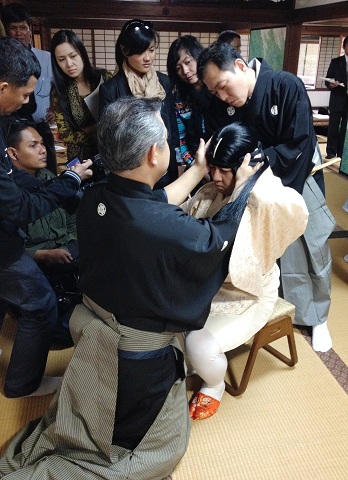
Nagayama and his colleague transform his jolly enthusiastic male student into a timid Japanese woman who lived centuries ago for a Noh performance.
One of Nagayama’s students, for example, transformed from a jolly middle-aged man to a sentimental and modest lady with a timid smile when he put on an ornate robe and a mask.
For Nagayama, however, performing Noh is more than just an art. It is a way of life. Because the art has a lot to do with the Buddhist Zen philosophy, Nagayama said it is important for Noh actors to live a clean life, to enable their bodies to be fully engulfed by their characters once they are on stage.
“To be able to have a beautiful performance, you have to live a beautiful life as well. You have to have a good life to perform well. Noh is connected to life itself,” Nagayama said in Japanese.
Although already considered among his ranks as a master of the art, Nagayama also believes that he has more to learn about his craft. In fact, he views perfecting his art as a life-long challenge.
“I don’t believe I am a master. I am still learning. I am in the process of being a greater performer than I am now,” the Noh master said.
Perhaps the current entertainment industry can learn a thing or two from Noh about hard work, discipline and humility, which are inherent to this craft. At the end of the day, a successful show should really be more about the performance, and not the performer. — BM, GMA News
The media tour for the 2013 Sakai ASEAN Week was organized and sponsored by the city government of Sakai in cooperation with several private groups.

