

 GMA Brandtalk
 Tracking
 Archives

ADVERTISEMENT
Filtered By: Lifestyle
Lifestyle
The colorful imagination of Maximo Oliveros in ‘Maxie The Musicale’
(Warning: spoilers ahead)
Maybe what made all the difference was the set or the fact that it was in a musical format, but "Maxie The Musicale" is most definitely "the movie, but not the movie." Changing hues according to Maxie's moods, the set seems like a character in the story.
The story based on Auraeus Solito's coming-of-age independent film "Ang Pagdadalaga Ni Maximo Oliveros" (The Blossoming of Maximo Oliveros) portrayed Sampaloc, Manila through Maxie's colorful imagination.
The set of the mind
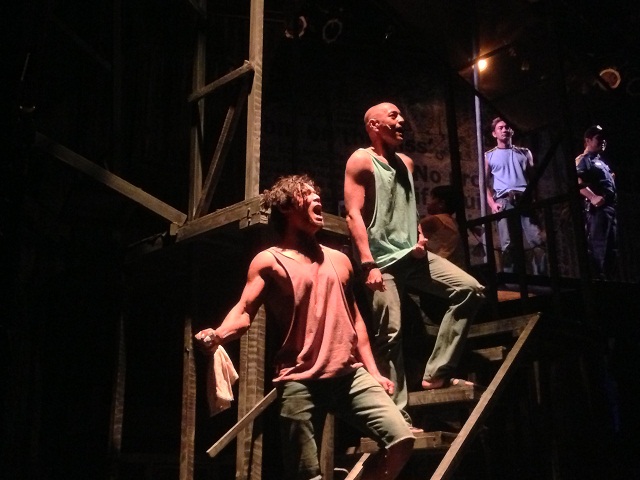
 The set had gray overtones, but it was colorful. The multi-level heart-shaped stage was made of what looked like galvanized iron. On each side were stairs made of silver-painted wood, with moving screens as walls. Below them were unused boxes, tires, large water containers, and a small sari-sari store.
Meanwhile, the bridge-like pathway on the second floor was designed with tabloid images as a backdrop because it is "a good representation of what the world feels like," according to production designer Gino Gonzales. They maximized the small stage by placing the band at the back, silhouetted by what looked like a dark alley.
Their depiction of a Manila slum represented Maxie's feelings and emotions—it showed how the protagonist saw his environment: a colorful yet gray place. With each event, the lights changed from purple to pink to yellow, like when Maxie was on cloud nine when he kissed Victor. When he felt down, the set reflected the opposite as the lights turned dark.
Character changes
 The stage version was faithful to Michiko Yamamoto's screenplay, with emphasis on other important events that made "Maxie The Musicale" a show worth watching.
The songs were close to what the world is hearing on the radio now—a mix of novelty, rock, pop, rap, and birit songs—while the movie soundtrack featured a kutiyapi, a two-stringed musical instrument in Mindanao.
The characters in the musical mirrored the personalities in the movie. Victor (Jojo Riguerra) was this noble cop who formed a deep friendship with Maxie (Jayvhot Galang), the show's protagonist. Then there's Paco (Roeder Camañag), the loving father, and his two brothers Boy (OJ Mariano) and Bogs (Jay Gonzaga), who all care for and protect Maxie.
Everything else was the same. The story begins one morning around Christmas time in Sampaloc, Manila. The people greet the morning with a song about waking up and surviving another long day; inside the Oliveros abode, Maxie is almost finished preparing food for his loving father Paco and older brothers.
 He also has divas for friends: Nar (Aaron Ching), Maxie's ever loyal, flirty, and funny best friend; Leslie (Nomer Limatog Jr.); and Monique (Teetin Villanueva). They all accompany him while watching pirated movies at Mang Axel's home-turned-theater house. There's also Nate (Eo De Guzman), who in the stage version was paminta (hiding in the closet) in the most flamboyant manner possible.
Moreover, the stage version somewhat romanticized the friendship of Maxie and Victor. The cop was fond of Maxie's genuine and kind personality, which led the audience to question his sexuality. Although it was not clear whether Victor is gay or not, his attachment towards Maxie, in context, proabably meant he saw him more than just a friend.
"Maxie The Musicale" also highlighted the gay beauty contest or "beaucon" where Maxie and his friends prepared their costumes, talents, and their answers to the Question and Answer portion. However, in the film, they simply went to a dress shop and borrowed extra fabrics to make gowns.
A death turned around
 Paco's death was also changed. After a cat-and-mouse chase, Chief Dominguez (Greg de Leon) together with Victor, cornered Paco. The lines used in the film were also delivered in the stage version, but what made it more interesting was the fact that Victor was the one who killed Maxie's father while the 12-year old lad witnessed the whole miserable event. Moreover, the residents of Sampaloc also mourn over Paco's death.
Knowing that he only did his job as a "good" policeman, Victor went looking for Maxie, wanting to explain what really happened that night.
"Maraming masamang tao sa mundo, minsan kailangan mo silang tapatan, kundi walang magbabago," he said.
But Maxie shrugs him off with an emotional answer saying, "Oo, maraming ngang masamang tao, pero isa lang yung papa ko," which was the same dialogue from the tear-jerking movie.
As the lights fade in, the residents of Sampaloc again greet the morning with a song about waking up and surviving another long day. Inside the Oliveros' abode, Bogs and Boy prepare Maxie's things for his return to school, and this time, Victor is no longer inside his heart.
"Maxie The Musicale" will move you to tears not because of Maxie's dramatic singing, but simply because that same gay lad who is loved by his family and all the people of Sampaloc, knows how to touch your heart with or without a song. — VC, GMA News
Maxie The Musicale will run until December 8, 2013 at the Philippine Educational Theater Association (PETA) Theater in Quezon City.
Maybe what made all the difference was the set or the fact that it was in a musical format, but "Maxie The Musicale" is most definitely "the movie, but not the movie." Changing hues according to Maxie's moods, the set seems like a character in the story.
The story based on Auraeus Solito's coming-of-age independent film "Ang Pagdadalaga Ni Maximo Oliveros" (The Blossoming of Maximo Oliveros) portrayed Sampaloc, Manila through Maxie's colorful imagination.
The set of the mind
The set reflects Maxie's colorful imagination. Photos by Rouchelle R. Dinglasan
Meanwhile, the bridge-like pathway on the second floor was designed with tabloid images as a backdrop because it is "a good representation of what the world feels like," according to production designer Gino Gonzales. They maximized the small stage by placing the band at the back, silhouetted by what looked like a dark alley.
Their depiction of a Manila slum represented Maxie's feelings and emotions—it showed how the protagonist saw his environment: a colorful yet gray place. With each event, the lights changed from purple to pink to yellow, like when Maxie was on cloud nine when he kissed Victor. When he felt down, the set reflected the opposite as the lights turned dark.
Character changes
Boy and Bogs sing their hearts out.
The songs were close to what the world is hearing on the radio now—a mix of novelty, rock, pop, rap, and birit songs—while the movie soundtrack featured a kutiyapi, a two-stringed musical instrument in Mindanao.
The characters in the musical mirrored the personalities in the movie. Victor (Jojo Riguerra) was this noble cop who formed a deep friendship with Maxie (Jayvhot Galang), the show's protagonist. Then there's Paco (Roeder Camañag), the loving father, and his two brothers Boy (OJ Mariano) and Bogs (Jay Gonzaga), who all care for and protect Maxie.
Everything else was the same. The story begins one morning around Christmas time in Sampaloc, Manila. The people greet the morning with a song about waking up and surviving another long day; inside the Oliveros abode, Maxie is almost finished preparing food for his loving father Paco and older brothers.
Victor and Maxie's relationship was romanticized.
Moreover, the stage version somewhat romanticized the friendship of Maxie and Victor. The cop was fond of Maxie's genuine and kind personality, which led the audience to question his sexuality. Although it was not clear whether Victor is gay or not, his attachment towards Maxie, in context, proabably meant he saw him more than just a friend.
"Maxie The Musicale" also highlighted the gay beauty contest or "beaucon" where Maxie and his friends prepared their costumes, talents, and their answers to the Question and Answer portion. However, in the film, they simply went to a dress shop and borrowed extra fabrics to make gowns.
A death turned around
Seems like another day in Sampaloc, Manila.
Knowing that he only did his job as a "good" policeman, Victor went looking for Maxie, wanting to explain what really happened that night.
"Maraming masamang tao sa mundo, minsan kailangan mo silang tapatan, kundi walang magbabago," he said.
But Maxie shrugs him off with an emotional answer saying, "Oo, maraming ngang masamang tao, pero isa lang yung papa ko," which was the same dialogue from the tear-jerking movie.
As the lights fade in, the residents of Sampaloc again greet the morning with a song about waking up and surviving another long day. Inside the Oliveros' abode, Bogs and Boy prepare Maxie's things for his return to school, and this time, Victor is no longer inside his heart.
"Maxie The Musicale" will move you to tears not because of Maxie's dramatic singing, but simply because that same gay lad who is loved by his family and all the people of Sampaloc, knows how to touch your heart with or without a song. — VC, GMA News
Maxie The Musicale will run until December 8, 2013 at the Philippine Educational Theater Association (PETA) Theater in Quezon City.

