

 GMA Brandtalk
 Tracking
 Archives

ADVERTISEMENT
Filtered By: Lifestyle
Lifestyle
The Santos-Andres ancestral house: Heritage born anew
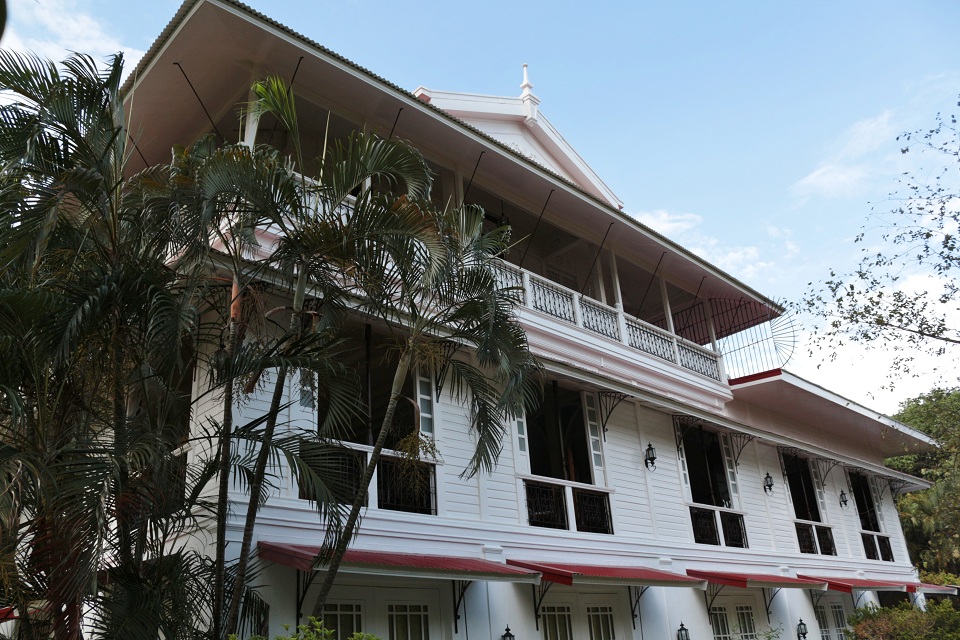
The Santos-Andres house in Navotas was dismantled and its pieces moved to Antipolo, where it was reassembled.
Unfortunately, it is a different story when it comes to the condition of these heritage abodes. A great number have either disappeared, or are endangered due to creeping modernization and lack of maintenance, which leaves them more vulnerable to fire and earthquake.
Despite such gloomy developments, there are also stories about a number of houses that have managed to weather these challenges, remaining not only for future generations to appreciate, but also to serve as shining examples of what can be done to help preserve a part of our past. One such tale is the story of the Santos-Andres ancestral house.
Originally built in 1917 in what was then the quiet fishing town of Navotas, the Santos-Andres ancestral house served as the home of the family of one of the most prominent businessmen of 20th century Philippines. His name: Roman Santos, a Kapampangan who went on to make a name for himself in a number of businesses like agriculture, banking, and non-life insurance. His name has lived on in a prominent building across Plaza Lacson in Sta. Cruz, Manila that itself is a notable heritage building.
For more than 80 years, the house stood quietly in the midst of the changes to its neighborhood. The former quiet fishing town became more industrialized and congested. As such, the house would find itself shaking as trucks passed by. Flooding became a major concern as well. Furthermore, apart from external factors, the house was in dire need of repairs and was becoming a hazard.
The house could have been left to rot, or demolished to make way for a more modern structure in its place. But the third generation of the Santos clan appreciated the heritage of the house they grew up in. The choice was soon made to give it a new lease on life, so to speak. This time, in a new environment where it could thrive anew.

The interior of the Santos-Andres house
The bulk of the house’s structure and layout was retained, though some features had to give way either for the sake of practicality or because they were deemed not useful anymore. Furniture pieces and antiques made the move as well.
Work was completed in 2002, a symbolic new dawn for a house that is currently three years from its centenary. From its original site near the Manila Bay, the Santos-Andres ancestral house in all its grandeur and charm now stands high among the modern abodes in the hills of Antipolo.
On the flipside, there is also a feeling of loss in that Navotas has lost a part of its heritage in the process—something the people behind the move acknowledge. Had the circumstances been different, a move would not have been necessary and the restored house would still be standing where it was built, to give Navotas some sense of character and history in the midst of its urbanization.
Nevertheless, the story of the Santos-Andres ancestral house has become an inspiring story of heritage conservation and rebirth. It is even detailed in a book, “Tahanan: A House Reborn.” We can only hope that the story of this house will serve as an inspiration for those in the ongoing struggle to save and preserve the past we have left—as well as a clarion call for others to support efforts to preserve our country’s heritage. — BM, GMA News

