

 GMA Brandtalk
 Tracking
 Archives

ADVERTISEMENT
Filtered By: Lifestyle
Lifestyle
‘Harana sa Dapit Hapon’: Rekindling the love for tragic, heartbreaking kundiman at CCP
“Dahil sa iyo, nais kong mabuhay
Dahil sa iyo, hanggang mamatay
Dapat mong tantuin, wala ng ibang giliw
Puso ko'y tanungin, ikaw at ikaw rin…”
- From the classic love song “Dahil Sa Iyo”
It’s sad that very few young people these days are familiar with classic Filipino love songs such as the kundiman “Dahil Sa Iyo.”
Not only that, those who want to hear this kind of music would not find it on the radio or on TV. However, those who want to be serenaded with Filipino love songs are in for a treat because “Harana sa Dapit Hapon,” a series of free concerts at the Cultural Center of the Philippines (CCP), has started with the first performance on March 11.
 The concert, held at the Bulwagang Nicanor Abelardo (CCP Main Theater Lobby), was a joint project of the CCP and the Tribung Pinoy Foundation headed by Danny Dolor.
Featured artists were sopranos Gloria Coronel and Lisa Cabahug, tenor Lemuel dela Cruz and the Kabayao family—violinist Gilopez, pianist Corazon with their daughters, violinists Siciliene and Farida.
In an interview with GMA News Online, stage director and playwright Chris Millado, vice president and artistic director of the CCP, said traditional Filipino love songs are sad because they are mostly about unrequited love.
Millado explained that a “kundiman,” a contraction of the words “kung hindi man,” is an expression of a person’s love and his yearning to be loved in return.
The song “Dahil Sa Iyo,” composed in 1938 by Mike Velarde Jr., a cousin of our paternal grandfather, also conveys a person’s deep longing for his beloved. It begins, “Sa buhay ko'y labis ang hirap at pasakit, ng pusong umiibig, mandin wala ng langit, at nang lumigaya, hinango mo sa dusa, tanging ikaw sinta ang aking pag-asa.”
However, Millado said a kundiman can also express love for one’s country, such as the “Kundiman ni Rizal”:
“Ibubuhos namin ang dugo'y ibabaha ng matubos lamang ang sa Amang Lupa! Hanggang 'di sumapit ang panahong tadhana, Sinta ay tatahimik, tutuloy ang nasa! Sinta ay tatahimik at tutuloy ang nasa! O Bayan kong mahal, Sintang Filipinas!”
Foreign influences
According to the National Commission on Culture and the Arts (NCCA), Spanish-European influences are evident in traditional Philippine music, with Hispanization "effect[ing] a change in the people's musical thinking and what emerged was a hybrid expression tinged with Hispanic flavor.”
“It produced a religious music connected to and outside the Catholic liturgy and a European-inspired secular music adapted by the Filipinos and reflected in their folk songs and instrumental music,” it added.
However, Millado said that the melody and message of Filipino traditional music such as the kundiman, harana, balitaw and danza are still very much distinct from traditional Spanish music.
He also explained that even though these mainly appeal to older people nowadays, these were actually the songs of the youth in the past.
He said the composers of these kundiman songs were young and so were their listeners.
 Bringing the music back to the youth
During the intimate media briefing for the event a discussion arose on what could be possible ways of arousing young people’s interest in traditional Filipino music.
Several suggestions were aired such as offering traditional Filipino snacks that guests can enjoy after the concert that is expected to last about two hours. By that time, 6:30 p.m., they said it would be ideal to take a stroll around CCP and enjoy the country’s famous sunset and beautiful Manila Bay.
This writer thought of a few more ways to promote traditional Filipino music to young people: by creating social media accounts for the “Harana sa Dapit Hapon” series; by sharing interesting trivia, photos, and videos about the music onine to create buzz; by inviting schools to attend the concerts; by holding performances in schools; and by allowing concertgoers to interact with performers at these concerts.
There are so many other ways to kindle interest in traditional music among the youth, but the important thing is to bring the music to where they are, and usually that involves social media sites.
The next concerts in the “Harana sa Dapit Hapon” series will be held on April 8, featuring the Kabataang Gitarista; June 10, with Miguel Castro, Fame Flores and Los Lipeños; July 8; September 9; October 7 and December 9. — BM, GMA News
For more details, contact the CCP Artist Training Division at 832-1125 local 1604.
Dahil sa iyo, hanggang mamatay
Dapat mong tantuin, wala ng ibang giliw
Puso ko'y tanungin, ikaw at ikaw rin…”
- From the classic love song “Dahil Sa Iyo”
It’s sad that very few young people these days are familiar with classic Filipino love songs such as the kundiman “Dahil Sa Iyo.”
Not only that, those who want to hear this kind of music would not find it on the radio or on TV. However, those who want to be serenaded with Filipino love songs are in for a treat because “Harana sa Dapit Hapon,” a series of free concerts at the Cultural Center of the Philippines (CCP), has started with the first performance on March 11.
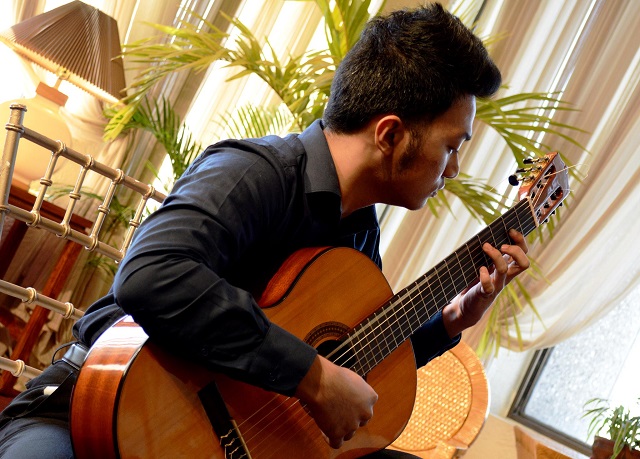
Classical guitarist Christian Mercader performs at the press conference for "Harana sa Dapit Hapon." Photos by Riz Pulumbarit
Featured artists were sopranos Gloria Coronel and Lisa Cabahug, tenor Lemuel dela Cruz and the Kabayao family—violinist Gilopez, pianist Corazon with their daughters, violinists Siciliene and Farida.
In an interview with GMA News Online, stage director and playwright Chris Millado, vice president and artistic director of the CCP, said traditional Filipino love songs are sad because they are mostly about unrequited love.
Millado explained that a “kundiman,” a contraction of the words “kung hindi man,” is an expression of a person’s love and his yearning to be loved in return.
The song “Dahil Sa Iyo,” composed in 1938 by Mike Velarde Jr., a cousin of our paternal grandfather, also conveys a person’s deep longing for his beloved. It begins, “Sa buhay ko'y labis ang hirap at pasakit, ng pusong umiibig, mandin wala ng langit, at nang lumigaya, hinango mo sa dusa, tanging ikaw sinta ang aking pag-asa.”
However, Millado said a kundiman can also express love for one’s country, such as the “Kundiman ni Rizal”:
“Ibubuhos namin ang dugo'y ibabaha ng matubos lamang ang sa Amang Lupa! Hanggang 'di sumapit ang panahong tadhana, Sinta ay tatahimik, tutuloy ang nasa! Sinta ay tatahimik at tutuloy ang nasa! O Bayan kong mahal, Sintang Filipinas!”
Foreign influences
According to the National Commission on Culture and the Arts (NCCA), Spanish-European influences are evident in traditional Philippine music, with Hispanization "effect[ing] a change in the people's musical thinking and what emerged was a hybrid expression tinged with Hispanic flavor.”
“It produced a religious music connected to and outside the Catholic liturgy and a European-inspired secular music adapted by the Filipinos and reflected in their folk songs and instrumental music,” it added.
However, Millado said that the melody and message of Filipino traditional music such as the kundiman, harana, balitaw and danza are still very much distinct from traditional Spanish music.
He also explained that even though these mainly appeal to older people nowadays, these were actually the songs of the youth in the past.
He said the composers of these kundiman songs were young and so were their listeners.
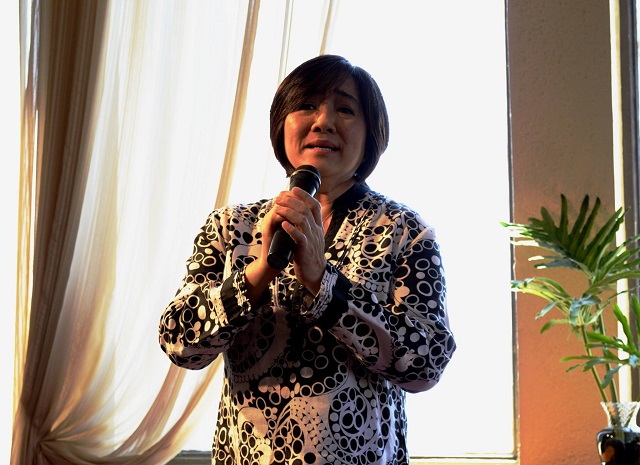
Soprano Lisa Cabahug
During the intimate media briefing for the event a discussion arose on what could be possible ways of arousing young people’s interest in traditional Filipino music.
Several suggestions were aired such as offering traditional Filipino snacks that guests can enjoy after the concert that is expected to last about two hours. By that time, 6:30 p.m., they said it would be ideal to take a stroll around CCP and enjoy the country’s famous sunset and beautiful Manila Bay.
This writer thought of a few more ways to promote traditional Filipino music to young people: by creating social media accounts for the “Harana sa Dapit Hapon” series; by sharing interesting trivia, photos, and videos about the music onine to create buzz; by inviting schools to attend the concerts; by holding performances in schools; and by allowing concertgoers to interact with performers at these concerts.
There are so many other ways to kindle interest in traditional music among the youth, but the important thing is to bring the music to where they are, and usually that involves social media sites.
The next concerts in the “Harana sa Dapit Hapon” series will be held on April 8, featuring the Kabataang Gitarista; June 10, with Miguel Castro, Fame Flores and Los Lipeños; July 8; September 9; October 7 and December 9. — BM, GMA News
For more details, contact the CCP Artist Training Division at 832-1125 local 1604.

