

 GMA Brandtalk
 Tracking
 Archives

ADVERTISEMENT
Filtered By: Lifestyle
Lifestyle
On the Rizal Monument and the Torre de Manila
About Face, Rizal (Part 2)
This is the second part of an analysis of the Torre de Manila issue. Read Part 1 here.
Fresh from leading our legal team against China in The Hague at the end of July, Solicitor General Florin T. Hilbay made a radical turn on Torre de Manila. Departing from his original mainstream position on the Knights of Rizal versus DMCI in the Supreme Court, he entered deeper legal waters.
“The original comment we filed a year ago had always felt too legalistic to me. At the time, no one had the good legal basis to go all-out for the Rizal Monument. So we ended up reading the law conservatively, applying the standard technical rules against the Knights of Rizal,” he acknowledged.
 What changed his mind? “Two people gave me the inspiration,” he said. The first, his UP law classmate Kay Malilong, gave him the insight that “every cultural property must be treated differently.” The second, Education USec Albert Muyot, lent the decisive second insight that “there's something really special about the Rizal Monument being Kilometer Zero.”
Kilometer Zero means that all distances from Manila to the rest of the country have been measured from the Rizal monument, making it the heart of the nation.
“It was then that I realized that ‘physical integrity’ for cultural artifacts should, and properly so, be defined broadly to cope with the demands of conservation, and that the Rizal Monument should be treated as sui generis.”
"Sui generis" is Latin for unique, one of a kind. That was precisely the anti-Torre protestors’ point about Motto Stella—the name the monument's sculptor gave his prizewinning design 102 years ago: it has become so revered that marring its sightline and diminishing its stature with a 49-storey condominium dwarfing it from behind is a highly offensive sight to a people for whom Jose Rizal is a prime symbol of nation.
The Supreme Court’s TRO on the Torre's construction and its call for oral arguments in the Knights’ case gave Hilbay the chance to express his fresh point of view. He didn’t have to look far to reconcile the parameters of the Law with a concept new to Philippine jurisprudence: heritage. Deeper interpretation of the National Heritage Act, RA 10066, became the core of his new position.
A fundamental question DMCI raised in the Supreme Court was the procedural correctness of the Knights’ case filed in the highest court of the land, which tries questions of law, not of fact. Hilbay replied that the Constitution itself guarantees “any citizen” the right to seek relief on “matters of transcendental importance” in the Court.
He buttressed this with Sec. 7 of RA 7356 on Preservation of Filipino Heritage, calling it “the duty of every citizen to preserve and conserve the Filipino historical and cultural heritage and resources.”
On the Torre itself, the Solicitor General believes its protection under the Constitution means “impairment of the Rizal Monument's physical integrity warrants the declaration by this Honorable Court that the construction of the Torre de Manila is illegal.”
For this he cites Article XIV, which says, “The state shall foster the preservation, enrichment and dynamic evolution of a Filipino national culture...” in Section 14, and “The State shall conserve, promote and popularize the nation’s historical and cultural heritage and resources as well as artistic creations” in Section 15.
Emphasizing “conservation,” Hilbay states, “The Constitution enacts conservationist and protectionist policies with respect to the cultural treasure of the nation ...[While] the statutory mandate to protect the physical integrity of cultural artifacts necessarily includes the protection of the sightline of the Rizal Monument.”
The government’s own lawyer had clearly departed from mainstream legal opinion expressed to the media by Justice Antonio Carpio after the first day of trial—that the Knights of Rizal case needs a trial of facts in lower courts, not the Supreme Court.
Perceiving beforehand that “the SC call for oral arguments meant that there's currently a majority of its members who want to look deeper,” Hilbay indeed delved deeper into the hitherto overlooked six-year-old Heritage Law, the NCCA Charter (RA 7536), and the Constitution.
One of the things he saw in the Heritage Law was its empowerment of the NCCA to issue the Cease & Desist Order to stop construction last January with its mandate it to “vigorously protect the nation’s cultural treasures.”
The same law is how NCCA lawyer Trixie Cruz-Angeles begins her explanation to the Court of NCCA’s authority to issue a CDO, adding Section 16: “All the country’s artistic and historic wealth constitutes the cultural treasure of the nation and shall be under the protection of the State which may regulate its disposition.”
Also delving deeper into questions of law in consultation and research brought Cruz-Angeles this insight: “We came to the conclusion that the NCCA does indeed have jurisdiction over the subject property—the Rizal Park, the Execution Site and the Rizal Monument. And that it does have the obligation and capacity under the law to protect the Rizal monument, Rizal’s execution site and the Rizal Park, including the latter’s landscape, setting and the spaces surrounding the monument.”
True to its origin in the PCCA—the Presidential Commission on Culture and the Arts born from people power in 1987—the NCCA was breaking new ground with the Solicitor General, asserting this arts and culture agency’s rightful role in the nation’s life.
“No other administrative agency or body of the Government of the Philippines had previously exercised the same authority in relation to the same subject matter within the same administrative jurisdiction,” the NCCA position paper points out.
The CDO it issued in January 2015—ignored by DMCI, which filed a case questioning its jurisdiction —nevertheless “remains valid and has full legal effect [as] the primary and foremost policy-making body, coordinating agency and grant-giving body tasked with the preservation, development and promotion of Philippine arts and culture,” the NCCA maintains.
The Constitution, the NCCA Charter, the National Heritage Law and other pertinent laws have all given it authority “to regulate, investigate and adjudicate activities inimical to the preservation/ conservation of national cultural heritage/properties.”
What the NCCA and the Knights are doing about the Torre’s defacement of the Rizal Monument is putting commercial interests in their place, halting a rampage that cares little for visible reminders of our people’s historical memory.
People Power has done its part to protect its Guiding Star. The future of our cultural heritage now rests on the Supreme Court’s clear articulation of the intention behind the letter of laws expressing popular sentiment that now await full implementation with State power.
But as the nation waits, more visible reminders of collective memory are being defaced, starting with Baguio City’s heritage structures and misguided alteration of deeply thoughtful improvements by the Rizal Centennial Commission of our hero’s shrines in Fort Santiago and Dapitan. A sense of urgency in clarifying mandates has never been sharper.
One matter to be clarified is the NCCA’s higher authority over the National Historical Commission of the Philippines, whose misreading of the Law is the subject of a third installment. — BM, GMA News
Fresh from leading our legal team against China in The Hague at the end of July, Solicitor General Florin T. Hilbay made a radical turn on Torre de Manila. Departing from his original mainstream position on the Knights of Rizal versus DMCI in the Supreme Court, he entered deeper legal waters.
“The original comment we filed a year ago had always felt too legalistic to me. At the time, no one had the good legal basis to go all-out for the Rizal Monument. So we ended up reading the law conservatively, applying the standard technical rules against the Knights of Rizal,” he acknowledged.
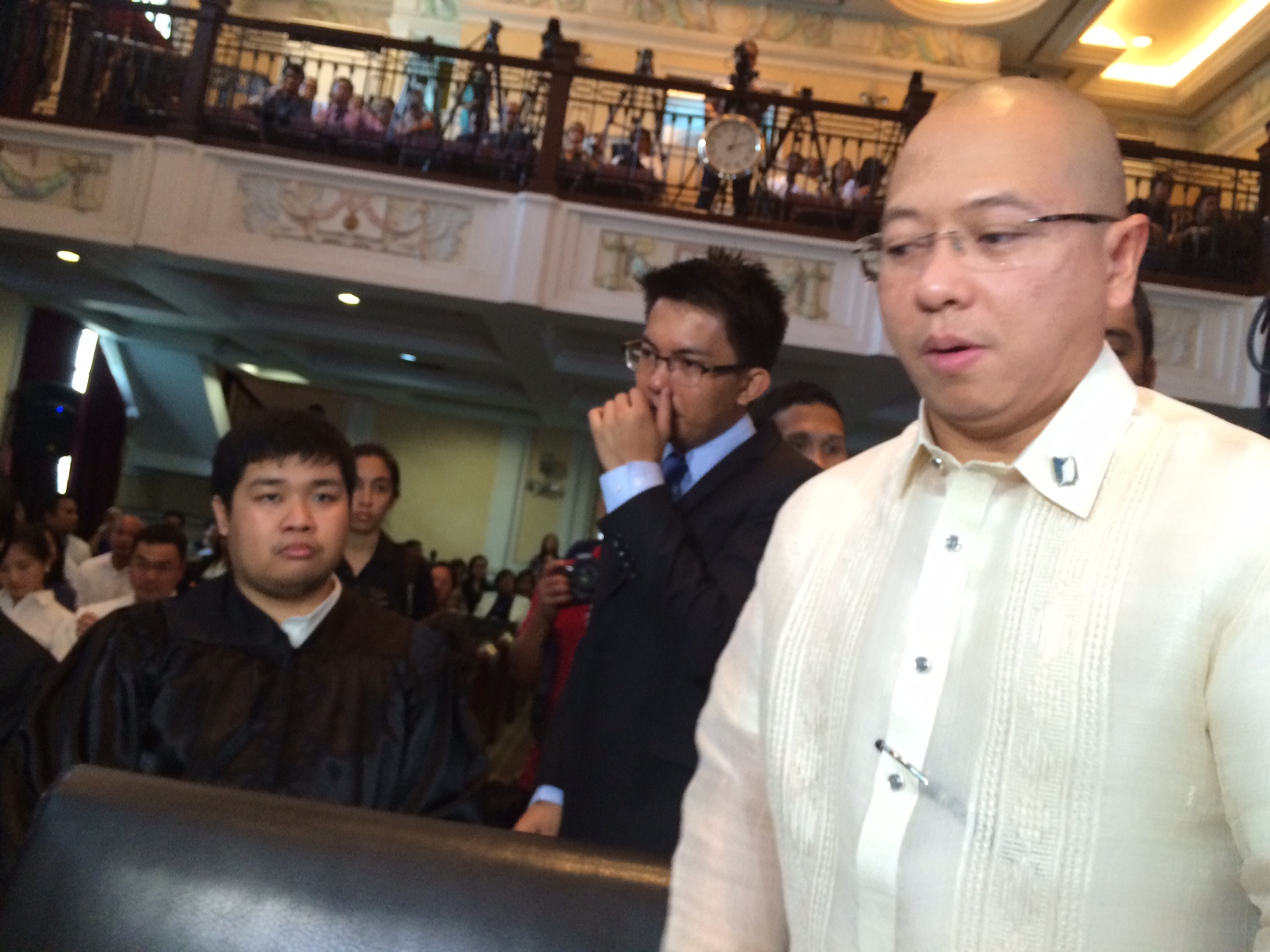
Solicitor General Florin Hilbay (right) at the Supreme Court, where he argued that the SC has the power to order the demolition of the Torre de Manila for violating the vista of the Rizal Monument. Photo taken on August 4, 2015. GMA News/Joseph Morong
Kilometer Zero means that all distances from Manila to the rest of the country have been measured from the Rizal monument, making it the heart of the nation.
“It was then that I realized that ‘physical integrity’ for cultural artifacts should, and properly so, be defined broadly to cope with the demands of conservation, and that the Rizal Monument should be treated as sui generis.”
"Sui generis" is Latin for unique, one of a kind. That was precisely the anti-Torre protestors’ point about Motto Stella—the name the monument's sculptor gave his prizewinning design 102 years ago: it has become so revered that marring its sightline and diminishing its stature with a 49-storey condominium dwarfing it from behind is a highly offensive sight to a people for whom Jose Rizal is a prime symbol of nation.
The Supreme Court’s TRO on the Torre's construction and its call for oral arguments in the Knights’ case gave Hilbay the chance to express his fresh point of view. He didn’t have to look far to reconcile the parameters of the Law with a concept new to Philippine jurisprudence: heritage. Deeper interpretation of the National Heritage Act, RA 10066, became the core of his new position.
A fundamental question DMCI raised in the Supreme Court was the procedural correctness of the Knights’ case filed in the highest court of the land, which tries questions of law, not of fact. Hilbay replied that the Constitution itself guarantees “any citizen” the right to seek relief on “matters of transcendental importance” in the Court.
He buttressed this with Sec. 7 of RA 7356 on Preservation of Filipino Heritage, calling it “the duty of every citizen to preserve and conserve the Filipino historical and cultural heritage and resources.”
On the Torre itself, the Solicitor General believes its protection under the Constitution means “impairment of the Rizal Monument's physical integrity warrants the declaration by this Honorable Court that the construction of the Torre de Manila is illegal.”
For this he cites Article XIV, which says, “The state shall foster the preservation, enrichment and dynamic evolution of a Filipino national culture...” in Section 14, and “The State shall conserve, promote and popularize the nation’s historical and cultural heritage and resources as well as artistic creations” in Section 15.
Emphasizing “conservation,” Hilbay states, “The Constitution enacts conservationist and protectionist policies with respect to the cultural treasure of the nation ...[While] the statutory mandate to protect the physical integrity of cultural artifacts necessarily includes the protection of the sightline of the Rizal Monument.”
The government’s own lawyer had clearly departed from mainstream legal opinion expressed to the media by Justice Antonio Carpio after the first day of trial—that the Knights of Rizal case needs a trial of facts in lower courts, not the Supreme Court.
Perceiving beforehand that “the SC call for oral arguments meant that there's currently a majority of its members who want to look deeper,” Hilbay indeed delved deeper into the hitherto overlooked six-year-old Heritage Law, the NCCA Charter (RA 7536), and the Constitution.
One of the things he saw in the Heritage Law was its empowerment of the NCCA to issue the Cease & Desist Order to stop construction last January with its mandate it to “vigorously protect the nation’s cultural treasures.”
The same law is how NCCA lawyer Trixie Cruz-Angeles begins her explanation to the Court of NCCA’s authority to issue a CDO, adding Section 16: “All the country’s artistic and historic wealth constitutes the cultural treasure of the nation and shall be under the protection of the State which may regulate its disposition.”
Also delving deeper into questions of law in consultation and research brought Cruz-Angeles this insight: “We came to the conclusion that the NCCA does indeed have jurisdiction over the subject property—the Rizal Park, the Execution Site and the Rizal Monument. And that it does have the obligation and capacity under the law to protect the Rizal monument, Rizal’s execution site and the Rizal Park, including the latter’s landscape, setting and the spaces surrounding the monument.”
True to its origin in the PCCA—the Presidential Commission on Culture and the Arts born from people power in 1987—the NCCA was breaking new ground with the Solicitor General, asserting this arts and culture agency’s rightful role in the nation’s life.
“No other administrative agency or body of the Government of the Philippines had previously exercised the same authority in relation to the same subject matter within the same administrative jurisdiction,” the NCCA position paper points out.
The CDO it issued in January 2015—ignored by DMCI, which filed a case questioning its jurisdiction —nevertheless “remains valid and has full legal effect [as] the primary and foremost policy-making body, coordinating agency and grant-giving body tasked with the preservation, development and promotion of Philippine arts and culture,” the NCCA maintains.
The Constitution, the NCCA Charter, the National Heritage Law and other pertinent laws have all given it authority “to regulate, investigate and adjudicate activities inimical to the preservation/ conservation of national cultural heritage/properties.”
What the NCCA and the Knights are doing about the Torre’s defacement of the Rizal Monument is putting commercial interests in their place, halting a rampage that cares little for visible reminders of our people’s historical memory.
People Power has done its part to protect its Guiding Star. The future of our cultural heritage now rests on the Supreme Court’s clear articulation of the intention behind the letter of laws expressing popular sentiment that now await full implementation with State power.
But as the nation waits, more visible reminders of collective memory are being defaced, starting with Baguio City’s heritage structures and misguided alteration of deeply thoughtful improvements by the Rizal Centennial Commission of our hero’s shrines in Fort Santiago and Dapitan. A sense of urgency in clarifying mandates has never been sharper.
One matter to be clarified is the NCCA’s higher authority over the National Historical Commission of the Philippines, whose misreading of the Law is the subject of a third installment. — BM, GMA News

