

 GMA Brandtalk
 Tracking
 Archives

ADVERTISEMENT
Filtered By: Lifestyle
Lifestyle
MOVIE REVIEW
Crimson Peak: Guillermo del Toro’s love letter to gothic horror
It is no secret that Guillermo Del Toro has a longstanding love affair with horror. Before he dove into the abyss and emerged with the apocalyptic portents known as kaijus, Guillermo del Toro was immersed in a dreamlike landscape that blurred the lines between the real and the fantastic, and gave shape to our deepest fears and desires: A vision that animated films like The Devil’s Backbone and Pan’s Labyrinth. With his latest feature, the gothic romance Crimson Peak, del Toro revisits the darkness of the human psyche manifested in bleeding walls and blood red snow.
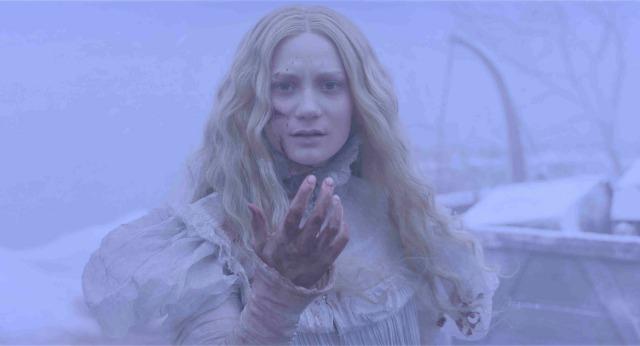
Mia Wasikowska plays author Edith Cushing. United International Pictures
In Gilded Age New York, aspiring authoress Edith Cushing (Mia Wasikowska) is captivated by the mysterious Sir Thomas Sharpe (Tom Hiddleston), despite the misgivings of her father (Jim Beaver) and childhood friend, Dr. Alan McMichael (Charlie Hunnam), and a mysterious message from beyond the grave that warns her, “Beware of Crimson Peak.” After a series of unfortunate events, Edith marries Thomas and he whisks her off to his family seat in England, Allerdale Hall, where he lives with his obsessive sister Lucille (Jessica Chastain) and the terrifying spirits that walk Allerdale’s hallways.
Del Toro plays with standard tropes found in gothic horror: an ingénue protagonist, seductive strangers, mysterious mansions, and more. His influences are legion. Think Sheridan Le Fanu and Henry James’s The Turn of the Screw, or the story of Bluebeard crossed with Flowers in the Attic.
He explores themes that are familiar to fans of the genre: gaslighting and hysteria, an underlying current of sexual thrall and terror, the notion that, as one of Crimson Peak’s characters says, “love makes monsters of us all.”
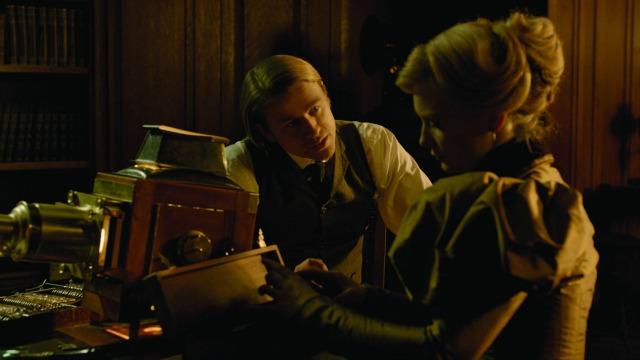
Dr. Alan McMichael (Charlie Hunnam) and Edith Cushing (Mia Wasikowska) were childhood friends. United International Pictures
The pace is slow and steady, like the horror films of yore, and there are no narrative surprises. But by hewing closely to the genre’s conventions, del Toro is able to focus his efforts on the film’s glorious visual vocabulary.
Crimson Peak deals in contrasts, skillfully telegraphed to the audience through art direction. America is modern and forthright, its characters clothed in fashion forward clothing and its scenes bathed in a golden glow. England is mysterious and foreboding, its characters clad in old-fashioned garb and its scenes set against a bleak gray backdrop. Edith is innocence and light, the butterfly to Lucille’s dark and deadly moth. Alan and Thomas are negative images of each other: blond, stocky Alan is a progressive man of science, albeit one with a fascination for the supernatural, while the tall and dark-haired Thomas is an aristocrat trying to remake himself as an industrialist, but can’t quite shake off his unearthly ties to the family homestead.
Allerdale Hall, the Crimson Peak referred to in the title, deserves proper billing as the movie’s main character—yes, despite the stellar cast, the house is the best part of the film. A crumbling gothic mansion sitting atop a profitable red clay deposit, Allerdale Hall breathes, bleeds, and bears witness to countless horrors, a physical manifestation of the psychological and supernatural terrors experienced by the characters. Crimson Peak’s production team built the house from the ground up, its set designers traveling the world over to source the fabrics, finishes, and furnishings needed to create its decrepit Victorian vibe.
The ghosts that people Crimson Peak are terrifying, in small doses. This is not a fright-a-minute flick. Here, fear resides in the corners of mirrors, dusty cabinets, and forbidden quarters—rearing its grotesque, humanoid features for a split second, disappearing so swiftly, one begins to question reality itself. Del Toro hints at a taxonomy of ghostly creatures, classified by color and emotional motivation, but this is not fully explored.
Those expecting del Toro to reinvent the wheel are better off looking elsewhere. This is gothic horror in Technicolor, an homage to the best the genre has to offer and a primer for new generations of viewers. (Photos credit to United International Pictures). —KG, GMA News

