

 GMA Brandtalk
 Tracking
 Archives

Myth and memory in Kanakan Balintagos’ ‘Ang Mga Buhay na Apoy’
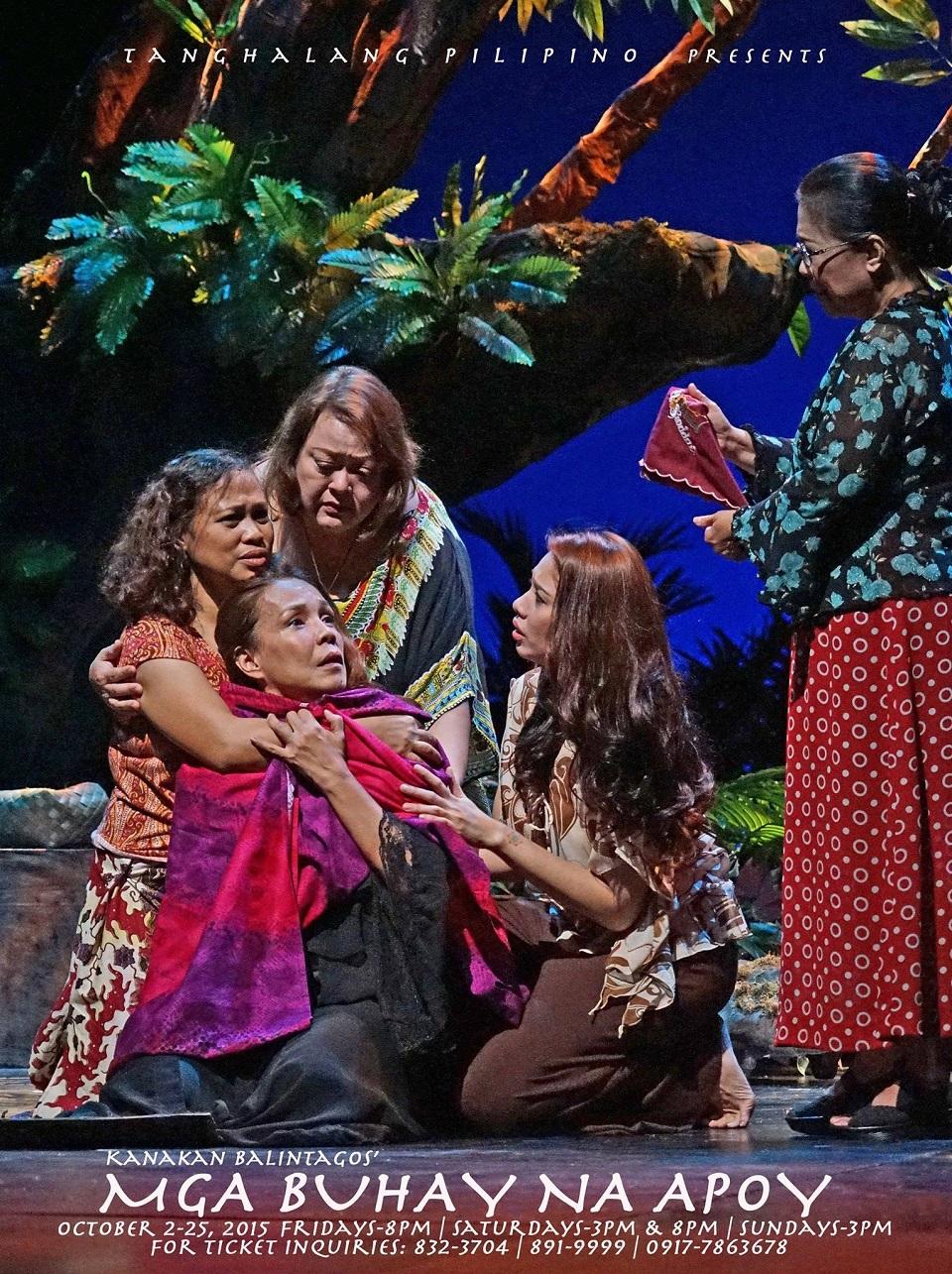
In "Ang mga Buhay na Apoy," acclaimed filmmaker Kanakan Balintagos returns not only to his first love (theater) but also to the subject that is possibly closest to his heart: his nativity, and the tortuous but altogether interesting journey he has needed to take to recuperate it.
This autobiographical full-length play, which won first prize at this year’s Palanca Awards, had in fact seen earlier “rehearsals” in Balintagos’ career—from the recently restaged superhero musical "Manhid"; to the outdoor-installation-cum-theater-piece "Ang Maikling Buhay ng Apoy," staged fifteen feet above ground in the mid-1990s in the middle of a grove inside the verdant Diliman campus; to his short and full cinematic features, foremost of which is, of course, that numinous film from 2011, "Busong".
Common to all these endeavors—all remarkable works, in their own right—is the same nativist nostalgia, challenged and finally illuminated by the present’s own set of difficult but ennobling imperatives. Chiefest of these is the memory-transfiguring practice of art-making itself.
What distinguishes "Ang mga Buhay na Apoy" is, to me, its stark mimetic quality, which is something that theater better affords than film—a form that is much too enmeshed in the technology of its medium to offer its audience the kind of immediate and corporeal “presence” that theater performatively (and lavishly) provides.
And marvelously present and corporealized this play truly is, especially in regard to the powerful dramatic portrayal of the lead actor, the great Irma Adlawan, who singularly embodies the ambivalent energies of her difficult role—monstrous yet benevolent—with urgent conviction, fiery courage, and astonishing aplomb.
Here she is Soledad (or Soling), the cognitively dissonant woman who comes from a family of Palawan healers and shamans, but is presently a charismatically obsessed folk Catholic. In the face of so much anguish she has convinced herself—but only delusionally—that the magical passages and rituals of her past are nothing if not pagan hexes that are diabolically inspired.
The trauma of this dissonance is, however, more than just cultural: a victim of rape twice over (in both cases, by powerful “outsiders,” colonial intruders into her vulnerable world), she has literally bodily experienced the violence her people as a whole are having to endure. The damage to her has been so severe that it has in turn caused her to inflict damage on her own children, who have decided, by turns, to abandon her (but only temporarily).
The play, however, is ultimately about healing. It may be true that it's their love for each other that ultimately brings it about, but as Balintagos understands so well the achievement of authentic well-being—as against merely palliative gestures—can only come from the wholehearted reclaiming of one’s own past.
Fortunately for all of us, in the hands of the artist the past can be reimagined at the same time that it is remembered. Indeed, art does not only preserve history’s various vestiges. Because it transfigures as much as it represents, art makes the present at once intelligible and bearable.
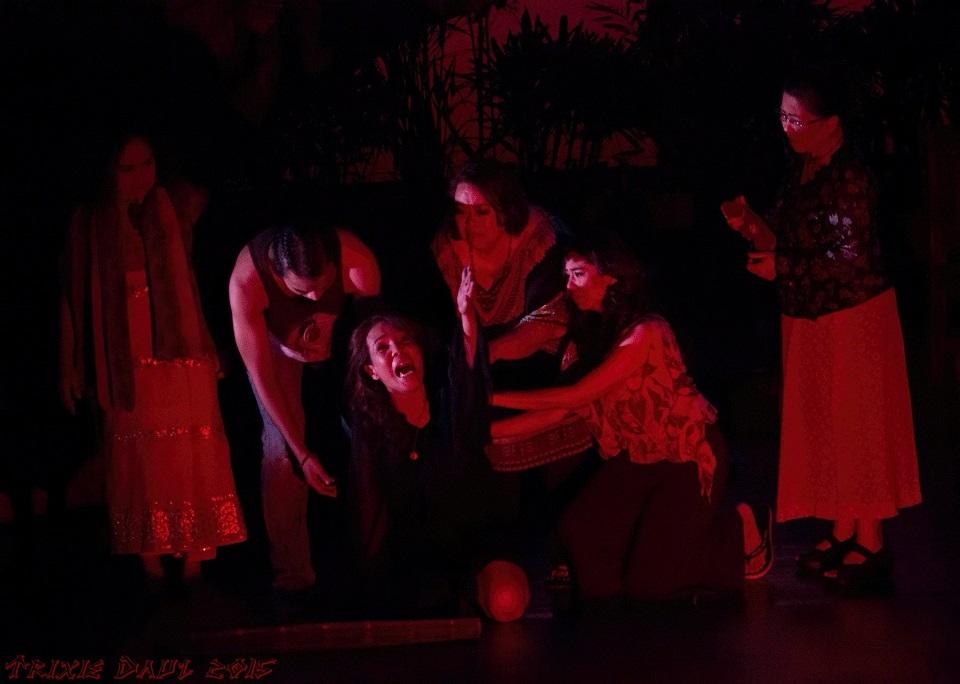
The edifice of Soling’s disavowal of her origins—her cultural and familial heritage—therefore needs to crumble, in the end. In what is this play’s most important and dramatically potent scene, in a fevered and trance-like state this confused and pitiable woman recounts her nightmarish life in and through the mythological figures that had suffused her childhood—a kind of therapeutic and symbolism-rich “talking cure” that exorcises her of the unspeakable secrets (and transgressions) that have bedeviled her and her family for so long.
It’s precisely because these figures are, at bottom, indistinguishable from her life as a Palawan child that they can function so effectively: while they, being mere metaphors, are capable of narrating the terrors that have been foisted on her—and that she has foisted on her unfortunate family—they are also bearers of meaning that she knows can never really harm her or her loved ones, for they happily distinguished and accompanied her days as a charmed member of her indigenous community.
The tormented visual artist is, of course, Balintagos’ dramatic stand-in here, and in his letter to his mother, he tells her that he wants to go back to their ancestral home in Palawan to discover who he really is. This is an artistic journey toward the naked and unencumbered self, but also (as he writes in his letter) toward the same luminous “goodness” that he knows is his mother’s truest nature.
It’s been said that art’s essential trajectory originates in experience and ends in illumination. This is an arc that this play indeed memorably traverses, as its characters emerge out of the trauma of their brute realities into the resplendent truth of their envisioned and better selves, which are ineluctably rooted in the origins that they can no longer afford to deny, lest they deny their one chance at hard-won wholeness and joy.
An additional pleasure in this amazing production is the fact that it traces this movement not just dramaturgically, but also scenographically: in the play’s second half Paolo Alcazaren’s beautiful set design (dominated by a misshapen but for this reason “mythic-looking” tree) is literally flip-reversed, so much so that it brings to front and center stage what the first two acts have dissimulated and concealed: the darkness that secretes the harrowing sins that have cloven the soul of this fatherless family; but also the pristine and feral shadows where the past’s enchantments, prayers, and spells endure, to offer their fugitive consolation and grace.
And so, I can say that among all of Balintagos’ artful “returns” to his Palawan roots, it’s in this play—set entirely in a postlapsarian but still Edenic garden—where he homes closest to the Sacred Source. Hopefully, on his next visit, rather than just dwell on the irreconcilable difference between native and Christian religious systems, he will also reflect more deeply on the mythological imagination that unifies both and indeed all spiritualities—an imagination that approaches the transcendent through the worldly metaphors and sensuous forms that both mystics and artists traffic in, as a matter of course (for indeed, what’s the difference between the folk Catholic mother’s treasured “El Shaddai” handkerchiefs and the Palawan balian’s ritual branches and leaves, when both are nothing if not “sacramentals”—which is to say, vessels of the same radiant blessedness?).
But all that’s arguably for the future. For now: bravo. — BM, GMA News
J. Neil C. Garcia teaches creative writing and comparative literature in the University of the Philippines, Diliman, where he serves as Director of the university press and a fellow for poetry in the Institute of Creative Writing. He is the author of numerous poetry collections and works in literary and cultural criticism, including The Sorrows of Water (2000), Kaluluwa (2001), Performing the Self: Occasional Prose (2003), The Garden of Wordlessness (2005), Misterios and Other Poems (2005), and Postcolonialism and Filipino Poetics: Essays and Critiques (2003). In 2009, Hong Kong University Press published its own international edition of his Philippine Gay Culture (1996). Between 1994 and 2006, he coedited the famous Ladlad series of Philippine gay writing. His most recent books are Aura: the Gay Theme in Philippine Fiction in English, published in 2012, and The Postcolonial Perverse: Critiques of Contemporary Philippine Culture, published in 2014. He is currently at work on “Likha,” his seventh poetry book.

