

 GMA Brandtalk
 Tracking
 Archives

Freedom fight continues at 7th PHL International Literary Festival
Civilization was forever changed by the printed word, and at the 7th Philippine International Literary Festival, the power of documentation continues to be revered.
With the theme "Against Forgetting," the festival gathered the country's champions of literature at the QCX in Quezon Memorial Circle on April 28 and 29 for lectures, workshops, and roundtable discussions on writing, publishing, rights trading, and readership.
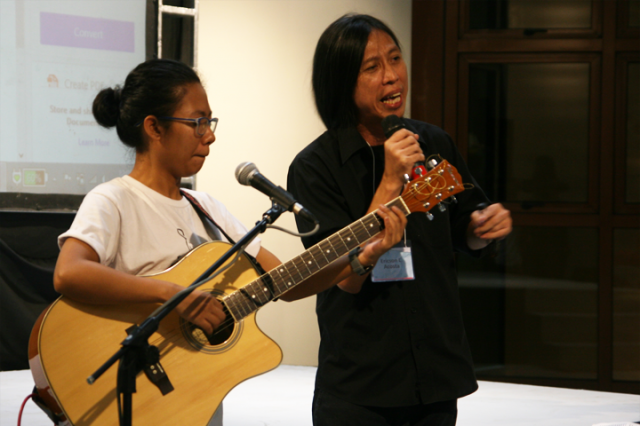
Organized by the National Book Development Board with the help of the Komisyon ng Wikang Filipino, the literary festival opened on Thursday with a creative performance from Bagong Himig Seranata, followed by speeches from Summit Media Group Editorial Director Jo-Ann Maglipon and exiled Chinese poet and essayist Bei Ling.
The pair discussed what the theme meant. The importance of remembering was detailed more by Jose "Pete" Lacaba and Ericson Acosta in the opening dialogue for the festival.
Lacaba and Acosta were both incarcerated, one during Martial Law and the other as recent as 2011.
"Nagsimula ako magsulat, hindi pa pinapanganak ang marami sa inyo dito," Lacaba told the attendees of the dialogue. He said he started his career with the Philippine screen press and went on to the underground press. "Nahuli ako nung 1974 to 1976. Naka two years ako sa loob," he said.
While the image of a writer in his prison cell putting words together seems romantic, Acosta and Lacaba dispelled that portrait.
"Mahirap pong magsulat sa loob ng kulungan," Acosta said. "I would write only in the nighttime. It was very hot during the day."
Lacaba, meanwhile, calmly detailed the torture he experienced during Martial Law.
"Nung mahuli na ako...ginugulpi na ako, binubugbog ako, pinapalo ng walis tambo sa lulod, at tsaka pinapahiga sa hangin," he told the audience.
Lying down on air meant that the prisoner would lie down, his head on one chair, his feet up on another, and nothing in between to support the rest of his body.
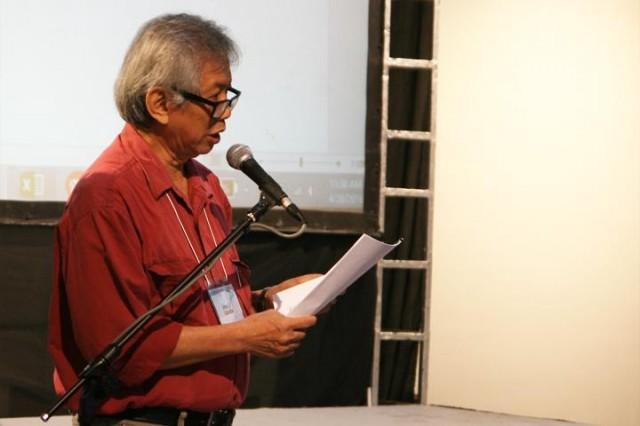
Lacaba read Prometheus Unbound, his acrostic poem that expressed his opinion of then president Ferdinand Marcos.
In the age where antagonistic memes about the president go viral as quickly as pictures of grammatically incorrect kittens, being tortured for criticizing the government seemed distant and unreal.
But even with the fear and, as Acosta pointed out, the knowledge that one must write under despicable circumstances, "writing is necessary."
Questioning the law, breaking the norms
The theme of not just freedom, but liberty in writing was present in the breakaway lectures—even, or perhaps especially, on the subject of erotica.
In the Sex and Sexuality lecture, Mayette Bayuga said, "Ang pagsusulat ay dapat mapagpalaya."
J. Neil Garcia discussed the liberating power of the pen for the writer, affirmed by Bernadette Neri. The pair focused on what literature has done for the LGBT community—and what more needs to be done.
Garcia confessed that he shifted to English because he found the Tagalog terms for homosexuality harsh and cruel.
"Bakla was shameful, English had gay—which is nice," he said whimsically. The pejorative use of "bakla" or "bading" has discouraged the progress of Tagalog (and other Philippine languages) as medium for literature.
Bayuga and Joel Salud discussed the hidden prudishness inside people that reveal themselves only when challenged to write erotic pieces. Garcia then asked people to imagine how much harder that would be for homosexuals, bisexuals, asexuals—basically anyone outside of the norm who are told that they are anomalous sinners.
Neri added a layer of class to gender and lamented the fact that stories of lesbian farmers or lesbian factory workers hardly ever get written.
"Bihira ang tumatalakay sa lesbianang karanasan sa labas ng siyudad," Neri said.
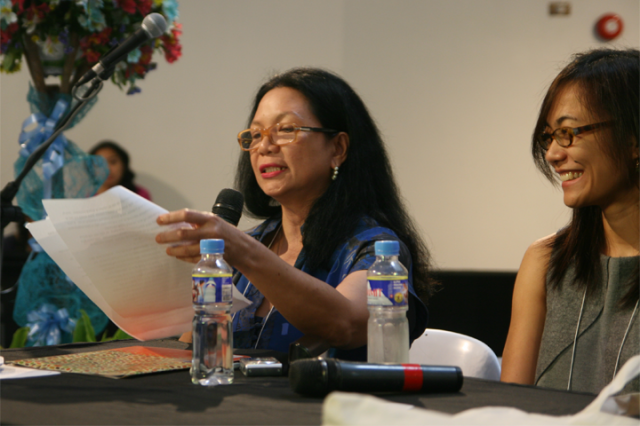
The proposed Anti-Obscenity Bill in the Philippines might be a deterrent, but the panel collectively mused that a stronger, inherent guilt attached to sex and other taboo topics threaten the liberty of the writer.
As an example, Salud said that he felt more comfortable criticizing the government, potentially exposing him to harm, than in attaching his name to an erotic novella he wrote, potentially exposing him to...shame?
Bayuga relayed a similar experience, but added that after she decided to have her story printed, she felt something better than relief.
"Naramdaman ko ang uri ng kakaibang uri ng kalayaan," she said.
Erotica for her became another avenue to broaden people's perspectives, to think of sex not as indecent, but truly sacred—sex as a pathway to divinity, as the Kama Sutra taught.
"Anything we write—whether it’s about sex or not—it should be with the intention to enlighten," Salud concurred. "(It should be a) liberating experience for both the writer and the reader." —KG, GMA News

