

 GMA Brandtalk
 Tracking
 Archives

A collection of utopic proportions at the Ateneo Art Gallery
“Utopias are discontents that create the new.”
With those words, Charlie Samuya Veric began his lecture to accompany a show he curated as part of the 500th anniversary of the publication of Thomas More’s "Utopia", "Figuring Filipino Utopias."
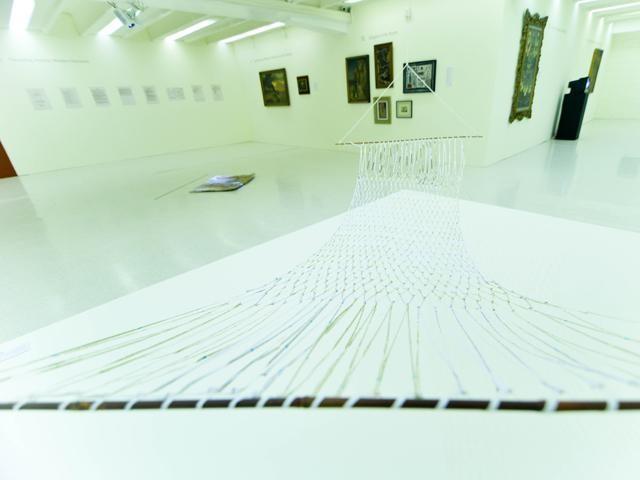
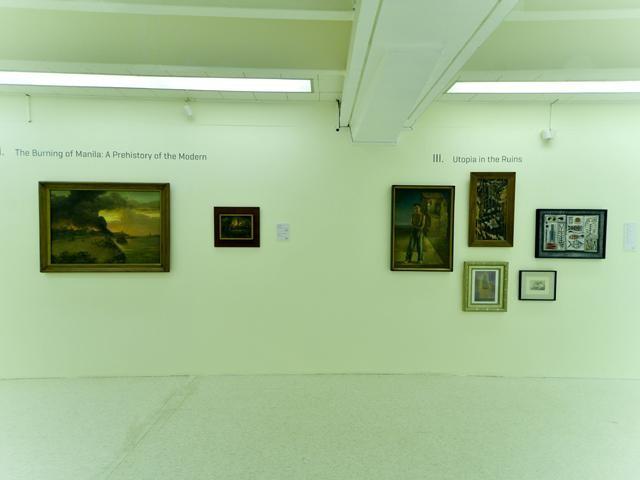
The exhibition at the Ateneo Art Gallery makes use of the permanent collection of the gallery, which Fernando Zobel endowed. It opened last month and will run until 14 January 2017.
First, a word on the book which inspired this exhibit. Thomas More, a former Lord Chancellor who was executed for refusing to consent to Henry VIII’s actions that led to it, published this work in 1516. Most of "Utopia" is a detailed description of a “nowhere place” (which is what utopia literally means). More intended the work to be a tweak of the nose at the society of his time. Rizal’s "The Philippines a Century Hence" is an example of a utopic work following More.
The late 20th and early 21st centuries though have seen the rise of dystopias, or disturbing visions of a time to come. One could argue that visions of the future reflect as much the time these works were written.
So it was, Veric said in his lecture, with Zobel endowing the Ateneo Art Gallery collection. He pointed out that, unlike most conceptions of a modernity unmoored from the past, the roots of Philippine modernity as Zobel understood it were shaped by the destruction of World War II, when Manila was decimated and almost all of its pre-war art heritage up in smoke.
He noted parallels between Zobel’s 1960 donation and developments in the wider world, including decolonization. He even argued that some developments in Zobel’s written work anticipated other comprehensive developments in Philippine art criticism. He ended by saying that for Zobel, in his writings, the ultimate unmooring for Philippine modern art, his utopic vision, was for it to let go of the tendency toward literalism. Abstraction, Zobel’s tentative answer, was something which the artist himself started to practice in his visual art.
The lecture prompted a lively discussion, where topics ranged from questions of class in Zobel’s work and contemporary art in general, eyewitness accounts to Fernando Zobel’s time with the Ateneo de Manila, getting younger people to appreciate modern art, and even the need to research primary sources in the modern art. Following the lecture, we asked Veric about the show which this talk complemented.
Veric, who has a doctorate in American studies from Yale University, said that it was a venture between him and two other faculty members in the Ateneo de Manila, Jonathan Chua and Jovino Miroy.
“We thought of how to celebrate [More’s Utopia],” he said, “but I wanted in particular, to think about what is Filipino about utopia.”
The university’s interest in interdisciplinary work, he said, paved the way for the involvement not only of academic departments, but the Ateneo Art Gallery itself.
We asked about why Veric and company chose to use art as their way of unpacking the concept of utopia in our setting.
“I did my research first, going into the fundamental ideas of utopia, some of the works in cultural studies on utopia,” he said, “and at the same time, primary materials on Philippine modern art.”
He found that the dominant form of utopian imagination was the novel. “In my case, what I wanted to do was really use the visual arts, because the visual arts appeal to the imagination.”
He argued that the use of visual arts encourages students in particular to look more closely, to pay more attention, and to be more mindful. “I guess that the arts have a lot to contribute to mindfulness, to contemplation, to sympathy and ethics.”
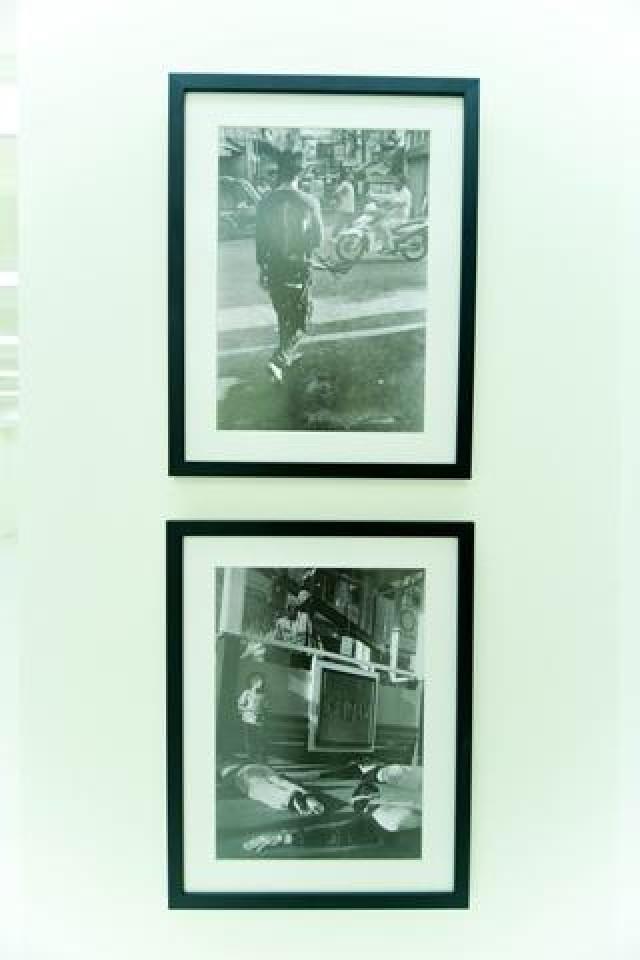
The exhibition itself is a selection of works from the permanent collection, including pieces by Fernando Amorsolo, Arturo Luz, Vicente Manansala, Jose Tence Ruiz, Juvenal Sanso, Fernando Zobel, and many others.Complementing the permanent collection selections are newer works by Buen Calubayan and Aba Lluch Dalena, whose mother, Julie Lluch, is also represented in the exhibit.
There is one notable space in the exhibition, a blank one, to mark the declaration of martial law in 1972. Across that, in a seeming dialogue, are the newer works by Dalena and Calubayan, and on the wall opposite are Zobel’s typewritten lecture notes on an introductory course on contemporary painting.
With Veric and his colleagues using the visual arts as a means to foster educational discourse, it seems that Zobel’s other vision for the Ateneo Art Gallery is being realized. The intent of the original endowment in 1960 was to make it a teaching tool, to show students for themselves what modern art in our country is like. This time, however, such a tool is in the service of asking students to go beyond what can be seen and to reflect on something that can change one’s horizons about the future. — AT, GMA News

