

 GMA Brandtalk
 Tracking
 Archives

Ballet Manila stages a soaring tribute to Tchaikovsky
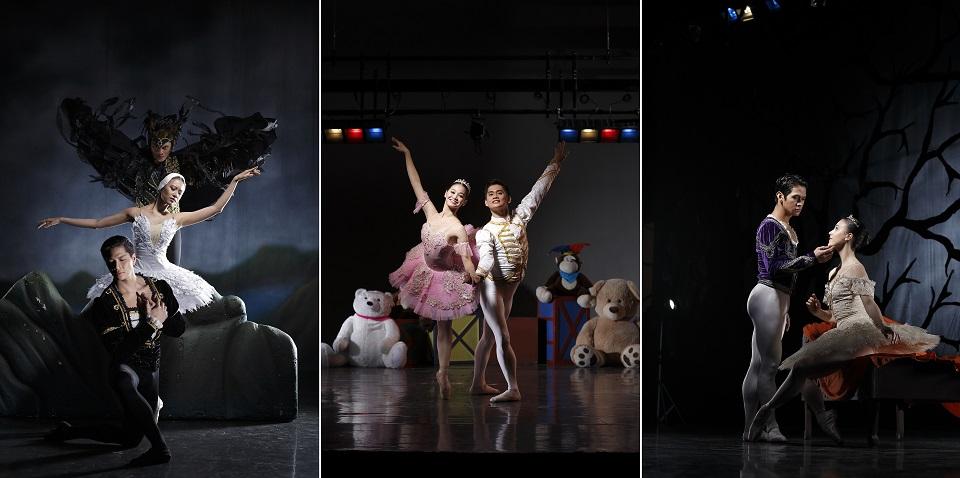
The popular image of a classical ballerina is one portraying a swan, a fairy, or a princess, dancing to the music of a composer whose name is almost synonymous with ballet itself.
Ballet Manila’s latest production featured these same characters by combining three of the best-loved ballets of the Classical era: Swan Lake, The Nutcracker, and The Sleeping Beauty, all by the most influential classical composer in ballet, Pyotr llyich Tchaikovsky.
And what good is a “Tchaikovsky marathon”, as the dancers call it, without hearing the music first-hand? Ballet Manila was accompanied by the Manila Symphony Orchestra, led by international guest conductor Maestro Alexander Vikulov of the Mariinsky Theater.
The show began with a short introduction by veteran theater actor Miguel Faustmann, playing Tchaikovsky himself. He acts as a kind of tour guide through the ballet, offering little bits of trivia on the history of the productions. And while it might be a bit overindulgent to an older audience, the younger generations were sure to learn something new about the ballets.
Swan Lake, historically the first of the Tchaikovsky ballets, opened the show, with Abigail Oliveiro as Odette and Mark Sumaylo as Prince Siegfried. Ballet Manila chose to highlight Act II, with its trademark pieces the White Swan Pas de Deux, Odette’s solo, and the Dance of the Little Swans. Already swan-like in person, Oliveiro’s long, lithe lines made her a queenly yet vulnerable Odette, and her partnership with Sumaylo was fluid and suave.
The unsung heroes that make up Ballet Manila’s corps also have to be applauded. The corps de ballet that framed the duets and variations were unified throughout the whole show, literally from head to toe.
The second part of the show featured dances from The Nutcracker, namely the Rose Waltz and the grand pas de deux. The grand pas de deux was more of a pas de six in this version, as it was performed with five male partners along with Sugarplum Fairy Katherine Barkman, and was a chance for Ballet Manila to show off their danseurs.
Rudy de Dios, who performed the male variation, impressed the audience with his partnering skills, as he caught Barkman in mid-jeté after she was deftly tossed by another partner, as well as assisting Barkman in 16 consecutive partnered grand jetés. A testament to her technique and strength, Barkman performed a different version of the Sugarplum Fairy variation, much harder than more popular versions of the piece.
But the star of the night, hands down, was Dawna Mangahas as Princess Aurora. From her crisp jumps in Aurora’s entrance to her determinedly held attitude in the Rose Adagio, Mangahas dazzled and kept the energy up for the latter, longer half of the show, which covered the bulk of Acts I, II, and III of The Sleeping Beauty. Mangahas performed with a sweet and adorable naivety, and it only took a few playful bats of her eyelashes for the audience to fall in love with her Aurora.
Mangahas was partnered by the Kremlin Ballet’s premier danseur, Mikhail Martynyuk, whose cabrioles were audible from the audience area and whose turns were slick and wonderfully controlled. Martynyuk will return to the Aliw Theater stage for Ballet Manila’s Don Quixote in February 2017.
As the princes and princesses of the stage bowed deeply to the man who gave them life through this music for the grand finale, the audience could feel the impact Tchaikovsky has made on the world. The Tchaikovsky triad of ballets, almost two centuries after their composition, are the still the epitome of classical ballet and will continue to be for a very long while. — BM, GMA News

