

 GMA Brandtalk
 Tracking
 Archives

Here is home, part 1: Leo Orii’s ‘Sampaguita and Gold Button’
It’s been a suprisingly refreshing week despite deep distress with government violence writ large in the world eye. Weariness was just setting in from eight months of daily shock when two new books by two gifted foreigners about their lives in the Philippines came into my hands: Leo Orii’s novella “Sampaguita and Gold Button” and Weldon McCarty’s fantasist memoir “Bamboo Bed.”
They reminded me all over again how beautiful our islands are and what basic goodness our people have underneath a rising river of blood.
Suyin Liu Lee, the Chinese-American executive director of Asia Society Philippines, said that out of all Asia, she and her husband agreed to raise their family in Manila because “he wanted our children to grow up in the closeness of family and friends, with values like empathy, which is central to the Filipino soul.”
It’s striking how these three accomplished natives from far more developed countries homed into a country whose majority lives in crushing poverty. This emerges as the main thread that makes a single story of both books.
♦
Orii is a weaver of exquisite tapestries; McCarty is a writer/musician of the psychedelic kind. Their shared instinctual sense of home in the Philippines reveals their deepest selves reflected in our islands and people—twin mirrors beaming back the nameless magic told over and over again by bemused foreigners.
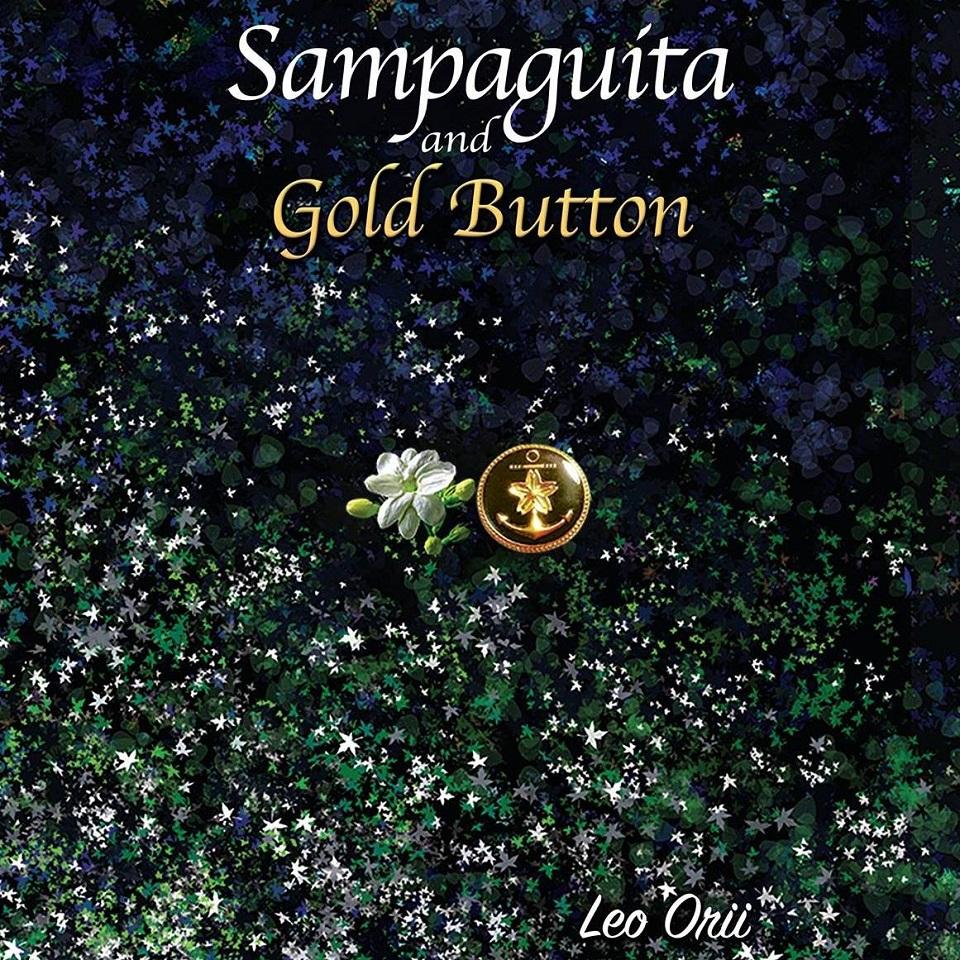
Orii’s surrogate hero Yuji Izaki, 18, sails into Cebu from northeast Japan as a merchant marine: “[R]aised in the midst of rising Japanese militarism, he was educated to obey the words of his seniors, which were almost the same as commands to silence all the juniors. [T]his island was very contrary to that. People here sang their own ‘songs of life’ freely, independently. They were so easy to talk to anywhere on the island...
“...before landing, he had assumed that natives of Cebu would be half-naked savages living together in remote settlements. To the contrary...he learned only after landing that Cebu Island had been ruled and colonized by Spain for three hundred and fifty years. The coexistence of diverse cultures, the communion among people of varied backgrounds and especially heartfelt smiles...contributed to how beautifully that place had evolved.”
Yuji Izaki and "Mac" McCarty have one more thing in common: both their countries bent and twisted their fates in war, welding their souls to the Philippines for life. Fictional Yuji arrives by sea. Real-life Mac flew in as a military draftee at 19, a highly trained cryptographer for the US Air Force during the Vietnam War.
Native Oklahoman Mac found Clark Air Base’s temporary housing a paradise: “It was life-changing—incredible tropical nature, tall hardwood trees sheltering lush and exotic plants nearly covering a cluster of tiny Quonset huts that seemed spaced for privacy amidst the friendly jungle. It was like a resort, like living in a placid cave, isolated from the world... maintained by Filipino staff—people who knew what was good.”
Being plunged into this separate reality would change them both. Yuji feels right at home in Cebu’s warmth up and down the social ladder, awaking his interest enough to quit the merchant marine and switch jobs to a Japanese export-import business so he could stay. More decisive is meeting well-born Cebuana beauty Mina, 18, casually singing and dancing her way to the center of his world.
The young man from cold north of the Land of the Samurai falls in love for the first time in warm Cebu. But Yuji and Mina barely have time to confess their mutual feeling before it is time for her to leave for nurse’s training in Manila, leaving him to his new job in a Japanese export-import business. The parting is difficult enough, but the course of love takes another drastic turn, as Yuji is suddenly summoned home to Sendai: his elder brother, a soldier, had been killed in action in Manchuria; their sorrowing father is gravely ill, and his mother needs him.
Yuji does not tell Mina why he is returning to Japan, but solemnly vows to marry her as soon as he returns.
He finds his wintry hometown flushed with war fever along with the rest of the country. With barely enough time to mourn his brother, he is drafted into the war Japan had just declared on the US and Britain.
He is in the middle of training when his aged parents plead with him to marry a girl of their choosing, on the chance that their only surviving son might leave them an heir before he leaves for the battlefield—and Yuji can no more escape loyalty to family, country and Emperor as stop breathing.
Will Yuji find his way back to Mina, for a rare second glimpse of love eternal ablaze in war? This is best discovered for yourself in this love story told as only an artist can—with a happy ending stranger than you think. — BM, GMA News
“Sampaguita and Gold Button” will be launched on April 8 at TIU Theater in Makati City. It will be available in National Bookstore and Powerbooks by April 8, as well as in Kanto Artist Run Space (Art Gallery) in Makati Cinema Square.
A review of Weldon McCarty’s “Bamboo Bed” follows in part 2.

