

 GMA Brandtalk
 Tracking
 Archives

Kataga marks 10 years with Dolores, haibun, and dagli
Literary luminaries and artists from all over Luzon gathered at the Diliman campus of the University of the Philippines on September 29 to celebrate the 10th year of Kataga, Samahan ng Manunulat sa Pilipinas, Inc.
_2018_10_11_16_09_00_4.png)
Kataga is an organization of creative writers and theater actors “na nagsusulong at nagpapalaganap ng masining at makabuluhang panitikan mula sa karanasan ng lipunan bilang ambag sa pagbabago nito.”
Kataga is the only multi-genre literary organization in the country with 60 full-pledged members dubbed as 'Ganap na Kasapi' across seven chapters: Kataga-Manila, Kataga-Manila South, Kataga-Quezon City, Kataga-Zambales, Kataga-Lucena (Panitik), Kataga-Lucena (Tanghal), and Kataga-Online.
In less than a decade, Kataga’s membership expanded from Luzon to as far as Cagayan de Oro, Thailand, South Australia, and Saudi Arabia. Several members have received accolades from literary contests like the Don Carlos Palanca Memorial Awards and National Book Awards, too.
Dr. Reuel Molina Aguila, the founding member and adviser of the group, is a Palanca Hall of Famer. Other Palanca awardees include previous Kataga presidents Ferdinand Pisigan Jarin, Erick Dasig Aguilar, and Ma. Cecilia De La Rosa, Marco Antonio Rodas, Mark Angeles, Emmanuel Barrameda, John Patrick Solano, and Eugene Soyosa.
Jarin’s “Anim na Sabado ng Beyblade at iba pang Sanaysay” and Jack Alvarez’s “Ang Autobiografia ng Ibang Lady Gaga” received recognition from the National Book Awards in 2008 and 2016, respectively.
The performance of Aguilar’s stage play Solomon: The Musical was awarded as the Best International Show in the Escenamateur ‘Juan Mayorga’ Prize of the Performing Arts by the International University of La Rioja (UNIR) in Madrid this year.
There are members who’ve served as panelists and fellows in various national writers workshops organized by prestigious universities in the country. Moreover, Dr. Aguila and Angeles were writers-in-residence of the International Writing Program in the University of Iowa, USA, in 1983 and 2013, respectively.
But above the formalist training its members receive, Kataga aims to cultivate and advance the artistry of writing through collective action. As cultural workers, the members lead and undergo lecture-workshops, underscoring the need to write for the masses.
Progressive Roots
Kataga was established on September 27, 2008 to address the need of young writers to continue their craft after college. At that time, there was no association of writers that responded to the need.
“Sa bahay nina Jess at Lilia Santiago naganap ang founding ng Kataga; nasa Gomburza St., UP Diliman,” Dr. Aguila related. “Makatapos ang workshop na Palihang Rogelio Sicat, at sa sigla ng ilang mag-aaral sa Malikhaing Pagsulat, nagsama-sama ang mga sampung kabataang manunulat at itinatag ang Kataga,” he said.
Kataga traces its progressive tradition back to the Martial Law period.
“Sa panahon ng BM, nabuwag ang kasisimula at pinakamalaking samahan ng mga manunulat, ang PAKSA (Panitikan para sa Kaunlarang ng Sambayanan). Gawing 1973, itinatag ng ilang manunulat ang Galian sa Arte at Tula (GAT) at siyang naging dominante at bukod tanging grupo ng mga manunulat. Nabuhay ito mula 1973 hanggang 1993,” Dr. Aguila explained.
In its twenty years, GAT made a huge impact on Filipino literature. But when GAT ceased to be, "nagkaroon ng void sa mahabang panahon. Nagkanya-kanya ang mga manunulat, nagtayo ng maliliit na grupo na sa ilang taon lang ay nabuwag din,” said Dr. Aguila, who was also a GAT member.
“Samantala, parami nang parami at pasigla nang pasigla ang pagsusulat at publikasyon dahil na rin sa pagkakaroon ng pormal na kurso sa pagsusulat sa kolehiyo, ang pagdami ng mga publishing house, pagdami ng mga workshop, at pati na ang internet ay nakatulong sa popularisasyon ng panitikang Pilipino.”
On Haibun and Dagli
Following GAT’s practice, Kataga advocates independent publication.
Last September 29, Dr. Aguila launched two indie books Lagom, Mga Piling Akda, a collection of his selected and unpublished works, and Anino ng Yapak: Mga Tulang Haibun, the first haibun book in the country.
_2018_10_11_16_09_00_3.png)
Haibun is a literary form that originated from Japan. It is created by combining prose and haiku. Dr. Aguila’s “Haibun sa Pagbabalik” won for him the title Makata ng Taon 2008 from the Surian ng Wikang Pambansa.
The group had already produced two indie anthologies in 2013 and 2016, collecting works of its full-pledged members. Chapters and individual members also published their own collections. The anthologies include poems, poems for children, short stories, personal essays, one-act plays, and dagli.
Dagli is a native literary form. At the turn of the 20th century, Vicente Sotto, the Father of Cebuano Short Story, wrote sugilanon pieces which were considered as dagli. Tagalog writers also wrote dagli.
As part of the anniversary celebration, the group launched Gawad Kataga sa Pagsulat ng Dagli. Over 70 entries from Cagayan Valley to South Cotabato were received. Winners include Napoleon Arcilla from Catanduanes (Unang Gantimpala), Christian Paul Camposano from Marikina City (Ikalawang Gantimpala), and Danica Matias from Taytay, Rizal (Ikatlong Gantimpala). The Board of Judges include Eros Atalia, Jack Alvarez from Kataga-Online, and Isaac Ali Tapar, current President of Kataga.
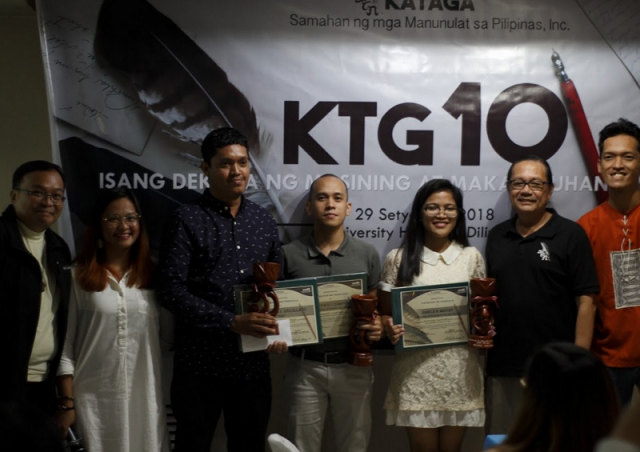
“Ang Gawad Kataga ay ang pagsisimula ng taunang patimpalak ng Kataga upang kilalanin ang mga nagsisimulang manunulat sa bansa. Una itong nagbukas sa genre ng dagli upang bigyang lunan ang dumaraming manunulat sa bansa na nagsusulat nito. Sa mga susunod na taon, magbubukas ang Gawad Kataga sa iba pang genre ng panitikan. Layon ng Kataga na matipon ang pinakamaraming bilang ng manunulat sa iba't ibang genre na kaisa sa pagsusulong ng makabuluhang sining at panlipunang pagbabago,” Tapar explained.
Restaging Dolores
But Kataga is not only a writers’ organization. It also has a performing arm, Kataga-Lucena (Tanghal), which is the first community theater in Lucena City.
“Tagapagtanghal ng makabuluhang sining ang Tanghal. Naglilinang ito ng mga talentong pansining sa lalawigan ng Quezon. Nagre-rehearse sa mga abandonadong bodega at nagtatanghal sa sinehang malaon nang walang sine,” Rodas, the chapter’s current Artistic Director, explained.

Some of the senior members of Tanghal were part of Kuta ng Sining. The chapter is currently affiliated with Lucena City Performing Arts Association (LCPAA).
Last month, the theater group restaged Rodas’s full-length play Dolores: Ang Pagsusuob, which the playwright co-directed with Jonna Reyes and Zedric Lorzano. The play received a grant from the National Commission for Culture and the Arts (NCCA) in 2003.
The play revolves around Dolores, Quezon, a “mistikong bayan ng mga sagradong lihim at gunita—pook ng anting at pananampalatayang sinusubok ng tabak, o ng balang gawa mula sa tinunaw na krus na pilak.”
In Full Swing
Through writing and stage performance, Kataga underscores the deep appreciation of our historical and cultural heritage.
Most of its members are young professionals in different fields: from Filipino, to science, programming, psychology, OFW, music, and painting.
“Bukod sa regular na palihan ng mga akda, nagbibigay pag-aaral ang Kataga hinggil sa panitikan at lipunan sa mga kasapi nito. Mayroon itong kurikulum sa iba-ibang genre ng panitikan na ibinibigay sa bawat miyembro. Malinaw sa Kataga na ang pagsusulat ay isang disiplina kaya naman palagian ang pag-aaral ng mga miyembro nito sa mga usaping pampanitikan at panlipunan,” Tapar said.
Kataga chapters also conduct literary workshops for college students and language/literature teachers.
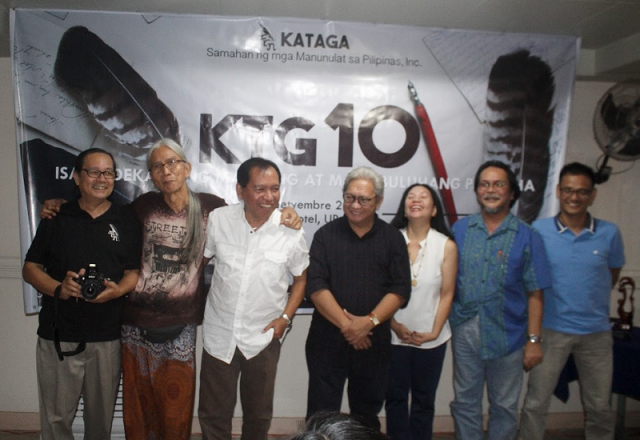
In its 10th anniversary, Kataga has inducted a roster of Halal na Kasapi, literary luminaries and artists who helped and inspired the members.
The honorary members include Maria Lourdes Abulencia and Ma. Carmen Marasigan for Kataga-Lucena (Tanghal), Joseph E. Jarasa for Kataga-Lucena (Panitik), Jess Santiago, Marne Kilates, Victor Paz, and Danilo Consumido for Kataga-Quezon City, Mayette M. Bayuga for Kataga-Manila South, Richard R. Gappi for Kataga-Online, and Luchie Maranan for the soon-to-be-established Kataga-Baguio.
Tapar sees that Kataga is set to become a more vigorous collective of cultural workers in the next decade.
“Sa masiglang produksyon ng pitong sangay ng Kataga sa kasalukuyan, patuloy na lalago at madadagdagan pa ang mga aktibong kasapi at sangay. Patuloy ring magluluwal ng mga akda, libro, produksyon ang mga miyembro nito sa layunin makapag-ambag ng panlipunang pagbabago,” he said. — LA, GMA News

