

 GMA Brandtalk
 Tracking
 Archives

‘Scanitikan’ lets millennials scan QR codes to read books
Laguna-based artist has invented a way to encourage young readers to read Ibong Adarna and Jose Rizal’s Noli Me Tangere.
Scanitikan, a portmanteau of “scan” and “panitikan” (literature), is a brainchild of Anathema Corpus, a creative consultant from Paete, Laguna.
Corpus converted book-length literary works into QR Codes (Quick Response Codes) so readers could enjoy the digital experience.
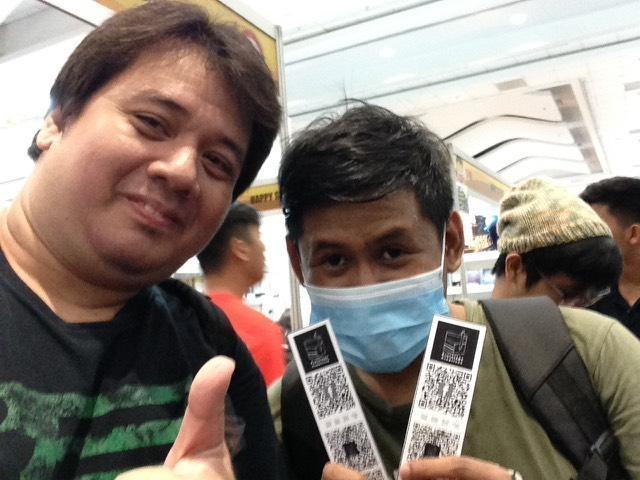
From turon to Scanitikan
At first, Corpus designed his Scanitikan project as a souvenir for his writer friends he planned to meet at the Manila International Book Festival last year.
According to Corpus, the VP and Head of Outreach of SULAT (Samahang Umaagapay sa Literatura At Talento) Pilipinas, a local group of literary writers, Scantikan was inspired by turon.
“Dahil sa isang turon sa mall, nag-pop ang isang hamon. ‘Yung turon at commodities, puro scannable at accessible. How about gawaan naman ang works of art at panitikang Pilipino, di ba?” related the Program Director of B.A.S.Y.A.N.G (Babasahin at Sulating Yaring-atin, Atin Nang Galugarin!) Project, a collective that organizes community-based workshops, creating and disseminating books written by and for children.
The project is arguably the first QR code ‘scan-to-read’ literature in the country.
Scan and read
According to the 2017 National Book Development Board (NBDB) Readership Survey, around 92% of young readers prefer to read non-academic books, like audio and eBooks.
Readers are turning to online stores to order paperback books. But shipping costs and the door-to-door delivery can be a drag.
More books in the market are also made available as electronic books or eBooks. With e-reader apps and devices, like Google Play Books and Amazon Kindle, bookworms can take their entire library with them wherever they go.
Books with QR codes make reading more interactive and fun. All the reader needs is a mobile app to scan the code.
Some printed storybooks even include QR codes in their pages. When scanned, the codes send them automatically to websites with supplementary materials, like images, audio clips, and videos.
It's something Corpus is pretty well-versed with.
His career expertise leads to “payment prompt at corporate details. Kaya ayun, why not gamitin as archiving and as a resource ang na-QR na pieces? Accessibility and storage-wise, okay siya kasi.”
He tried other sorts of coding, including barcoding "“pero mas okay at mas accessible ang QR code," he explained.
Scanitikan aims to scan some of the Philippine literature’s public domain literary pieces, and sooner, anthologies and pieces authored by local contemporary writers.
Aside from Ibong Adarna and Noli Me Tangere, Corpus has already converted the Bible, Doctrina Christiana, and his own work, Mamiso SugarsQuoted Minizine.
“Perhaps, come next month, after finishing the proper documentation and assistance, mas marami na akong mai-scan at maiso-showcase na literary pieces at collaboration,” he said.
Corpus, who once considered himself as a ‘rage poet,’ is the grandson of a zarzuela writer during the ‘40s. He is currently studying Sertipiko sa Panitikan at Malikhaing Pagsulat sa Filipino at Polytechnic University of the Philippines, Manila. — LA, GMA News

