

 GMA Brandtalk
 Tracking
 Archives

Young Filipino filmmakers heading to Cannes for their short films 'Agapito' and 'Ali'
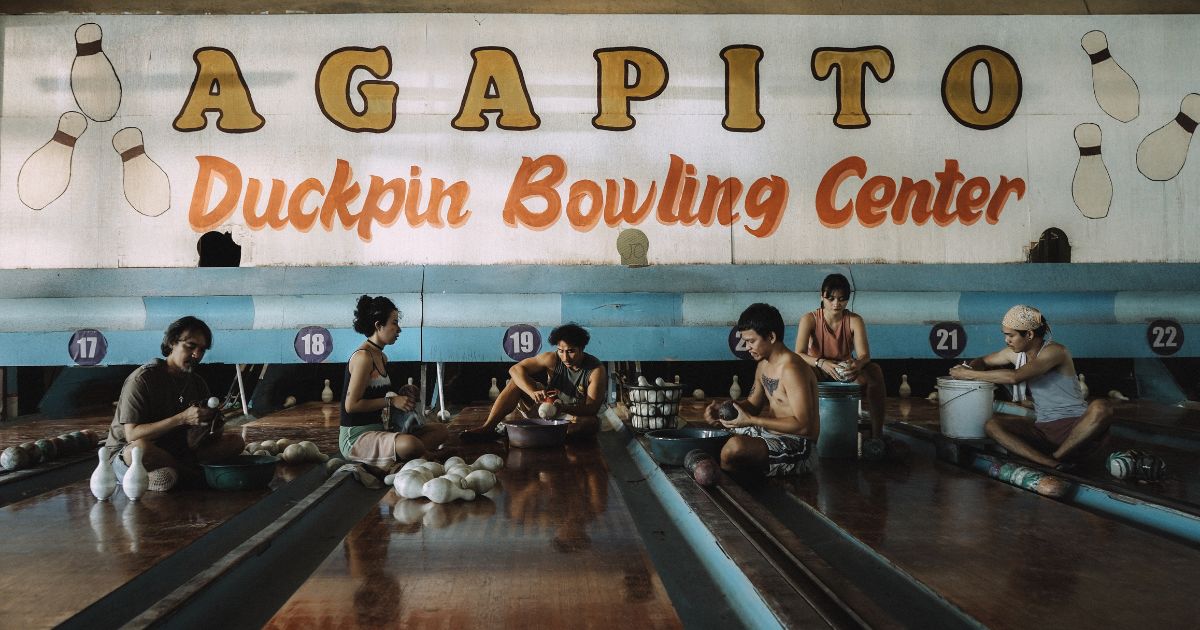
A young vibrant, ambitious, and talented group of filmmakers is making their way into this year's Cannes Film Festival again – Arvin Belarmino, Kyla Danelle Romero, and Kristine de Leon.
Writer-directors Belarmino and Romero co-directed the short "Agapito" and co-wrote another short "Ali," which are both nominees to the 78th Cannes Film Festival Short Films category.
Selected from 4,781 films, they are part of the lucky 11 shorts from all over the world that will be presented this year in competition. The selection is comprised of nine fiction short films and two animated short films. Five of them are directed by women.
The Short Film Palme d'Or will be handed by the jury chaired by Maren Ade on Saturday, May 24, during the closing ceremony.
Belarmino, 37, was born in Masbate and spent most of his years growing up in Quiapo, Manila. He took up information technology in De La Salle University at Dasmariñas, Cavite. He discovered his love for movies at age eight when his father took him to the video stores.
Romero, a psychology graduate, has already won several awards and nominations in the Philippines (GAWAD, FAMAS, NETPAC, Cinemalaya) and has now become the first Filipina filmmaker to compete for the Palme d'Or award for the Short Films category at the Official Competition in the Cannes Film Festival with "Agapito."
Kristine de Leon, a communication arts graduate of Miriam College and a film graduate at Busan Asian Film School, co-produced both short films "Agapito" and "Ali," both nominees in the Short Films category in the prestigious Cannes Film Festival.
We were able to interview the three young filmmakers via email and below they share their excitement, their challenges and their dreams.
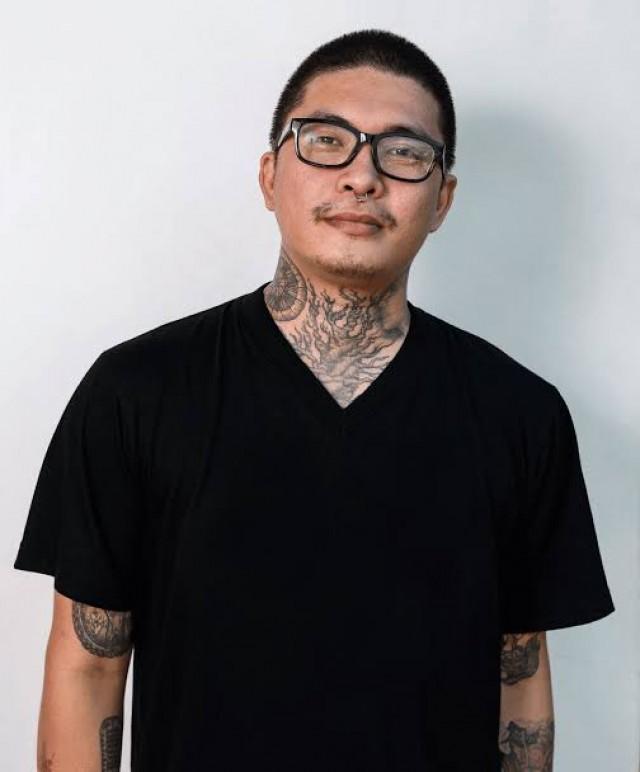
Arvin Belarmino (AB): We received a call and email from the Cannes film festival. We were surprised because we were not expecting it, but we are so grateful that it was selected in the official short film competition because Agapito was made with genuine heart and passionate collaborations.
Kyla Danelle Romero (KDR): Funny story, I actually found out about the news while I was at a family gathering, and when I got the call, I stepped outside. It was a very unexpected, almost miraculous kind of call. So, I was hysterical outside the restaurant! And my mother was the one who stepped out. She was the first who found out about everything. And next, I called Arvin, who became hysterical as well --- pinching himself out of disbelief.
It was such a perfect moment. I was with my mother, and Arvin was with his brother, the namesake of the film, "Agapito" himself. It was perfect because the film itself was a dedication to our loved ones. And we were honored to celebrate the very moment of the announcement with them by our side.
Can you please tell us about the inspiration for these two short films?
AB: My personal intention for the film was inspired by my brother, Agapito, who has special needs. That is why we named the film after him. The film is dedicated to all our loved ones who long to spend quality time within the midst of our busy lives. Creating those special situations and memorable moments for those who are special to us. And on how our loved ones can ground us and keep us from taking things for granted.
KDR: Agapito is something that was inspired by our loved ones and the things we are most passionate about.
One day last year, we encountered news about the existence of a duckpin alley, which still operated like in the olden days, where humans were behind the backdraft, setting the pins manually instead of machines, which are typically used today. We were thrilled upon seeing this and wanted to make a material about it.
I guess what really struck a chord in me after I saw that place was the fact that it looked very familiar to me. My late father, Danny Romero, was a sports anchor turned sports coach, and his pure energy and passion led him to establish a multi-sports facility in Imus, Cavite. This facility is where I grew up in. Every day after school, I'd go "home" straight to this facility and play with all the stuff I can find – from badminton rackets to ping pong and billiard balls.
I became equally passionate about sports because of my dad, and I know that if I wasn't a filmmaker today, I'd probably be like him — the boss and head coach of a sports facility.
This might have partly inspired the character of Mira, the supervisor of Agapito Bowling Center. She is the strong woman who leads and defends her group of pin setters, while lovingly caring for her brother Junior, a character inspired by Belarmino's brother, Agapito himself. She's the embodiment of the strong women in Arvin's life -- and the woman that I, at one point, wanted to be.
Meanwhile, as Agapito is inspired by the things we have and love — Ali is inspired by the things we cannot have, the things that we only love in secret. While Arvin and I were brainstorming about the concept with director Adnan, we were pitching a story that was inspired by our own provinces in the Philippines. I am from Agoo, while Arvin is from Masbate. As we threw ideas around, we realized that Philippines and Bangladesh are more alike than we all think — especially in the sense that we are both from cultures where many things are suppressed. And our means of breaking free from suppression is, and has always been, through art.
And that became the soul from which "Ali" came to be.
Please tell us what you look forward to at this year's Cannes Film Festival.
AB: It's our first time taking part in the official short film competition at the Cannes Film Festival. We are looking forward to sharing our film with the world and meeting passionate and talented filmmakers at the festival. And to watch a lot of films as well to be continuously motivated by Cinema.
KDR: I have been to Cannes twice before, and both times are so completely different from each other. It has always been a very exciting festival, because it is completely unpredictable. It is a haven for creatives and cinema lovers, and a fascinating place full of opportunities for people who want to break into the film industry. For us, it has been the place where we connected with many future collaborators — from our collaborators in Radikals to now, our collaborators in Agapito and Ali. It's the birthplace of many brilliant ideas. And I expect no less than the same unpredictability and exciting possibilities for this year's festival.
Other than that, I look forward to seeing Scarlett Johansson in the flesh. Hopefully. Fingers crossed!
A lot of filmmakers dream of making it to Cannes and you are one of the lucky ones to get in knowing how challenging it is to make it to this prestigious festival. What is the significance of you being able to be part of this year's festival?
AB: We are extremely grateful and honored that the festival appreciated and selected "Agapito" to be part of the official competition. For us, this film is genuine and pure because of how it was made. From the passionate cast and crew and of course co-directing it with Kyla Romero was indeed truly a wonderful experience. And we are thankful for the trust that our producer Jon Galvez and Carlos Ortiz of 901 STUDIOS gave us, also with the help of Mc Murphy Quito, and Abijah Bautista, and finally together with our co-producer Kristine De Leon, Dominique Welinski, and Alemberg Ang.
Everything was made with care and love. It was truly a very collaborative experience, which I believe is the best way to make a film.
KDR: It is always a huge feat, whenever a Filipino film gets into Cannes. It proves that Filipinos are more than capable of entering the world stage, and even more so dominating it. Hence, our venture to Cannes is of great significance, and it gives the hope that Cannes has its doors open for filmmakers like us, who simply want to tell true, sincere stories.
I guess another significance it would serve is for Filipina filmmakers. It proves that we Filipinas must take up space in the industry, because we also deserve to be here. There are audiences worldwide willing and ready to listen to our stories. In many years, Cannes Film Festival has only accepted a few Filipino films in their official selections – and now, for the first time, they finally have one directed by a Filipina. So yes, Filipina filmmakers and Filipina film workers can, and must take up space. The industry needs more of us.

AB: The whole cast and crew were all invested in the story. If there are changes that need to be done during the shoot, everyone is supportive and open. Me and Kyla feel very blessed and grateful to all the people who joined us in this journey making Agapito. All of our sacrifices are worth it and appreciated.
KDR: Belarmino and I have been collaborators and co-artists for a long time. We know each other and know well how to balance each other out. Whenever one goes wild with their imagination, the other becomes the voice of reason. Since we are both wildly creative beings, there are times when our ideas clash, and that's when we do what we usually call grounding — stepping away from the board or pen and paper, and going back to people or places that fuel us, that ground us or help us think straighter. For instance, going to Luneta or Quiapo, which are special places for us both, and just doing random, "human" things like eating ice cream, people-watching, and playing a round of color game. Then once we've figured out a thing or two, we go back to the board again – either to write straight on it or to break it (figuratively). Most of the time, it's the latter, that's why we always end up with very unique films, and very out-of-the-box narratives.
The collaboration process is always a roller coaster ride for both of us, but moments like this, and films like Agapito and Ali, are enough to prove that our kind of collaboration works.
What were the challenges you encountered in making "Agapito" and how did you hurdle them?
AB: The time and shoot location.
The bowling alley where we shot the film is operational and they need to open it for bowling players right after our shoot. We made sure that we planned our schedule very well to get all the shots we needed while considering the schedule of the bowling alley. Even though the location space was limited, and certain areas were small, we managed to make it work through a tight collaboration with production design, camera department, the actors and the very supportive owners of the bowling alley. It was such an enriching experience for us.
KDR: We've faced a number of challenges on and off set, but one thing is for sure, and this is something Belarmino and I undoubtedly agree on – the "Agapito" set was pure, sincere, and healthy. It was passion, grit, and love for our own artistries that drove us to create and persevere every minute we're in the set, and every moment we spent in the editing room. "Agapito" is proof that great films can (and should) be made with healthy and ethical sets.
In writing the screenplay for "Ali," what were your biggest obstacles and how did you overcome them?
AB: Writing the screenplay for the short film Ali was a smooth and collaborative experience because we have worked with the team before with RADIKALS and we are all friends. I gave a concept that is connected to my regional roots from Masbate where I was born. Then I aligned this concept with the regional roots of Adnan, the director of Ali. That's why the intention and result was authentic. Similar to the feeling of making Agapito.
KDR: The biggest obstacle in writing that screenplay, to me, was finding our common ground. It is not easy, writing a foreign film with local sensibilities — in this case, writing a Bangladeshi story with Filipino eyes. It took a lot of self-awareness for us to be able to transcend those boundaries and make something that we can all call our own, a story that transcends our own cultures.
But once we leaped through the obstacle, and saw what's on the other side, we were in awe. We had not just any story, but a story both universal and regional. Something that is from our own backyards, but we are sure the world can and should see.
Please talk about your collaboration with director Adnan Al Rajeev on "Ali" and when you first met him?
AB: Adnan is one of our producers in "Radikals" which was part of Critics Week in Cannes last year. Adnan is a kind person and humble collaborator. He is also a director and then he reaches out asking for a concept for a short film. I did not think twice because I know he is also a visionary and a passionate entity. So, I was excited about writing and making "Ali" with him, Kyla, Kristine and Tanveer. We all have the same love and passion for making films while understanding different cultures.
KDR: We first met Adnan in person in Cannes, but we had been virtual collaborators beforehand, through "Radikals." He is a very sincere and sweet person, and a powerhouse of a director and creative. He is also very humble! He loved eating Lucky Me Pancit Canton with us for breakfast.
In terms of the collaboration process, it was also very smooth! Director Adnan is very open and receptive. He listened very well and seamlessly combined all our wild ideas into one great film. We'd definitely love to collaborate with him again.
What do you hope to achieve while you are in Cannes?
AB: For me, cinema is a never-ending exploration. Being part of the short film competition in Cannes is already such a blessing. I am humbled by this experience. I will always be open and will always be beyond grateful for the upcoming opportunities and blessings.
KDR: Getting into Cannes is an achievement enough. Honestly, while I'm there, I just want to make the most out of the festival and represent those I need to represent the best I can.
Other than that, I also plan to network and make the most out of the programs, especially the Focus COPRO' program by Cinéma de Demain — where I am chosen to participate with my first feature-length film project, "Giliw", which is now in development.
After Cannes, what is next for you?
AB: I will be shooting my first full-length feature film, "Ria".
KDR: What's next is more films. Our feature film, "Ria", to be directed by Arvin Belarmino, and co-written by Belarmino and myself, is set to go into production by June. I also have another short film, "Ligaw", which won the iACADEMY iNDIEGENIUS grant, and is set to go into production soon. So basically, after Cannes, it's back to work. Back to creating. We have a lot to work on, and a lot more up our sleeves.
We're excited about everything that's about to come this year!
Kristine de Leon, co-producer of "Agapito" and "Ali"
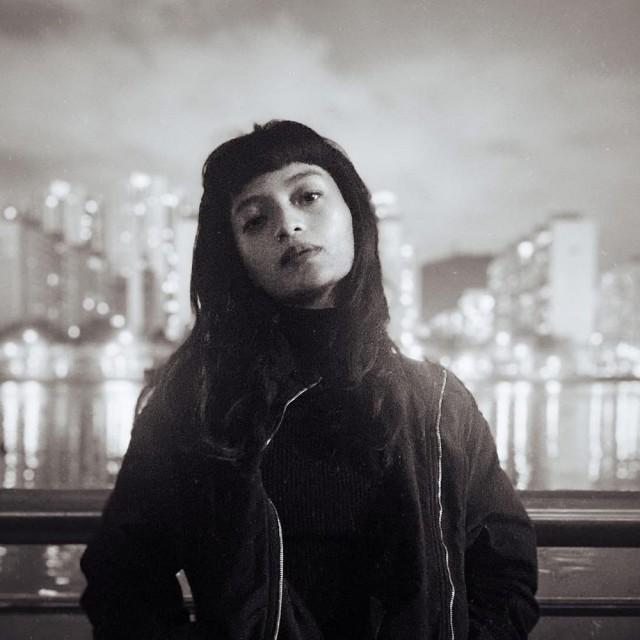
In 2023, I had the privilege of attending the residency program at the Busan Asian Film School in Korea, a nurturing ground for emerging Asian producers. There, I met Tanveer Hossain, a visionary producer from Bangladesh. Our shared passion for Asian cinema sparked a profound connection, leading us to envision a bridge between Southeast and South Asia. We believed that by harnessing our own resources and narratives, we could craft films that resonate deeply and authentically.
That same year, while producing Arvin Belarmino's short film Radikals, we faced a significant financing gap. I recalled Tanveer's commitment to our shared dream, and true to his word, he introduced me to Adnan Al Rajeev, a prominent figure in Bangladeshi media. Adnan not only provided financial support but also contributed creatively, embodying the collaborative spirit we aspired to. Radikals premiered at the 63rd Semaine de la Critique at the Festival de Cannes in 2024, a milestone that reaffirmed our vision.
Inspired by this success, I inquired about Adnan's aspirations. Despite his established career, he expressed a desire to direct. Together with Tanveer and Arvin, we charted a path for his directorial journey, beginning with short films. We aimed to create a film that would authentically reflect both our countries yet still emphasize Adnan's unique voice. This collaboration culminated in the formation of Katalog, a film boutique operating in both Bangladesh and the Philippines.Our mission: to champion a new wave of cinematic expression—bold, thought-provoking, and unapologetically original.
Katalog's inaugural production, Ali, directed by Adnan, was selected for the Official Short Film Competition at the Festival de Cannes in 2025. Simultaneously, we co-produced Agapito, a project by Kyla Romero and Arvin Belarmino, which also secured a spot in the festival's main competition. These accomplishments are not just personal triumphs but a testament to the power of cross-cultural collaboration and the boundless potential of Asian cinema.
How was it collaborating with director Adnan Al Rajeev? What was his vision, and how did you help make him realize that as a producer?
Adnan is truly one of the kindest souls I've had the pleasure of working with. He would often call us out of the blue, simply to express his gratitude and appreciation for our support. His humility and warmth are deeply moving.
What sets Adnan apart is his ability to listen—genuinely and attentively. He absorbs feedback from everyone around him, thoughtfully reflecting on how each perspective can enhance his storytelling while staying true to his unique voice and vision.
Throughout this journey, I've been fortunate to collaborate with producer Tanveer Hossain. Both Tanveer and Adnan have placed immense trust in me regarding the production strategy and process, even as a young woman navigating this industry. Their confidence has been both empowering and affirming.
In crafting this intimate narrative, Adnan sought to unveil a broader truth—a tale of love, sacrifice, and the intricate ways in which families and communities shape our identities. While deeply rooted in his personal and national context, the story transcends borders, echoing a universal reality: countless voices remain unheard across the globe. By bringing these silenced stories to light, Adnan aims to honor Bangladesh's legacy of resilience and give voice to those whose truths have long been suppressed.
How was it collaborating with Arvin Belarmino and Kyla Romero for the script?
Arvin and Kyla were deeply involved in the process, truly collaborating with Adnan to shape the material through his unique voice. They conducted thorough research on both Bangladesh and the Philippines, exploring the nuances of each culture. They listened closely to one another, often brainstorming the wildest scenes—and agreeing on them with full trust. The process was smooth and worry-free for me. Having worked with them for nearly five years, I know their shared commitment to uplifting every filmmaker they encounter.
Talk also about your collaboration as co-producer in the Belarmino-Romero film "Agapito." How would you describe Belarmino and Romero as filmmakers? What made you join the bandwagon as a co-producer in their film?
I am the producer of Arvin's debut feature film, Ria, so whatever Arvin wanted to do before the feature he wanted me to be part of the journey which I appreciate a lot. In this short, I take the lead in guiding its international strategy—an area I've been specializing in. I'm incredibly grateful to collaborate with Jon Galvez and Carlos Ortiz as delegate producers; the three of us share the same principles and goals when it comes to filmmaking.
Arvin and Kyla—my god—have the talent, grit, and passion that define true filmmakers. Working with them has never been difficult because they listen, they deliver on deadlines, and above all, they trust. The three of us are friends, and we've already navigated many uncertain and risky paths in filmmaking together. It's always a privilege to work with such brilliant, fearless minds. I'm genuinely a fan of both of them. They believed in me and trusted me to help bring their vision to life at a time when my filmography was still growing. That mutual belief continues to drive our collaboration.
When did your friendship with Belarmino and Romero start? How is it working with them?
I had the chance to work with Arvin on a passion project years ago, and even then, I was already a fan of his fearless approach to filmmaking. Fast forward to when I received a call asking if I wanted to be his producer—I couldn't believe it. I kept thinking, "Why me? There are so many others more experienced." But over the years, I began to understand why. I also had the opportunity to work on Kyla's project, Dosena, which further deepened our creative connection.
What truly strengthens our team is simple: the three of us just genuinely want to make a good film. That shared intention has always been our foundation. These two made me the producer I am today.
What are you looking forward to at this year's Cannes Film Festival? What do you hope to do or see?
To be honest, this year I just wanted to enjoy the festival and watch films! In recent years, I was caught up in business meetings or feeling unwell. Now, I'm excited to finally take the time to see a range of films—especially those from Asia. And of course, to have a bit of team building with Arvin and Kyla: eating ice cream by the beach, sharing our wildest dreams and biggest fears about the upcoming shoot for Ria, Arvin's debut feature.
You are part of a growing number of young filmmakers who are making a presence on the international scene. What is the significance of this for you and for the Philippine cinema?
I honestly thought my career was over when I found out I was pregnant—the same year I met Arvin and Kyla. That's why this milestone holds such deep personal meaning for me. It gave me the chance to prove that motherhood doesn't have to stop you from pursuing your dreams—in fact, it can fuel you to work even harder.
This achievement is something I want to share with women and with young, regional producers—especially those who are often overlooked or don't know where to access resources. I want to show that we can tell stories that resonate on a global stage. I believe that by nurturing young filmmakers—just as I once was—we build a strong foundation for more diverse, regional narratives that enrich Philippine cinema.
How do you see yourself in five years?
In five years, I see myself continuing to work with the incredible people I've started my career with, while also collaborating with more women and regional filmmakers. I hope to be a mentor to young women producers, passing on the wisdom and guidance that Alemberg Ang gave me. I want to help shape a new generation of storytellers and ensure their voices reach the international stage.
If you had a dream project, what would it be like?
Remton Zuasola's Ang Damgo Ni Euleteria inspired me to tell stories and helped me realize the kind of narratives I want to bring to the screen. It's my favorite film, and my dream project is to collaborate on Remton's next feature! I'm also working on Glenn Barit's upcoming second feature, Luzonensis and Floresiensis, following Cleaners. When I was younger, I just wanted to meet these filmmakers; now, I'm thrilled to be making films alongside them.
My goal is to help elevate regional filmmakers to the international stage through co-production and international labs. I believe their voices deserve to be heard globally. —MGP, GMA Integrated News

