

 GMA Brandtalk
 Tracking
 Archives

'Pingkian: Isang Musikal': A fiery call to action that's more relevant than ever
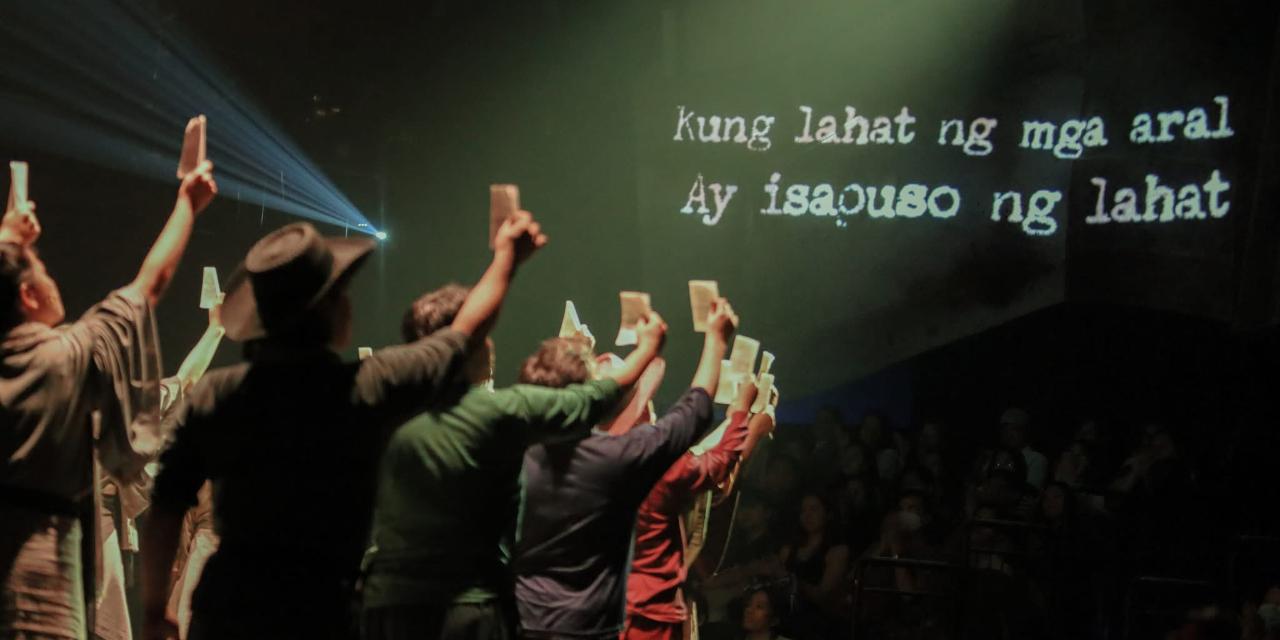
Tanghalang Pilipino’s "Pingkian: Isang Musikal" returned to the stage this September, and if its 2024 debut was already stirring, this year’s revival blazes even brighter. Fiercer, sharper, and more urgent, it transcends the bounds of a historical musical and becomes a powerful reminder of what it truly means to fight for freedom.
I first watched "Pingkian" last year, and it sparked in me a profound sense of patriotism — a resolve to stand against injustice and honor the dreams of heroes who longed for a free and just nation. Seeing it again in 2025, against the backdrop of corruption scandals, political controversies, and widespread public frustration, made the experience feel even more necessary. This is more than a stage production; it is a call to action.
A revolutionary story reimagined
Written by Palanca Award-winner Juan Ekis, with music by Gawad Buhay-recognized composer Ejay Yatco and direction by Jenny Jamora, "Pingkian" tells the story of Emilio Jacinto, the young revolutionary known as the “Brains of the Katipunan.”
The title itself refers to Jacinto’s nom de guerre, Pingkian, a Tagalog word meaning “flint” or “spark-maker.” It’s a fitting metaphor for Jacinto’s role in igniting the flames of revolution through his ideas and writings, sparks that helped light the fire of freedom.
The musical unfolds in Jacinto’s fevered hallucinations after being gravely wounded and captured by Spanish forces. In this liminal space between life and death, he encounters figures from his past and imagined future, including Andres Bonifacio, Jose Rizal, and his mother, Josefa Dizon. These dreamlike conversations allow him to confront his doubts, question the impact of his work, and reckon with the legacy he hopes to leave.
This inventive structure blurs the lines between memory and imagination, history and ideology. It transforms the revolution from a static series of events into a living dialogue between past and present — making history feel immediate and alive rather than distant and untouchable.
Performances that ignite
At the heart of it is Vic Robinson’s riveting portrayal of Emilio Jacinto. Robinson captures both the intellectual fire and youthful passion of the revolutionary hero, his powerful voice carrying the weight of Jacinto’s ideals while revealing moments of doubt and vulnerability.
Gab Pangilinan shines in dual roles as Florencio Reyes, the traitor who betrays Jacinto, and Catalina de Jesus, his lover. She transitions seamlessly between the two, giving each depth and nuance.
Paw Castillo brings a commanding presence as Andres Bonifacio, capturing both the Katipunan leader’s fiery resolve and his fraternal bond with Jacinto. Meanwhile, Kakki Teodoro’s calm and dignified Rizal grounds the philosophical debates with quiet strength and emotional clarity.
Words as weapons
One of the show’s most striking moments is "Sapat Ba ang mga Salita? (Are Words Enough?)," where Jacinto questions whether his writings can truly change hearts. As the author of the Kartilya ng Katipunan — the movement’s manifesto on liberty, equality, and moral conduct, Jacinto helped shape the revolution’s ideological foundation. Yet he wonders if words alone can stand against oppression.
The musical offers a resounding answer: they can. In a pivotal scene, Rizal reminds Jacinto that revolution is not only about bloodshed — ideas are weapons too. Words can awaken the spirit and alter the course of a nation.
A standout addition in this year’s run is a rap-style balagtasan between Rizal and Jacinto, a bold fusion of poetic tradition and contemporary rhythm. It electrifies the stage and shows how timeless ideals can resonate in new forms, proving Pingkian’s power to honor history while speaking directly to today’s audiences.
A dream of freedom
The emotional peak comes when Rizal shows Jacinto a vision of the future he dreamed of: a nation free from foreign rule, where Filipinos are equal and self-determined. It’s a stirring glimpse of hope and a heartbreak, knowing Jacinto, like Rizal and Bonifacio, did not live to see it realized.
The song Pangarap Ko’y Kalayaan (My Dream is Freedom) captures this longing in its moving refrain:
“Pangarap ko’y kalayaan, malayang Katagalugan.
Bayang walang inaapi, bayang akin ang sarili.”
The music swells with emotion, and its message lingers long after the curtain falls: freedom remains a dream worth fighting for.
A musical for our times
What makes "Pingkian" so compelling is not just its artistry but its resonance today. In a political climate marred by corruption and injustice, the show holds up a mirror to society. Jacinto’s words on freedom, equality, and moral courage are not relics of history — they are calls we must still answer.
His struggle to awaken a people under colonial rule speaks to a generation grappling with disillusionment and powerlessness. Through music and storytelling, Pingkian reminds us that the revolution’s work is unfinished, and every era must fight for justice in its own way.
As an original Filipino work, "Pingkian" is a triumph of artistry and substance. It celebrates history without romanticizing it, confronts the present without preaching, and sparks something powerful within its audience. In a time when truth is distorted and public trust is fragile, Pingkian rekindles the fire of what we once fought for and what we must continue to fight for.
It deserves to be seen not only by theatergoers but also by those in power, by educators and students, and by anyone who still believes in the promise of this nation. For those who experience it, "Pingkian" will not simply be a show to remember; it will be a fire that stays with you, urging you to act, to question, and to hope. And perhaps that awakening is the most revolutionary act of all.
"Pingkian: Isang Musikal" runs until October 12, 2025, at Tanghalang Ignacio Gimenez, Cultural Center of the Philippines Complex, Pasay City. Tickets are available via TicketWorld and Ticket2Me. —JCB, GMA Integrated News

