

 GMA Brandtalk
 Tracking
 Archives

Jessica Soho tells why stories matter, especially for children and the future
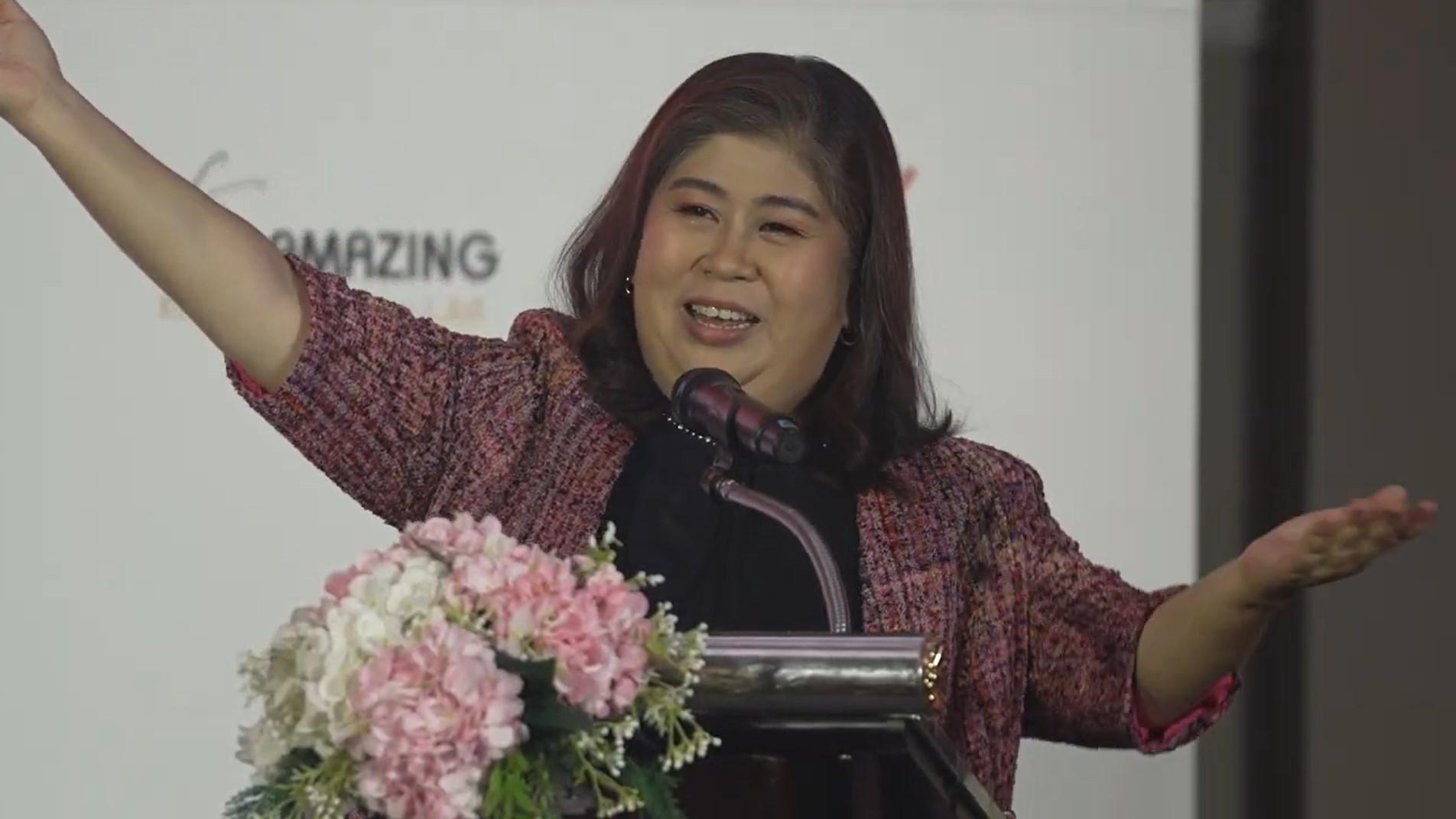
For Kapuso broadcast journalist Jessica Soho, the most powerful forces in the world are not those that explode, injure, or destroy. They are not fame or money either.
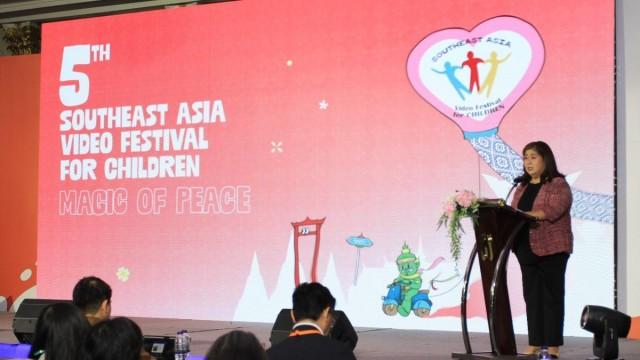
"The power of words. The things we tell each other. The stories we share," Soho told educators, media practitioners, dignitaries, and young storytellers at the 5th Southeast Asia Children's TV and Video Festival in Bangkok, Thailand.
"Stories empower people to act, and maybe start revolutions and/or build peace," Soho said in her speech last November.
She reminded her audience that storytelling is not merely entertainment. It is a quiet, persistent force, Soho said, that can move people to act, build understanding, and, sometimes, change lives.
As a journalist for over 40 years, Soho has been a witness to many conflicts, disasters, corruption, and human blight. Despite the weight of those experiences, however, Soho's message was not one of cynicism, but hope.
"There are more good people than bad," she said. "We have more things in common than differences."
Stories as lifelines
To illustrate how storytelling can make a difference in people's lives, Soho showed the audience select video clips from her top-rating, award-winning news magazine, Kapuso Mo, Jessica Soho (KMJS).
By sharing these stories on KMJS, what started as moments of pain turned into triumph over adversity. In some instances, these transformed into collective action.
Soho spoke about Ranilyn, a severely malnourished child from Bantayan in Cebu, whose only wish was to wear her favorite dress again. After her story aired on KMJS, aid started coming in. She soon gained weight, returned to school, and finally her dream came true—her healthier body could fit her favorite dress once more.
There was also Reymark, a young boy who tilled a small farm with his horse just so his family could eat after his father went missing. After KMJS told Reymark's story, his father returned, their family received assistance, and he reclaimed his childhood and went back to school.
There was also Daxxen, who fell ill with a rare disease that caused painful blisters all over his body. When he was near death, his community carried him down from a remote mountain village so he could reach a hospital. Help also soon came Daxxen's way. While he has yet to fully recover, his wounds have already healed, and his life continues.
"These are real stories," Soho emphasized. "And they show that stories can transform lives."
Reuniting families
KMJS has continued the success of one of Soho's earlier public affairs shows, Reunions, which helped reconnect some 700 missing individuals with their families during its 5-year run on air.
One of the KMJS's most unforgettable reunion stories was that of Jojo de Carteret, an Australian filmmaker born in the Philippines who was separated from his family as a child. After being adopted by an Australian couple, Jojo found his biological mother in the Philippines decades later, with the help of KMJS.
Their mother and son reunion, Soho said simply, was proof that "miracles do happen."
Even stories that seemed fit only for fiction—such as babies being switched at birth—have been reported by KMJS on Philippine television.
Through DNA testing, KMJS helped identify and return the babies to their rightful parents.
KMJS has helped resolve three such cases. In each case, persistence, maternal instinct, and the truth prevailed.
Teaching children to tell stories
Soho's message went beyond journalism. Addressing the children in the audience, she asked: Do you like stories? Do you want to become storytellers? Do you want to change the world?
Her answer came in the form of seven lessons—principles not only for storytelling, but for life.
Read. Listen. Respect facts. Create meaningful content. Aim for impact. Be fair. And above all: be good and do good.
Accuracy, she stressed, is the bedrock of journalism and responsible storytelling.
In an age rife with misinformation, she urged young creators to protect the integrity of the truth, to listen beyond their own echo chambers, and to tell stories that make people think, feel, and act.
"Stories are lessons in life we should not ignore," she said. "They should make us better human beings."
Soho's presence at the festival also underscored the broader mission of its convenor, Anak TV, an advocacy organization committed to promoting child-sensitive, family-friendly television in the Philippines.
Through forums, jury screenings, and the widely recognized Anak TV Seal, the organization brings together parents, educators, media practitioners, and communities to evaluate and encourage responsible programming for children. Anak TV's work reinforces the idea that what children watch, hear, and absorb matters.
The future in young hands
Toward the end of her speech, Soho acknowledged a common critique of today's youth—that they are fragile, that they need to toughen up.
However, Soho offered a different perspective. The future, she said, belongs to them.
"The older generations, including mine, have failed to solve some of the world's most basic problems, but the solutions are yours to figure out."
"With your tools and gadgets and all that technology available at the swipe of your fingers—you should be in a better position to do more and greater things."
"For people to get along and communicate better so the world can still become a more peaceful place. As it should be," Soho said.
In a world often fractured by noise and division, her message was clear and quietly radical: stories, told with care and truth, remain one of humanity's strongest bridges—to understanding, to peace, and to hope. — VDV, GMA Integrated News

