

 GMA Brandtalk
 Tracking
 Archives

Backing the Dream: How beauty queens fund their journey to the crown

I
f the first reality of pageantry is how expensive it can be, the next question is inevitable: how do candidates actually afford it?
This is the second part of a three-part series examining the financial landscape of pageantry at the local level—the first major step before the national stage.
In Part 1, candidates revealed that competing at the local level can cost anywhere from tens of thousands to hundreds of thousands of pesos.
But behind those figures is a more complex system, one built on sponsorships, personal networks, local government support, and, in many cases, years of preparation long before stepping onstage.
For some, the answer is simple: they don’t pay at all. But for others, every peso is planned, negotiated, or sourced from multiple streams.
Fully funded: When teams take over
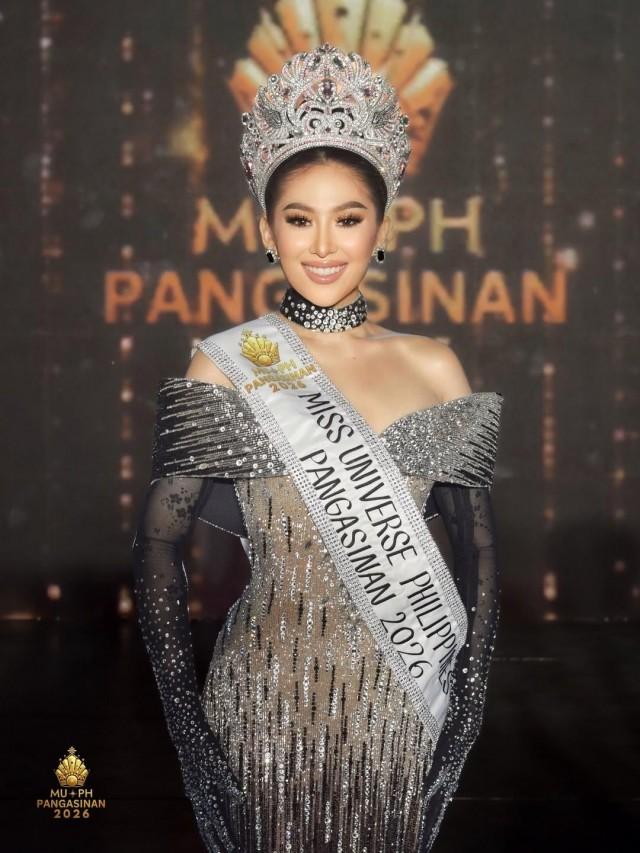
Donna Nuguid of Pangasinan is among those who got to continue her pageantry journey without having to spend out of pocket, but only because of a strong support system behind her.
Despite her journey as Miss Dagupan City in January totaling to P300,000, Donna did not need to spend money on her own.
“Lucky ako kasi hindi ako talaga nag-shell out. Wala akong ginastos personally. It was my handler who provide for everything and I will be forever grateful,” Donna said.
D
onna’s team covered everything, from gowns to housing and transportation, even beyond the local competition.
“Talagang hanggang ngayon, sila lang din ‘yung gumagastos sa akin. Transpo, bahay, gown, and ‘yung mga wardrobe,” she said.
In many local pageants, this kind of setup is made possible by handlers, often longtime pageant enthusiasts, former industry insiders, or supporters who have developed both the eye for potential and the willingness to invest in a candidate’s journey.
Their role goes beyond coordination or logistics.
In most cases, they act as the central manager of a candidate’s preparation, assembling and covering the needs of the competing queen, from glam teams and transportation to accommodation and styling, depending on the arrangement and available resources.
These are typically not formalized sponsorships in the corporate sense, but personal commitments rooted in the belief in a candidate’s potential and shared pageant experience.
Donna made it clear that this kind of setup is built on trust and expectation.
For her, the real investment is performance—delivering results for the people backing her.
“Ang kailangan ko lang gawin is just to win the crown and then to show them what I'm capable of,” she said.
J
enrose Javier of Sultan Kudarat echoed a similar experience, but on a larger, institutional scale.
“Luckily, I have a sponsor with me, which makes me not worry about any finances,” she said. “Whenever I try to join any pageant, I always make sure that someone is supporting me because pageantry is like a gamble at some point.”
In her case, the support comes directly from her province.
“Everything, especially with the finances of this journey, is all covered by my province, Sultan Kudarat. I love how they support women in our province, especially here in pageantry,” she said.
Sultan Kudarat has indeed been supportive of its beauty queens.
Last year, the province received praise from pageant fans for showing its all-out support for Chelsea Fernandez as she competed in Miss Cosmo 2025. Aside from being named 1st runner-up, Chelsea also won Cosmo People’s Choice after earning 28.3 million votes online.
Sultan Kudarat also declared Chelsea as tourism ambassadress and set December 20 of every year as “Miss Chelsea Day.”
For Jenrose, Sultan Kudarat’s support goes beyond financial relief—the backing also served as something bigger than personal gain.

“Every step I'm making in this journey is not just a dream of mine but also a dream of my province,” she said.
Her campaign, she explained, is tied to representation, using pageantry to reshape perceptions and promote her community.
“Maybe because when you say Sultan Kudarat, some people think there's still a norm about terrorism, about dangerous places, when in fact, it's not. There's really a big potential in our province, especially with tourism. Parang hindi nakikita ng tao ‘yung potential. Maybe in some way, pageantry is a way to boost our tourism, community, and to give a new branding in our province,” Jenrose said.
Shared costs and partial backing
Not all candidates are fully funded. For many, financial support comes in portions, split among teams, sponsors, and local government units (LGUs).
B
ella Ysmael of Taguig described a more collaborative setup shaped by similar funding dynamics seen across pageant systems.
“I'm lucky that Taguig has been very supportive in a way where they've collaborated with my camp, my team, where expenses are being divided,” she said.
However, she emphasized that support from LGUs is rarely all-encompassing.
“There are no particular promises,” she said. “I know that the LGU has many priorities in terms of budget. And I'm just happy that they're able to allocate a little bit to help my career. I really appreciate that.”

This kind of arrangement introduces a different kind of pressure: strategic spending. Candidates must decide where limited funds should go and shouldn't.
“It's really more of allocating funds to where it matters most,” Bella said, pointing to her decision to prioritize a strong glam team over additional content production.
Networks as currency
For Ashley Subijano Montenegro of Luisiana, Laguna, the key to managing costs was not just funding—it was relationships built over time.
“The amount I spent was extremely, extremely low… A lot of the things other girls had to pay for, I had access to,” she said.
A
shley explained that her access came from years of working in the fashion and modeling industry, including connections with designers willing to lend or create gowns.
“I started building my network. I started looking for solutions of ‘OK, if I know I'm gonna need these things in the future, what can I do now to help prepare for that?’” she said.
She emphasized that these relationships were not transactional.
“The greatest thing I did was build genuine connections and relationships with people, not with the intention to use them, but to be vocal and open about my dreams so that when that time came for me to compete, if they had that care for me, the means to help me, and if they shared my dream, then they could lend me their hand. And that exponentially saved me on so much because I spend a fraction of what other girls have to spend,” she said.

That preparation significantly reduced her financial burden, but she was also candid about its limits.
“If I didn't have this network of people, I don't think I could do it,” she said.
Ashley is also the niece of renowned Filipino designer Ryan Ablaza Uson, who makes her gowns.
“His gowns that he made for me range around P200,000 per gown. And he covers that for me completely for free just out of love,” she said. “I don't get to keep them. That's never a part of the deal. He makes them for me, I wear them, but they are his.”
N
icole Borromeo of Cebu Province pointed to a similar advantage, noting how prior experience in pageantry can shape access and support.
In the present day, collaborations between candidates and creatives such as makeup artists, designers, photographers, and stylists have become a common part of the process.
These arrangements are typically initiated either by the candidate or the service provider, and are agreed upon as structured partnerships where services are exchanged, discounted, or sponsored in alignment with both parties’ goals for visibility and exposure.

“It became a win-win in the sense of ‘I win because I'm wearing you and you win because I'm wearing you,’” Nicole said. “And it becomes this ripple of like, if they believe in me, it's an insult not to believe in myself, and it's an insult not to perform at my best. So, you just elevate together, you grow together. It's a team effort.”
Resourcefulness and self-funding
Not all candidates receive full financial backing, and for many, preparation is a mix of personal budgeting, side work, and whatever support they can gather along the way.
A
s a piece of advice for independent candidates, Roxie Smith of Baguio underscored the importance of planning and discipline, especially for those without full backing.
“Connections really matter a lot in terms of budget… but it's really knowing what will make you win,” she said.
Drawing from her own experience of competing with limited resources in the past, she described how even small contributions from friends or family can be stretched through careful planning.

“Tinipid ko siya. I use Excel sheets a lot,” Roxie said. “I really compute. And I don't go over what I already initially planned. So, I'm really a planner. So, I think it's important to allot your budget and know what to prioritize.”
Her advice reflects a reality many candidates encounter: funding is not always a lump sum, it is often pieced together from different sources and managed strategically over time.
No single formula
Across all accounts, one thing becomes certain: there is no single way to fund a pageant journey.
Some are fully backed by handlers, others split costs across teams and LGUs. Some rely on networks built over years, others navigate it through budgeting and resourcefulness.
R
egardless of the path, what remains constant is the need for support.
“You cannot afford to do this alone,” Nicole said.
Whether that support comes from family, sponsors, government, or community, it often determines not just how far a candidate can go, but whether they can compete at all.
In Part 3, we look into what comes after the spending: the prizes, opportunities, and long-term returns that candidates hope to gain from the journey. —CDC, GMA News

