

 GMA Brandtalk
 Tracking
 Archives

Fashionalist uprising: the Postura Project
Wear at least one Filipino thing every single day. It sounds simple enough. We are in the Philippines, after all, and Filipino clothing is everywhere.
But the thing is, most people have become distracted by the bright and shiny displays of international clothing brands, the legendary super cheap prices of Bangkok clothes, or the ultra-chicness of shopping at Hong Kong and Singapore, so that the task of wearing something local every day becomes a veritable challenge.
Challenging as it is though, it is something that should be done—the economic and cultural benefits of supporting the local fashion industry are obvious. But more to the point, it can be done, as proved by the four fashionalism (fashion nationalism) advocates of the Postura Project.
The Postura Project is, to put it concisely, a challenge to wear at least one item that’s Filipino made or from a Filipino brand every day for at least thirty days.
Advertising creative Knox Balbastro had already been doing the project before it even started, but it wasn’t until communications consultant Arriane Serafico contacted her through Twitter that the project really got going.

“I had a lot of friends who are social entrepreneurs so on my own I thought I would support them by buying and using their stuff. But I was looking for a way to sort of magnify that effect… I wanted it to have more impact. So I started seeking out other friends,” Serafico shared.
Knowing of supermodel Sarah Meier-Albano’s “local and vocal” advocacy and blogger David Guison’s plan to make his blog more socially relevant, Serafico called them both and together with Balbastro, they broke out all their Filipino clothes—from Bench shirts to baro’t sayas—and faced the challenge head-on.
The fashionable foursome put up a website, regularly posted their daily looks and included all the juicy details on their clothes: where they came from, what brands, which designers.
The best part is, each blogger has a different style so that there’s something to appeal to everyone: Meier-Albano is hippie-street where Serafico is sugar-sweet; Balbastro is ethnic and elegant, and Guison is urban and edgy. Browsing through the website can get addicting, but more importantly, it gets you excited about Filipino fashion.
Knox admitted that the project was initially difficult, especially when they had to make sure that their choices were actually Filipino.
“But once you get in to it, it’s actually fun and you discover all sorts of brands,” she said.
A boost for the local fashion industry
For David, discovering these new brands made him realize how the local fashion industry can easily take over the world.
“Actually, there are a lot of startup brands, usually the ones that are online. And these are really nice brands talaga, like when I checked my closet, akala ko international siya, ‘yun pala local. So parang wow, pwede tayo mag-compete sa global brands talaga,” Guison said.
Balbastro added, “You look around here—you’ll see a lot of the stuff and go ‘wow, Filipino ‘to.’ We’re changing the perception na Filipino is low quality, low-cost. You have to be able to actually pay more for the stuff that are made here because you’re supporting an industry.”
The bloggers shared that the project has helped them grow and change in more ways than one.
Serafico said that she developed a shopping habit that catches salesladies off their guard.
“I’ve actually grown to have the habit of asking, “is this locally made or what?” and sometimes the saleslady will go, “Ay, no ma’am. This is imported” and I’ll be like, ‘ok, never mind,’” she shared with a laugh.
On Guison’s part, it was as simple as being more nationalistic, which is really what the Postura Project is all about.
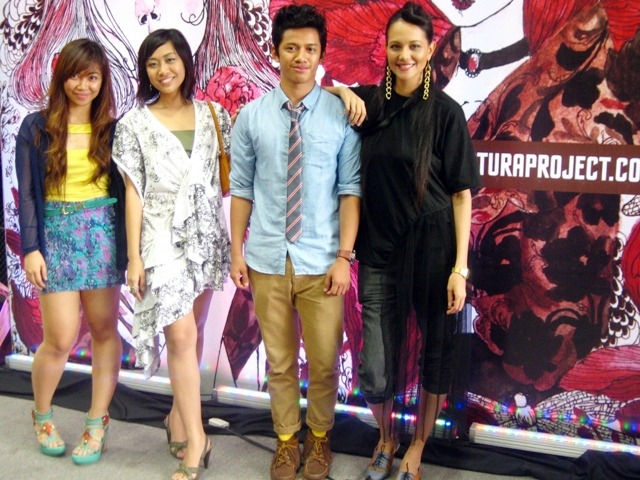
The young blogger beamed with pride when he said, “Dati proud na proud ako na international ‘yung suot ko. Ngayon proud na proud ako na Filipino ‘yung suot ko. Iba ‘yung feeling.”
Now that their 30 days are up, the fashionalists will keep wearing their Filipino clothes. According to Knox though, they’re now handing the reins to other people who want to take the project on—and they don’t even have to be hardcore fashionistas to do so.
“There are a lot of really popular Filipino bloggers there but what a great way to be a mouthpiece of the Filipino designers if you constantly wear something that’s local, and then you talk about it,” Serafico said.
She added, “I think a lot of people have a lot of Filipino stuff in their closets but they don’t really realize na oo nga ‘no, this is Filipino made, I can highlight it.”
But for those whose closets are vomiting Topshop and Forever 21, the Postura pioneers have thoughtfully collated all the local brands they’ve worn at the bottom of their webpage.
“It’s good to start Postura Project just by clicking around, looking at the brands. Every time we feature something, we link it back to the brands,” said Balbastro.
Serafico mentioned Yabang Pinoy’s Global Pinoy bazaar and The Ramp as places where one can find locally made stuff.
Provinces like Baguio or Sagada are also good places to look, they said.
“This kind of creativity is just all over, it’s just that we have to open our eyes,” Balbastro said on the official Postura Project video.
Meier-Albano shared the sentiment, saying that Philippine fashion isn’t limited to a handful of designers or brands.
“Philippine fashion isn’t necessarily just Inno Sotto or Pitoy Moreno. It’s the kid that lives down the street from you that tried to sew something yesterday,” she said.
Smiling in her bright yellow dress, she added, “everybody can have [his/her] hands on it, and can do it, and be proud… It’s wearable pride, you know, fashionalism.” –KG, GMA News

