

 GMA Brandtalk
 Tracking
 Archives

ADVERTISEMENT
Filtered By: Lifestyle
Lifestyle
EDSA for kids: The People Power revolution in numbers
Where were you during the People Power revolution?
In 1986, Russell Molina was in high school. "I was really not that into EDSA then. My head was filled with girls and what to eat," he admitted. However, his family was very much into the spirit of EDSA, and Molina eventually became a part of it.
"Looking back I remember the whole event having a sort of tempo. It started quietly, then very much like an orchestra, reaching a crescendo," he said during the launch of "EDSA" on July 16, National Children's Book Day.
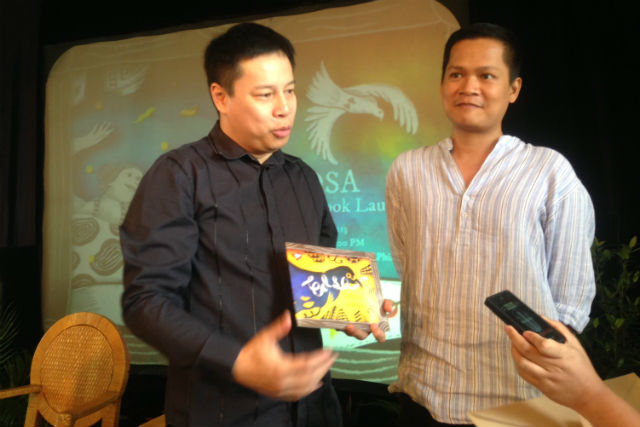
Author Russell Molina and artist Sergio Bumatay III Photos by Carmela G. Lapeña
The People Power revolution was a shared experience, and everyone has their own EDSA story—at least those who are old enough to have lived through it.
Those who aren't learn about People Power in school, but like other historical events that are taught by names, dates, and places, the significance is sometimes lost.
"EDSA" was published by Adarna House in partnership with the EDSA People Power Commission. According to EPPC commissioner Emily Abrera, "EDSA" is the first of three stories on EDSA that appeal to different age groups. There will also be a teacher's guide that will be available online. "Those who didn't have any direct experience of EDSA will have a guide and can be led to certain ideas that can emanate from the pictures and the words," Abrera said.
For "EDSA," Molina decided to create a counting book, which reflects his own experience of the People Power revolution. "Something that also escalates, something that reaches a crescendo," he said.
With its minimal words and detailed illustrations, the book allows parents or teachers to provide a richer perspective by adding unique details from their own recollection.
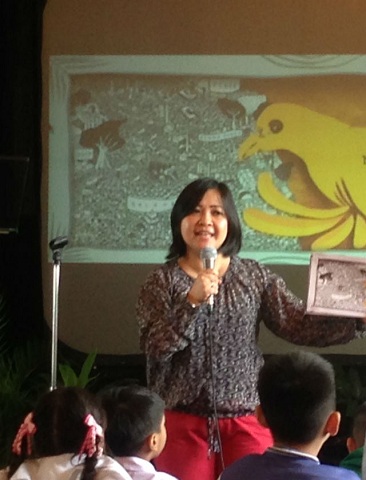
Myra Hulleza-Sepe reads 'EDSA' during the book launch on National Children's Book Day
Artist Sergio Bumatay III added that the storyteller plays an important part in reading "EDSA." "Mas nae-explain nila kung ano talaga yung nangyari at anong mga bagay ang nakikita doon," he said.
Bumatay chose a comical style rather than a realistic one for his illustrations, mindful of the book's young readership. "Kung realistic, masyadong heavy yung look and then mas pinili ko na lang maging comical para mas light and relatable sa kids," he said.
Also, instead of the usual books about EDSA that heavily feature the color yellow, the illustrations are in black and white. "For me, black and white brings our memories back," Bumatay said.
Since it is the storyteller's own memories that will add to the book, those without direct experiences will need to do some research in order to read "EDSA" effectively. "It takes a lot of research and a lot of dialogues with people who were actually there," said Molina. On the other hand, he added, the book is also a reflection piece, and is not just about EDSA.
"This is a story about sharing. This is a story about our freedom. It's a story about families getting together. It doesn't have to be [about] EDSA, it can be their own personal survival stories of freedom, sharing. What's important is the spirit behind EDSA," he said. — BM, GMA News
EDSA is published by Adarna Books.

