

 GMA Brandtalk
 Tracking
 Archives

ADVERTISEMENT
Filtered By: Lifestyle
Lifestyle
Dance review: The romance and relevance of 'Giselle'
+
Make this your preferred source to get more updates from this publisher on Google.
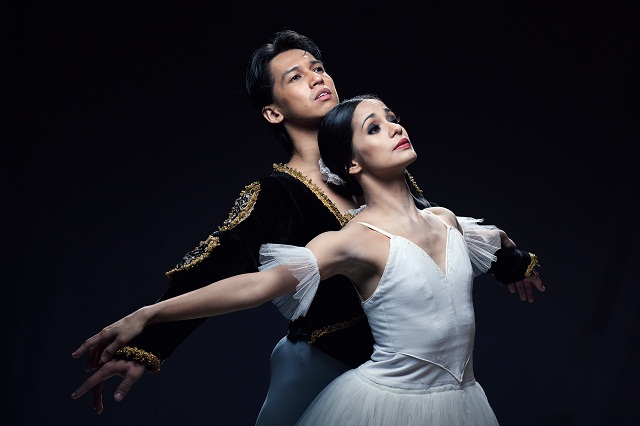
Principal dancers Jean Marc Cordero and Katherine Trofeo in "Giselle." Photo courtesy of Ballet Philippines
"Giselle", the classic 19th century European Romantic ballet, was given new life in Ballet Philippines' 44th season, restaged last month by former BP premier danseur Nonoy Froilan.
Coming to CCP on the last night of the show had me feeling intrigued on how our premier dance company would essay one of the most timeworn of our story ballets, as it would be my first time to watch a Philippine version of the ballet.
My first initiation into "Giselle"'s world was through a performance by the Moscow City Ballet at the Meralco Theater some years back, brought to life by stocky and technically strong Russian dancers. Not to mention the Giselle excerpts that I've viewed through the years through Youtube (a convenient technology for this dance scholar), performed by Bolshoi, Kirov and the celebrated companies that have received strong state support to nuture this classical dance art. Their dancers always come out with virtuouso strength, to say the least.
The final night of Ballet Philippines' "Giselle" had Katherine Trofeo, the oldest of the company's principal dancers, portraying the lead role as the much-loved peasant girl. Trofeo's expressiveness and exquisite profile stood out and easily blended with her gentleness, making up for her seeming paucity of technical panache. She lent an ethereal quality to the character where perhaps her European counterparts would have more physicality and groundedness. Her Western contemporaries Alina Cojocaru and Polina Semionova, for example, rendered the character with extreme sprightliness and a palpable athleticism. But that's always a given in theater and dance: different performers would lend a different characterization to the hero or heroine.
Trofeo's emotive acting evoked pathos, especially in Act 2 where she turned into a lovelorn ghost.
JM Cordero as Prince Albrecht, on the other hand, appeared restrained and unstimulating in his portrayal of an otherwise passionate character that caused Giselle's heartbreak. However, he had his moments in the leaps and jumps towards the end of the ballet, when he danced with the willis (female ghosts who died for love) and the spectral but graceful Giselle. He especially stood out in his final moments of grief as the ghost of Giselle left him, saving him from death.
Madge Reyes as Myrtha, the queen of the willis, had a commanding presence, though one might wish for more gentleness in her mien.
The corps de ballet that portrayed the white specter of the vengeful willis danced in harmonious unison, making the forest scene divine.
Thespian Shamaine Buencamino convincingly essayed the role of Giselle's mother Berthe, while veteran film actor Bembol Roco played the Duke of Courtland.
"Giselle" is part of the repertoire of most ballet companies worldwide, and the main character is a dream role for every ballerina, what with the gamut of emotions that its characterization requires: from the extreme innocence of youth to sudden madness that brings death.
Ballet Philippines has been known for cutting-edge choreographic ideas in its four-decade history, from the showcase of neo-ethnic works by former artistic director Agnes Locsin and more recent contemporary works such as "Zebra" by Ernest Mandap, to the adaptations of Philippine literary characters such as in the Crisostomo Ibarra ballet and an upcoming multimedia “rock ballet” on Andres Bonifacio called "Rock Supremo".
One might even begin to think how such European classics as "Giselle" might be adopted with a Filipino-inspired narrative, as was done earlier by Basilio Villaruz in writing the libretto for "Higanti", a modern ballet inspired by Giselle, choreographed and produced by UP College of Music dance majors some years back. We could probably do well in re-inventing the often alienating idiom of Western ballet classics into settings more relevant and responsive to the shifting modes of our unsettling contemporary times. — BM, GMA News
Giselle ran at the Cultural Center of the Philippines from Aug. 16 to 18.
Rina Angela Corpus is an assistant professor at the Department of Art Studies, University of the Philippines. Her research interests include feminist aesthetics, dance history and alternative spiritualities. She trained with the Quezon City Ballet and Limon Dance Institute in New York. You may visit her writings at Dance of Stillness.
Coming to CCP on the last night of the show had me feeling intrigued on how our premier dance company would essay one of the most timeworn of our story ballets, as it would be my first time to watch a Philippine version of the ballet.
My first initiation into "Giselle"'s world was through a performance by the Moscow City Ballet at the Meralco Theater some years back, brought to life by stocky and technically strong Russian dancers. Not to mention the Giselle excerpts that I've viewed through the years through Youtube (a convenient technology for this dance scholar), performed by Bolshoi, Kirov and the celebrated companies that have received strong state support to nuture this classical dance art. Their dancers always come out with virtuouso strength, to say the least.
The final night of Ballet Philippines' "Giselle" had Katherine Trofeo, the oldest of the company's principal dancers, portraying the lead role as the much-loved peasant girl. Trofeo's expressiveness and exquisite profile stood out and easily blended with her gentleness, making up for her seeming paucity of technical panache. She lent an ethereal quality to the character where perhaps her European counterparts would have more physicality and groundedness. Her Western contemporaries Alina Cojocaru and Polina Semionova, for example, rendered the character with extreme sprightliness and a palpable athleticism. But that's always a given in theater and dance: different performers would lend a different characterization to the hero or heroine.
Trofeo's emotive acting evoked pathos, especially in Act 2 where she turned into a lovelorn ghost.
JM Cordero as Prince Albrecht, on the other hand, appeared restrained and unstimulating in his portrayal of an otherwise passionate character that caused Giselle's heartbreak. However, he had his moments in the leaps and jumps towards the end of the ballet, when he danced with the willis (female ghosts who died for love) and the spectral but graceful Giselle. He especially stood out in his final moments of grief as the ghost of Giselle left him, saving him from death.
Madge Reyes as Myrtha, the queen of the willis, had a commanding presence, though one might wish for more gentleness in her mien.
The corps de ballet that portrayed the white specter of the vengeful willis danced in harmonious unison, making the forest scene divine.
Thespian Shamaine Buencamino convincingly essayed the role of Giselle's mother Berthe, while veteran film actor Bembol Roco played the Duke of Courtland.
"Giselle" is part of the repertoire of most ballet companies worldwide, and the main character is a dream role for every ballerina, what with the gamut of emotions that its characterization requires: from the extreme innocence of youth to sudden madness that brings death.
Ballet Philippines has been known for cutting-edge choreographic ideas in its four-decade history, from the showcase of neo-ethnic works by former artistic director Agnes Locsin and more recent contemporary works such as "Zebra" by Ernest Mandap, to the adaptations of Philippine literary characters such as in the Crisostomo Ibarra ballet and an upcoming multimedia “rock ballet” on Andres Bonifacio called "Rock Supremo".
One might even begin to think how such European classics as "Giselle" might be adopted with a Filipino-inspired narrative, as was done earlier by Basilio Villaruz in writing the libretto for "Higanti", a modern ballet inspired by Giselle, choreographed and produced by UP College of Music dance majors some years back. We could probably do well in re-inventing the often alienating idiom of Western ballet classics into settings more relevant and responsive to the shifting modes of our unsettling contemporary times. — BM, GMA News
Giselle ran at the Cultural Center of the Philippines from Aug. 16 to 18.
Rina Angela Corpus is an assistant professor at the Department of Art Studies, University of the Philippines. Her research interests include feminist aesthetics, dance history and alternative spiritualities. She trained with the Quezon City Ballet and Limon Dance Institute in New York. You may visit her writings at Dance of Stillness.

