

 GMA Brandtalk
 Tracking
 Archives

ADVERTISEMENT
Filtered By: Lifestyle
Lifestyle
Merienda with ‘Ilo Ilo’ director Anthony Chen, Part 1
+
Make this your preferred source to get more updates from this publisher on Google.
(Updated 9:44 p.m.) For a 29-year-old Singaporean who just bagged the prestigious Camera D'Or Award at this year's Cannes Film Festival for his first feature film, Anthony Chen is full of quotable quotes. The first of these little nuggets of wisdom was his answer to what triggered his making a film based on his experiences with his Filipino nanny, who worked with his family for eight years: “I think at some point in your life, childhood comes back and haunts you.”
However, the film “Ilo Ilo,” which makes its Philippine debut on December 4, is only loosely inspired by Chen's life. That said, there was one particular scene from the past that made it into the film—the one where the nanny slaughters the boy's pet chicken for dinner.
Chen launched into the memory like so: “There’s this part in the film where the boy has little chicks in their flat. When they grew up into chickens…the Filipino nanny in the film slaughtered the chickens and they ate them. I remember that very well, I remember there was one day I was walking in the kitchen and I remember she was holding onto the chicken in the bathroom and she slit off the neck…there was blood everywhere. It was a moment that just stayed in my head.”
“But you know, the thing about childhood is that it can be quite brutal,” Chen was quick to add. “She cooks very well—she cooks chicken and rice and you just tuck into it like you didn’t see any of it happen.”
However, the film “Ilo Ilo,” which makes its Philippine debut on December 4, is only loosely inspired by Chen's life. That said, there was one particular scene from the past that made it into the film—the one where the nanny slaughters the boy's pet chicken for dinner.
Chen launched into the memory like so: “There’s this part in the film where the boy has little chicks in their flat. When they grew up into chickens…the Filipino nanny in the film slaughtered the chickens and they ate them. I remember that very well, I remember there was one day I was walking in the kitchen and I remember she was holding onto the chicken in the bathroom and she slit off the neck…there was blood everywhere. It was a moment that just stayed in my head.”
“But you know, the thing about childhood is that it can be quite brutal,” Chen was quick to add. “She cooks very well—she cooks chicken and rice and you just tuck into it like you didn’t see any of it happen.”
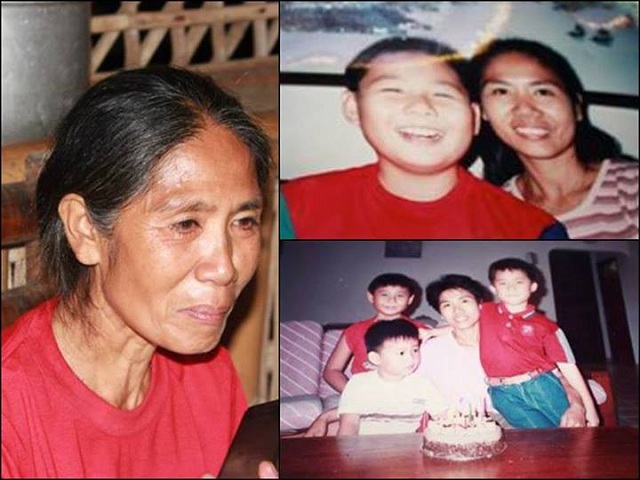
Teresita Sajonia, the inspiration for Anthony Chen's Cannes-winning film, 'Ilo Ilo,' and her charges. Photos from the Ilo Ilo Facebook page.
‘A humble piece of film’
Chen also did not take liberties with a few of the facts of Singaporean culture that made it into “Ilo Ilo.” He revealed that caning, for instance—a scene involving which made it into the film—is the norm in his country. “There’s no way a Chinese Singaporean family cannot have a cane in their homes,” he said.
Although Chen wanted the film to be as true-to-life as possible, he believes that making films are about reflection and observation, not reenactment. “I’m not making a Discovery Channel documentary. I think it’s my understanding of relationships, my understanding of the dynamic between two people [that lie behind the film]. I think that is key.”
“I was surprised it was well-received in other countries as it's a humble piece of film,” he revealed. “You know, it’s not the biggest thing with the biggest budget. It’s not the most expensive-looking thing.”
Chen noted that there were 26 other films from different countries—some with bigger budgets, bigger stars, or else distinctive aesthetics. He also did not expect such a culturally-specific piece of art to win Cannes’ second biggest prize.
“It’s very tough for a Southeast Asian film to make its mark in the world,” he said. “I always thought you had to be Singaporean—or Asian—to sort of understand the film. Because the whole phenomenon of having a nanny from the Philippines or Indonesia to work in your home is only common to Asia and maybe some parts of the Middle East or North America.”
He was even skeptical of the audience’s reaction at the film festival, saying with a laugh, “I was very surprised that people actually connected to the film so well, and in a way that people were moved. All these foreign audiences—American, French—were moved to tears at the end and I was like, ‘Really? Do you understand the experience?’”
Even so, he said he is “grateful for this fantastic journey of a film,” and that everything else the film receives is an “added bonus.”
‘You make me laugh, you make me cry’
 When asked what Auntie Terry—the Iloilo-born Filipina whom Chen based his protagonist on—thought of the film, Chen revealed that, “We didn’t really talk about the film so much. But she said something like, ‘You make me laugh, you make cry.’”
There have also been plans to invite Auntie Terry to the Iloilo screening of the film—“Unless she’s sick and tired of seeing it,” Chen joked.
Auntie Terry—real name Teresita D. Sajonia—got to attend the film's 1,600-seat Singaporean premiere as well. Cebu Pacific sponsored her flight there from Iloilo, where she lives with her partner in a rundown hut, surrounded by chickens, with only an old radio in the way of the latest technology—making it difficult for Chen to track her down. But she never forgot her former wards—she still keeps pictures of the Chen boys, as she sees them as her children, having none of her own. She even wrote to the family once, but they never got her letter, as they had changed addresses by then.
Ironically, though Chen’s own parents and two brothers got to watch the Singapore premiere and are proud of the work of their eldest son, they do not talk amongst themselves about it. Just as well, Chen said, as the film is loosely based on their lives, after all. It was another reason he couldn’t make the film completely autobiographical, as “they’d go berserk,” he said, smiling.
Chen could not get in touch with Auntie Terry personally immediately after Typhoon Yolanda swept through Central Visayas, as he was in Sweden at the time and she does not how to use a mobile phone. He thought at the time, “Oh my god, this could be like ‘The Wizard of Oz’—the entire hut could get blown away!” But thankfully, she, her partner, and their home made it through both the October 15 earthquake and the super typhoon.
Chen, however, is unsure of the rest of the province of Iloilo. "According to my contacts there, there's still a lot of households that have no electricity, a shortage of food supplies. The problem now is that all the media attention is literally placed on the badly-damaged province and everyone forgot that there were some other, smaller places that were hit as well—not as badly, but all these people are survivors and yet they have no access to food, to water, to electricity. I think it's very important that while the world looks at all these devastating images, we have to think of all the other people around the other provinces that probably need help.
"Because they are less exposed, they are not seen by the world. Therefore, all the aid goes to one place and I think it's very important that the distribution of help and efforts reaches provinces such as Iloilo," he concluded. — BM, GMA News
Part 2: On becoming a Cannes-winning director, and on the spelling of the province's name in the title.
Chen also did not take liberties with a few of the facts of Singaporean culture that made it into “Ilo Ilo.” He revealed that caning, for instance—a scene involving which made it into the film—is the norm in his country. “There’s no way a Chinese Singaporean family cannot have a cane in their homes,” he said.
Although Chen wanted the film to be as true-to-life as possible, he believes that making films are about reflection and observation, not reenactment. “I’m not making a Discovery Channel documentary. I think it’s my understanding of relationships, my understanding of the dynamic between two people [that lie behind the film]. I think that is key.”
“I was surprised it was well-received in other countries as it's a humble piece of film,” he revealed. “You know, it’s not the biggest thing with the biggest budget. It’s not the most expensive-looking thing.”
Chen noted that there were 26 other films from different countries—some with bigger budgets, bigger stars, or else distinctive aesthetics. He also did not expect such a culturally-specific piece of art to win Cannes’ second biggest prize.
“It’s very tough for a Southeast Asian film to make its mark in the world,” he said. “I always thought you had to be Singaporean—or Asian—to sort of understand the film. Because the whole phenomenon of having a nanny from the Philippines or Indonesia to work in your home is only common to Asia and maybe some parts of the Middle East or North America.”
He was even skeptical of the audience’s reaction at the film festival, saying with a laugh, “I was very surprised that people actually connected to the film so well, and in a way that people were moved. All these foreign audiences—American, French—were moved to tears at the end and I was like, ‘Really? Do you understand the experience?’”
Even so, he said he is “grateful for this fantastic journey of a film,” and that everything else the film receives is an “added bonus.”
‘You make me laugh, you make me cry’
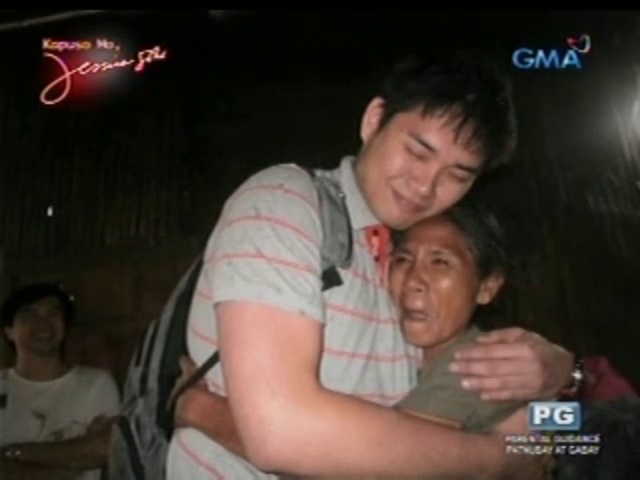
Chen reunites with 'Auntie Terry' in this screencap from Kapuso Mo, Jessica Soho'
There have also been plans to invite Auntie Terry to the Iloilo screening of the film—“Unless she’s sick and tired of seeing it,” Chen joked.
Auntie Terry—real name Teresita D. Sajonia—got to attend the film's 1,600-seat Singaporean premiere as well. Cebu Pacific sponsored her flight there from Iloilo, where she lives with her partner in a rundown hut, surrounded by chickens, with only an old radio in the way of the latest technology—making it difficult for Chen to track her down. But she never forgot her former wards—she still keeps pictures of the Chen boys, as she sees them as her children, having none of her own. She even wrote to the family once, but they never got her letter, as they had changed addresses by then.
Ironically, though Chen’s own parents and two brothers got to watch the Singapore premiere and are proud of the work of their eldest son, they do not talk amongst themselves about it. Just as well, Chen said, as the film is loosely based on their lives, after all. It was another reason he couldn’t make the film completely autobiographical, as “they’d go berserk,” he said, smiling.
Chen could not get in touch with Auntie Terry personally immediately after Typhoon Yolanda swept through Central Visayas, as he was in Sweden at the time and she does not how to use a mobile phone. He thought at the time, “Oh my god, this could be like ‘The Wizard of Oz’—the entire hut could get blown away!” But thankfully, she, her partner, and their home made it through both the October 15 earthquake and the super typhoon.
Chen, however, is unsure of the rest of the province of Iloilo. "According to my contacts there, there's still a lot of households that have no electricity, a shortage of food supplies. The problem now is that all the media attention is literally placed on the badly-damaged province and everyone forgot that there were some other, smaller places that were hit as well—not as badly, but all these people are survivors and yet they have no access to food, to water, to electricity. I think it's very important that while the world looks at all these devastating images, we have to think of all the other people around the other provinces that probably need help.
"Because they are less exposed, they are not seen by the world. Therefore, all the aid goes to one place and I think it's very important that the distribution of help and efforts reaches provinces such as Iloilo," he concluded. — BM, GMA News
Part 2: On becoming a Cannes-winning director, and on the spelling of the province's name in the title.

