

 GMA Brandtalk
 Tracking
 Archives

ADVERTISEMENT
Filtered By: Lifestyle
Lifestyle
Merienda with ‘Ilo Ilo’ director Anthony Chen, Part 2
+
Make this your preferred source to get more updates from this publisher on Google.
Read Part 1 here.
‘So I was a little bit selfish’
 Anthony Chen stated a few times during the interview that “Ilo Ilo” has come a long way. The picture became clearer as he spoke of his tight budget and casting decisions.
“We didn’t have a lot of money, so me and my producer, we bought a budget airline ticket to Manila. I rang up a good friend of mine who is also an independent filmmaker here,” Chen revealed. “I told him, would you help me find some actresses and he lined up about 30 or 40 actresses from here for me to meet.”
The budget could not even cover an audition space, so they stayed in a cheap hotel that Chen can no longer remember the name of. He said, “I remember that whole weekend, it was all women walking in and out of my hotel room, it’s like so dodgy—if you were to look outside, you would wonder what is going on in this room.”
Apparently, his meeting and casting lead actress Angeli Bayani was nothing short of fortuitous. She was the last one he met in the long line of auditioning actresses, the night before he was supposed to catch an early Monday morning flight back to Singapore.
“She almost didn’t actually make it because she was in a theater play at the time and she just finished the show and she was very tired, but eventually she came,” Chen said of the indie film actress. “I think she left me quite an impression with the audition—probably because she was very tired. She was very relaxed, very natural, because she was very, very tired.”
He didn’t make a decision right away, however. He returned to Singapore and went through the casting videos first. But eventually, his impressions of Angeli prevailed. “I liked the fact that there’s this glamorous side to her, but there’s also this very ordinary side to her. If you look at the film, she looks so ordinary in the film—she really looks like an OFW…and I appreciate that. One thing that was useful was that she told me her background. She’s a single mother, she has a young child, and I was thinking, ‘Oh, that’s very similar to the character in the film that I wrote,’ so if I were to pull her away from the Philippines, put her in Singapore for one month, she’d miss home, she’d miss her child—that’s very good for the kind of performance I want. So I was a little bit selfish.”

‘Not the best judge of what you really are’
Chen also stated that he’s a stubborn, obsessive-compulsive sort of director. He’ll keep pushing until he gets what he wants; he believes that Angeli was surprised by his brand of directing, as he liked to do many takes of one scene and “she’s used to getting it right on the first take.” According to Chen, she put a lot of pressure on herself and “delivered some lovely performances” and hopes that she “will be able to step up to other more interesting opportunities.”
He believes that a lot of his sensibilities, in terms of cinematography, are Asian, but at the same time, “Sometimes, you may not be the best judge of what you really are.”
A lot of critics, for example, pointed to evidence of British social realism in the film, though Chen believes he did not put such a thing there.
But he also acquiesced that Singapore is the sort of country where East meets West and that this mix of culture must have informed who he is as a filmmaker in some way.
‘A memorable, cute little name’
 Despite the film's title, the province does not make even a single appearance in the film. Chen explained that this was the first title he put on the very first draft of the script three years ago, and that, after two and half weeks spent disagreeing over 25 potential titles with the French sales agent, it finally stuck.
“No one in the world knows where Iloilo is, apart from someone from the Philippines or someone who knows a Filipino from there,” said Chen, by way of explanation for the retitling. “So I was saying, oh my god, is it going to be like, so bizarre, like who was going to watch if it’s called 'Ilo Ilo'—no one knows why it’s called 'Ilo Ilo'!”
Chen’s decision to title the film this way was due to Auntie Terry's telling them stories about how far Iloilo was from Singapore and how she needed to board two planes and then a bus just to get there, as there were no direct flights to Iloilo at the time.
“It’s such a memorable, such a cute little name. It stayed with me,” said Chen, who went on to explain that the name comes from a very personal place and that it’s a very honest film. “In fact, now, I’m so glad we stuck to the title because…it’s so rare, no one has used it before. People everywhere in the world, they will just go, ‘Oh yeah, that Singapore film called “Ilo Ilo” about that Filipino woman who went to Singapore!’ It just became an easy name to remember.”
Chen remarked that the "why" of the title, as well as how it is pronounced, is the first question asked of him in the 40 Q&As he’s done all over the world and that he has now memorized the questions at such events.
“I deliberately split it [the province's name in the title] because, first, I think it was an aesthetic decision,” said Chen, when asked about his alternative spelling of Iloilo. “The symmetry looked good, and also because when you type it out…you can’t tell which is the ‘I’ and which is the ‘L,’ so I was thinking a lot of people can’t pronounce it…and the thing is, to me, no matter how I split it…people in the Philippines will recognize the title anyway. It doesn’t really matter. But for the overseas foreigners, they can now pronounce the word.”
“Which is great, you know, because now you have one small little film from Singapore that put Iloilo on the world map,” he said, laughing.
‘I will never make a first film again’
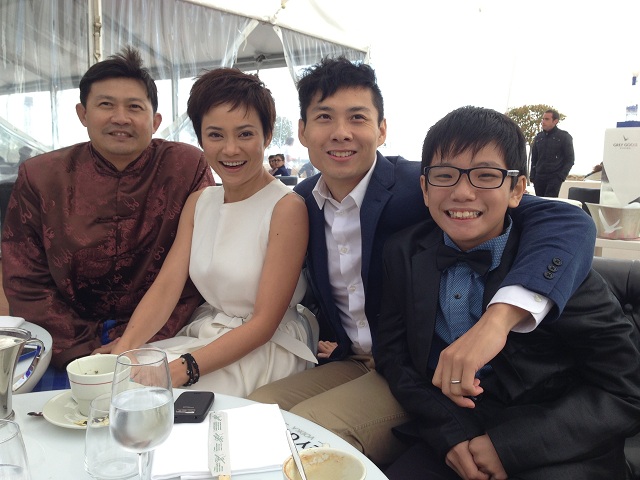 Where other artists would feel the pressure of living up to their first success, Chen is taking it easy.
“I don’t think you’ll be able to make another film that will repeat the success of a film like that,” he said. “The Camera D’Or is the most prestigious prize you can win for a first-time feature-length film—I will never make a first film again, I will never win the Camera D’Or again. It wouldn’t happen ‘cause I wouldn’t be eligible.”
“So in a way, it’s already a hard act to follow-up, as it’s very hard to repeat a lot of what this film has done,” he added. “I don’t know, for me, I’ve come to a point where, eventually, it’s about putting your heart into making the best film possible. I think, if you work hard enough—as long as you face yourself [and believe that] this film has got integrity, you’ve tried your best—I think that’s enough, whether film does well in terms of commercially or in terms of awards and all that.
“If I just let all that stress pile on, I will be crushed by it. If that’s the case, I don’t think I’ll ever make a second film. I should just stop now—end on a high, and that’s it,” he finished.
He had no idea how big the Camera D’Or was until the French critics told him that French audiences only remember who won Best Feature-Length Film (the Palm D’Or) and Best First Feature-Length Film. “Ilo Ilo” is the first Singaporean film to ever win this award.
“I had no idea how big it was until I was touring Europe for the film,” he said. “It feels amazing. I think it’s one of the best things to happen to our cinema in a long, long time—akin to Brillante Mendoza winning in the Cannes, right?”
‘You need to want it so much’

Chen couldn’t say much about his next film, except that it will probably be English-language and made in the UK, as that’s where he did his masters and where he’s now based with his wife, a Chinese national. It sounds very different from “Ilo Ilo,” but he said that was a good thing, as “You can’t compare the two films. It’s like making another first film.”
When asked if he was open to making a film in the Philippines, with Filipino actors, he said that he was open to anything and that nothing was impossible. “But I think it’s very important not to try and second-guess what’s gonna happen next. You never know, I was just thinking the other day, ‘What if I make a film about the typhoon?’”
And yet, he doesn’t believe in sequels. He feels that most sequels are awful to watch. “And sequels only work when they’re made by Hollywood—because there’s a marketing machine, and not because the sequel is good.”
“I think a lot of the time, it’s better to leave the emotions there, to let things linger on,” he said.
Chen received a lot of comments that “Ilo Ilo” could be remade into an American film as well—the family will be American while the maid will be Mexican. But he holds that remakes tend to be quite awful as well.
Chen has two agents: one in the US, and one in the UK. He’s already rejected three film offers, all of them with the scripts written out and with actors tied to the projects. “I needed to be sure of the script,” he explained. “I need everyone to come to the script on my terms.”
“I’m just waiting for the right project,” he said. “You need to want it so much ‘cause you’ll be working with it for two to three years.” — BM, GMA News
‘So I was a little bit selfish’
Anthony Chen in Manila. Vida Cruz
“We didn’t have a lot of money, so me and my producer, we bought a budget airline ticket to Manila. I rang up a good friend of mine who is also an independent filmmaker here,” Chen revealed. “I told him, would you help me find some actresses and he lined up about 30 or 40 actresses from here for me to meet.”
The budget could not even cover an audition space, so they stayed in a cheap hotel that Chen can no longer remember the name of. He said, “I remember that whole weekend, it was all women walking in and out of my hotel room, it’s like so dodgy—if you were to look outside, you would wonder what is going on in this room.”
Apparently, his meeting and casting lead actress Angeli Bayani was nothing short of fortuitous. She was the last one he met in the long line of auditioning actresses, the night before he was supposed to catch an early Monday morning flight back to Singapore.
“She almost didn’t actually make it because she was in a theater play at the time and she just finished the show and she was very tired, but eventually she came,” Chen said of the indie film actress. “I think she left me quite an impression with the audition—probably because she was very tired. She was very relaxed, very natural, because she was very, very tired.”
He didn’t make a decision right away, however. He returned to Singapore and went through the casting videos first. But eventually, his impressions of Angeli prevailed. “I liked the fact that there’s this glamorous side to her, but there’s also this very ordinary side to her. If you look at the film, she looks so ordinary in the film—she really looks like an OFW…and I appreciate that. One thing that was useful was that she told me her background. She’s a single mother, she has a young child, and I was thinking, ‘Oh, that’s very similar to the character in the film that I wrote,’ so if I were to pull her away from the Philippines, put her in Singapore for one month, she’d miss home, she’d miss her child—that’s very good for the kind of performance I want. So I was a little bit selfish.”
Two Auntie Terrys: Teresita Sajonia and 'Ilo Ilo' star Angeli Bayani. This photo and all those following from the "Ilo Ilo" Philippine premier publicity team.
‘Not the best judge of what you really are’
Chen also stated that he’s a stubborn, obsessive-compulsive sort of director. He’ll keep pushing until he gets what he wants; he believes that Angeli was surprised by his brand of directing, as he liked to do many takes of one scene and “she’s used to getting it right on the first take.” According to Chen, she put a lot of pressure on herself and “delivered some lovely performances” and hopes that she “will be able to step up to other more interesting opportunities.”
He believes that a lot of his sensibilities, in terms of cinematography, are Asian, but at the same time, “Sometimes, you may not be the best judge of what you really are.”
A lot of critics, for example, pointed to evidence of British social realism in the film, though Chen believes he did not put such a thing there.
But he also acquiesced that Singapore is the sort of country where East meets West and that this mix of culture must have informed who he is as a filmmaker in some way.
‘A memorable, cute little name’
Chen coaches young star Koh Jia Ler behind the scenes.
“No one in the world knows where Iloilo is, apart from someone from the Philippines or someone who knows a Filipino from there,” said Chen, by way of explanation for the retitling. “So I was saying, oh my god, is it going to be like, so bizarre, like who was going to watch if it’s called 'Ilo Ilo'—no one knows why it’s called 'Ilo Ilo'!”
Chen’s decision to title the film this way was due to Auntie Terry's telling them stories about how far Iloilo was from Singapore and how she needed to board two planes and then a bus just to get there, as there were no direct flights to Iloilo at the time.
“It’s such a memorable, such a cute little name. It stayed with me,” said Chen, who went on to explain that the name comes from a very personal place and that it’s a very honest film. “In fact, now, I’m so glad we stuck to the title because…it’s so rare, no one has used it before. People everywhere in the world, they will just go, ‘Oh yeah, that Singapore film called “Ilo Ilo” about that Filipino woman who went to Singapore!’ It just became an easy name to remember.”
Chen remarked that the "why" of the title, as well as how it is pronounced, is the first question asked of him in the 40 Q&As he’s done all over the world and that he has now memorized the questions at such events.
“I deliberately split it [the province's name in the title] because, first, I think it was an aesthetic decision,” said Chen, when asked about his alternative spelling of Iloilo. “The symmetry looked good, and also because when you type it out…you can’t tell which is the ‘I’ and which is the ‘L,’ so I was thinking a lot of people can’t pronounce it…and the thing is, to me, no matter how I split it…people in the Philippines will recognize the title anyway. It doesn’t really matter. But for the overseas foreigners, they can now pronounce the word.”
“Which is great, you know, because now you have one small little film from Singapore that put Iloilo on the world map,” he said, laughing.
‘I will never make a first film again’
Chen (third from right) and his Singaporean cast: Chen Tian Wen, Yeo Yann Yann and Koh Jia Ler.
“I don’t think you’ll be able to make another film that will repeat the success of a film like that,” he said. “The Camera D’Or is the most prestigious prize you can win for a first-time feature-length film—I will never make a first film again, I will never win the Camera D’Or again. It wouldn’t happen ‘cause I wouldn’t be eligible.”
“So in a way, it’s already a hard act to follow-up, as it’s very hard to repeat a lot of what this film has done,” he added. “I don’t know, for me, I’ve come to a point where, eventually, it’s about putting your heart into making the best film possible. I think, if you work hard enough—as long as you face yourself [and believe that] this film has got integrity, you’ve tried your best—I think that’s enough, whether film does well in terms of commercially or in terms of awards and all that.
“If I just let all that stress pile on, I will be crushed by it. If that’s the case, I don’t think I’ll ever make a second film. I should just stop now—end on a high, and that’s it,” he finished.
He had no idea how big the Camera D’Or was until the French critics told him that French audiences only remember who won Best Feature-Length Film (the Palm D’Or) and Best First Feature-Length Film. “Ilo Ilo” is the first Singaporean film to ever win this award.
“I had no idea how big it was until I was touring Europe for the film,” he said. “It feels amazing. I think it’s one of the best things to happen to our cinema in a long, long time—akin to Brillante Mendoza winning in the Cannes, right?”
‘You need to want it so much’
Chen and the cast at the film's Singaporean premiere.
Chen couldn’t say much about his next film, except that it will probably be English-language and made in the UK, as that’s where he did his masters and where he’s now based with his wife, a Chinese national. It sounds very different from “Ilo Ilo,” but he said that was a good thing, as “You can’t compare the two films. It’s like making another first film.”
When asked if he was open to making a film in the Philippines, with Filipino actors, he said that he was open to anything and that nothing was impossible. “But I think it’s very important not to try and second-guess what’s gonna happen next. You never know, I was just thinking the other day, ‘What if I make a film about the typhoon?’”
And yet, he doesn’t believe in sequels. He feels that most sequels are awful to watch. “And sequels only work when they’re made by Hollywood—because there’s a marketing machine, and not because the sequel is good.”
“I think a lot of the time, it’s better to leave the emotions there, to let things linger on,” he said.
Chen received a lot of comments that “Ilo Ilo” could be remade into an American film as well—the family will be American while the maid will be Mexican. But he holds that remakes tend to be quite awful as well.
Chen has two agents: one in the US, and one in the UK. He’s already rejected three film offers, all of them with the scripts written out and with actors tied to the projects. “I needed to be sure of the script,” he explained. “I need everyone to come to the script on my terms.”
“I’m just waiting for the right project,” he said. “You need to want it so much ‘cause you’ll be working with it for two to three years.” — BM, GMA News

