

 GMA Brandtalk
 Tracking
 Archives

Head of therapy NGO for chronically ill kids named PHL’s first Ashoka Fellow
Even something as selfless and well-intentioned an endeavor as helping someone downtrodden live a life of dignity needs resources in order to be sustained. But that's where the global community of Ashoka comes in.
Named after the Emperor Ashoka, who was believed to be a social innovator, the program began in India in 1981. Comprised of the world's leading social entrepreneurs, Ashoka has been to give social innovators a leg up in spreading their sustainable good deeds by way of living stipends, professional support, and access to a powerful global network of like-minded folks across 70 countries. So far, there are about 3,000 such individuals, called Ashoka Fellows—and best of all, they get to keep their fellowships for life.
In the Philippines, Ashoka has been around for two or three years. However, the program encountered many difficulties before it was set up, such as a lack of funding.
“Social innovation was not an ‘in’ thing yet at the time,” said Ma. Fatima “Girlie” Garcia-Lorenzo, the Philippines’ first Ashoka Fellow, at the Ashoka Philippines launch at Top of the Citi restaurant in Makati on Tuesday, April 22.
Girlie is the executive director of non-profit, pro-child, and pro-play therapy organization Kythe. The members promote healing and growth among children battling cancer and chronic illnesses in the wards of some 13 government and public hospitals.
Rigid screening process
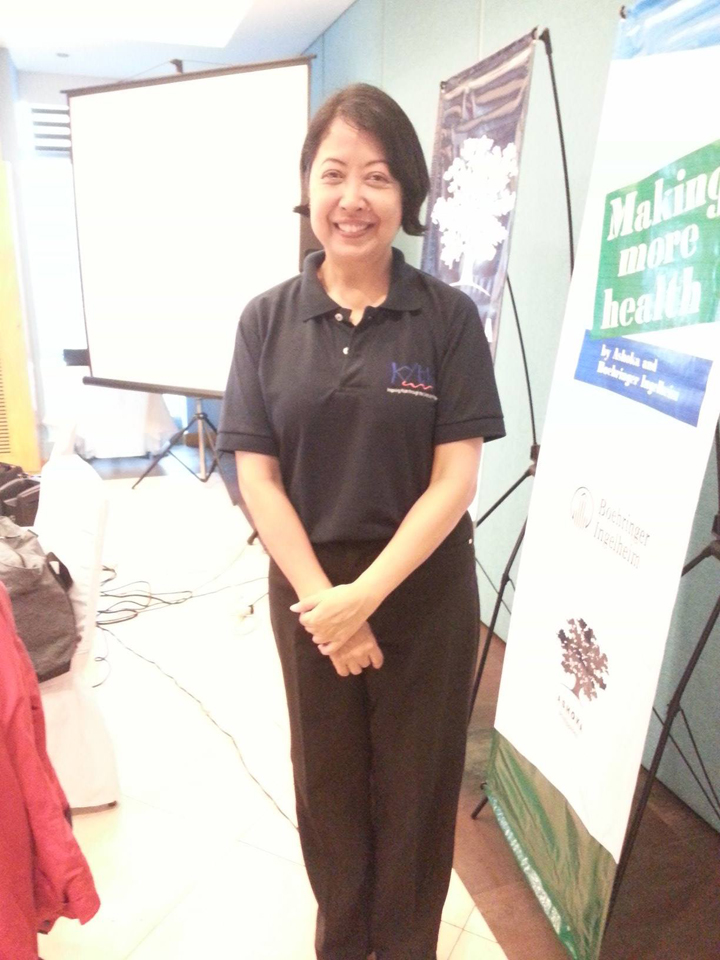
“Their screening process is intensive,” she added. “They really look into your past, who you were as person. Very draining. When I was told I got the fellowship, I said, 'Okay...are you sure? Well, if you say so.'”
A graduate of Behavioral Sciences from Maryknoll College (now Miriam College), Girlie was chosen for the Ashoka Fellowship many reasons, one of which was how long and how consistently she has been into social work. It is an advantage if the fellow has been socially-oriented since childhood, which was no problem for her.
“I was active in the parish when I was young,” she recounted. “I was head of the Parish Congress, I even headed World Youth Day as a teenager…all of these things were galvanized when I went to grad school, when I said ‘this is something I want to do.’”
However, future Filipino Ashoka Fellows need not worry about not having begun social work at an early enough age. Girlie assured that, “It’s the passion you put into it—Ashoka will look into that.”
Sustainable, replicable
Another reason Girlie was awarded the fellowship was the strength of Kythe's program.
“You could say there is a template for the program,” Girlie said. “It is sustainable, and it can be replicated anywhere.”
Kythe (kayth) is the Scottish word for “to manifest oneself.” Girlie founded the organization with fellow graduate student Carmen “Icar” Castro in 1992 in Ateneo de Manila University. The two had been working on a thesis about play therapy.
“After it was done, we realized we couldn’t leave the kids behind,” said Girlie. “We wanted to continue giving them psycho-social support. So us two graduate students put up a sign-up sheet by the Psych dept asking ‘hey, who wants to play with kids in a hospital once a week?’ About 20-30 students signed up.”
“We’re now at 500 volunteers,” she added. “When we left, Kythe was institutionalized by the Council of Organizations of the Ateneo.”
Last year, when pork barrel scam surfaced and it was revealed that businesswoman Janet Lim-Napoles had allegedly been funneling money from ghost non-government organizations she herself set up, Kythe reached a difficult period in its history.
“We had to intensify our credibility,” shared Girlie. “We had to get all these certificates from legitimate bodies and institutions, as well as testimonies from our partners. [My getting an] Ashoka fellowship is a stamp of global approval—we are legitimate, we are not corrupt!”
Child Life Programs
Setting up Kythe also the paved the way for setting up the first Child Life Programs in a few hospitals in the country.
The concept of a CLP was first brought over from the US, where Girlie travelled and got herself certified as one of the Philippines's first Child Life Specialists in 2001.
“Child Life Programs, psycho-social intervention, and family support go hand-in-hand in the Philippines—which makes us unique,” she said. “In other countries, those are separate aspects.”
Girlie wishes there were more pediatric wards with CLPs or psycho-social intervention in the nation, as many kids are traumatized by their illnesses and sometimes, doctors cannot really explain certain concepts in ways they understand. That's where Child Life Specialists come in.
“Sometimes, the child will not go through chemotherapy until the coordinator is there to hold their hand,” Girlie explained. She noted that organization volunteers handle child patients with non-chronic or non-critical illnesses and that in that way, they get to service the entire ward.
“We're there to be the child's advocate. And for parents, we explain the sicknesses in layman's terms and make them understand. This increases medical compliance—if we make the hospital a happy place to be, they will keep coming back.”
Kythe has gotten invitations from other hospitals to start the Child Life Programs there, but they are still reviewing these. For now, they are sticking to their 13 government hospitals because there is more of a need in these places.
Meanwhile, Ashoka Global is now looking for their next socially innovative fellow. — BM, GMA News

