

 GMA Brandtalk
 Tracking
 Archives

ADVERTISEMENT
Filtered By: Lifestyle
Lifestyle
To rub out the stars: Quick, cheap, but not pain-free tattoo removal
+
Make this your preferred source to get more updates from this publisher on Google.
Dr. Jean Marquez is resident dermatologist of GMA's “Pinoy MD.”
Tattoos are forever, but there's something to be said about erasing permanence.
I thought wrong.
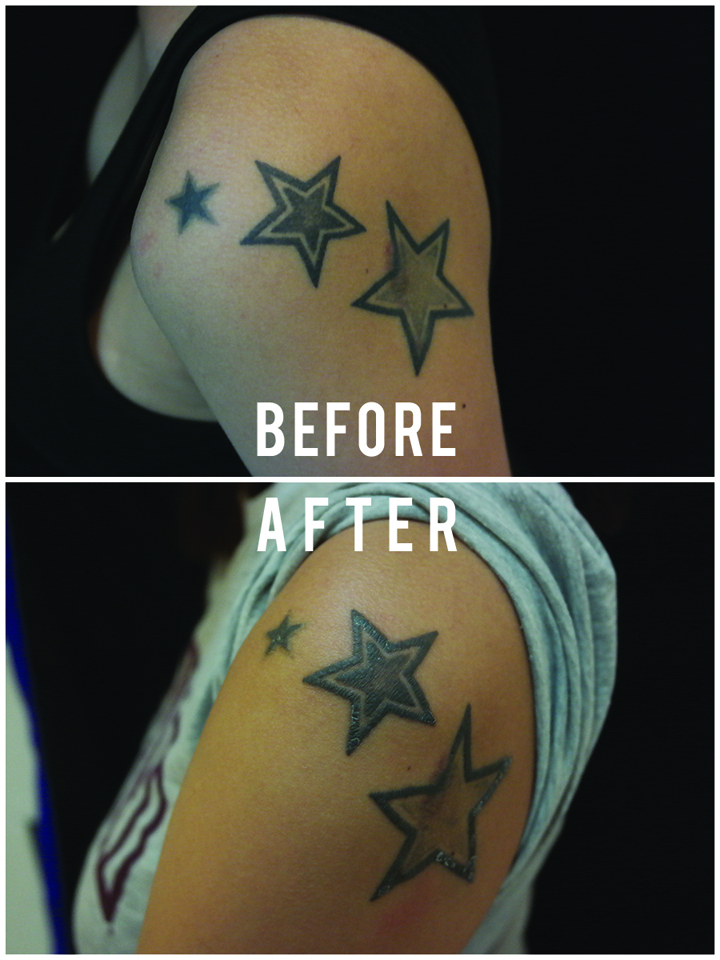
Not only did I regret the ink a year after but also, compared to my previous tattoos which bear some significance in my life, my recent one was as irrelevant as one star among billions in the sky—literally, that was my tattoo.
And so I have exhausted my time doing research on laser tattoo removals and have consulted a number of dermatologists from reputable hospitals in Metro Manila.
Collectively, all doctors I’ve spoken with have said that the guarantee of removing a tattoo 100% is never assured. There may or may not be residual marks, various skin reactions, and even the possibility of keloid formation. The cost is also ten times more expensive than getting the tattoo itself, averaging from P10,000 to P15,000 per session, depending on the size. There are also other factors to consider, such as the color of the tattoo, the length of time it has been on the skin, and if it was done professionally or not. All these will have a significant effect on the outcome.
I was about to sign up at a hospital for my first removal session when an inviting ad on the Eraser Laser came to my attention. The Eraser Laser is offered exclusively at Skin Specialist, a dermatology center by Dr. Jean Marquez of the Philippine Dermatological Society.
The Eraser Laser, with a brand name called Tri-Beam, is a new machine that claims to treat skin discolorations, scars, birthmarks and tattoos faster and more comfortably than its competitors. It is also supposedly tried and researched on Asian skin, thus making it more effective for Filipinos. With an introductory price of P5,000 to P7,000 per treatment, I gave it a try.
The treatment process
It started with a brief consultation with Marquez explaining what to expect during treatment. She guaranteed after seeing my tattoo, “this is very do-able and I assure you instant results.”
A nurse then cleaned the area and applied topical anesthesia. After the anesthesia took effect, I was asked to take a comfortable position and wear protective eye gear. Marquez then proceeded to work on my tattoo, located on my left shoulder blade. The machine made a clicking sound, and there was a very faint burning odor.
The treatment lasted for less than fifteen minutes and was painless in some parts, but painful in others. Even despite having a very high threshold for pain and having been under countless medical procedures in the past, the strain level of the removal hurt a lot—maybe twice as much as actually getting a tattoo.
There was also visible redness surrounding the tattooed area.
Post-treatment
The redness of the skin subsides after a few minutes and the pain was just simultaneous to the procedure.
However, expect near-intolerable itchiness in the tattooed area, beginning on the second or third day and to continue even weeks after. Marquez explained “that is a result of the pigments reacting and surfacing to the epidermis.”
Flakiness and peeling were also experienced, along with dryness.
An anti-bacterial ointment was prescribed, along with a silicone sheet as prevention for possible skin abrasion.
The result
Surprisingly instantaneous. After the first treatment, the lightest shade of my tattoo was 95% gone. The rest seem to have lightened and there was an obvious difference after one session. I still have a long way to go, and as per evaluation, will need at least six more procedures to achieve my target invisibility.
Marquez emphasized that results may vary per person and it is best to have a thorough consultation with a dermatologist to manage expectations. — VC, GMA News

