

 GMA Brandtalk
 Tracking
 Archives

ADVERTISEMENT
Filtered By: Lifestyle
Lifestyle
Celebrating nature through haiku in Sakai City
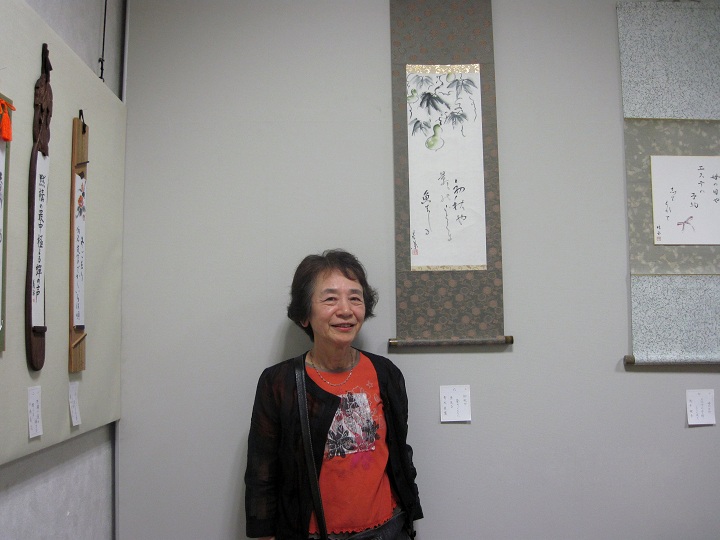
Miyoo Aoki poses in front of one of her haiku, framed along with other works on their club wall.
According to her, the inspiration for her haiku comes from the things nature shows her.
“Haiku comes from seeing and feeling something. By seeing nature, you can feel something deeply,” Aoki said.
Perhaps Japan's most famous literary form, haiku are three-line verses 17 syllables long—five syllables in the first line, seven syllables in the second and five again in the last line.
Traditionally haiku are written on a piece of shikishi (rice paper) and have a connection with one of the four seasons since the Japanese have a deep affinity for nature, said Aoki.
An art form related to haiku are haiga, paintings that incorporate haiku and are typically painted by haiku writers.
Haiku can be used as greetings and messages of congratulations or condolence, said Aoki. They can also be presented to friends as gifts or even be used in a romantic manner for courting.
In Sakai, even the young are participating in writing modern haiku, which sometimes have no mention of nature. There are also annual haiku competitions, especially in junior high schools.
But Aoki and her fellow haiku club members – twenty of whom are young – want to preserve the traditional form through their monthly meetings.
She said that with haiku, they are able to show their appreciation for the things life has to offer.
“Through haiku, we are able to hear the voice of nature with our hearts,” Aoki said. — BM, GMA News
The media tour for the 2014 Sakai-ASEAN Week from October 7 to 13, 2014 was organized by its Executive Committee and sponsored by the city government of Sakai in cooperation with several private groups.

