

 GMA Brandtalk
 Tracking
 Archives

ADVERTISEMENT
Filtered By: Lifestyle
Lifestyle
PEN panelists talk about the state of regional literature
The stories about the state of regional literature that came out of the third session of the recent Philippine PEN 2014 National Conference showed that the Philippines, while poor, is rich in its own way.
This sentiment was expressed by the panelists of the session, titled “Regional literatures and nation-building” and headed by Palanca-winning Bicolano poet Kristian Cordero.
The need for preservation and communication
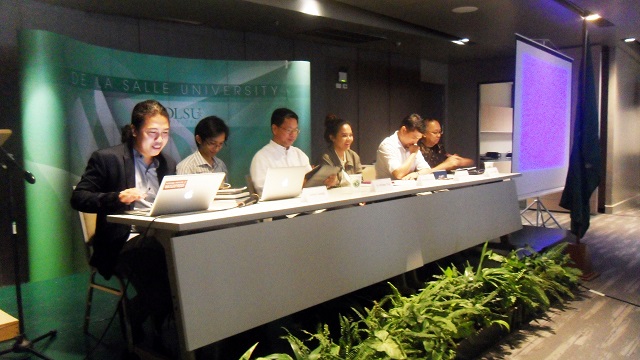
The panelists of the 'Regional literatures and nation-building' forum
“Cordillera’s literature is alive but is highly oral or performed,” he said.
In Bicol, an issue is that the language used in many local works can create an accessibility problem for many readers in the region. Fr. Wilmer Tria, Ateneo de Naga University Press director, said that the use of English in many of the works creates a distance between literature and the poor in rural areas.
“There is a widening gap between Manila and the countryside. There is elitism in universities,” he said.
However, he said, university publishers are helping writers focus on their creative process by supporting their marketing and publishing needs. He believes that the books they publish are also for those who have a heart to read to the poor.
Finding the Kapampangan ring
Alex Castro, author and cultural advocate, related the song "Atin Cu Pung Singsing" to how Mount Pinatubo's eruption in 1991 literally buried Pampanga's literature. He recalled how the disaster engulfed the town of Bacolor, site of many Kapampangan manuscripts.
Hope was rekindled in 2001 when the International Conference on Kapampangan Studies was founded. It led to the formation of the Center for Kapampangan Studies, which aims to promote Kapampangan language, history, and culture. Run by volunteers and cultural crusaders, the center produces translations of Kapampangan literature and preserves artifacts, dictionaries, poems, stories, indigenous scripts, books and even research journals.
According to Castro, the center’s finding of the lost ring that is Kapampangan literature is inspired by the maxim, “Be a better Filipino by being a good Kapampangan.”
More training
Francis Allan Angelo, a journalist from Iloilo, said that many writers from the region need further training to address their writing issues. He said that their writings need depth, beyond the typical news structure.
He also noted that while the province's cultural heritage sites are gradually receiving more attention as huge companies from Manila start coming in, the region should not just be about malls and tourist destinations—therefore the need to hone its writers so that they can contribute to the cultural wealth of Iloilo.
Cultural awareness contributes to nationalism, opined Zola Gonzalez-Macarambon of the English and Humanities Department of Cagayan de Oro's Capitol University. She recounted the rich tales and myths of Mindanao and how asserting ethnicity in literature can solidify regional identity and create meanings and patterns that will contextualize the issues of national identity. — BM, GMA News
The Philippine PEN Conference was held at De La Salle Univerisity in Manila from December 2 to 3.

