

 GMA Brandtalk
 Tracking
 Archives

ADVERTISEMENT
Filtered By: Lifestyle
Lifestyle
PHL-based social entrepreneurs join global group of changemakers
Pushing for breastfeeding. Providing safe water in vulnerable communities. Empowering Filipino migrants. Bridging the gap between the deaf community and the hearing society.
These are the issues that four social entrepreneurs based in the Philippines have been working on for years. Finally, their labor of love earned them a ticket to the Ashoka Fellowship Program, a global network of changemakers—some eventually became Nobel Peace Prize winners.
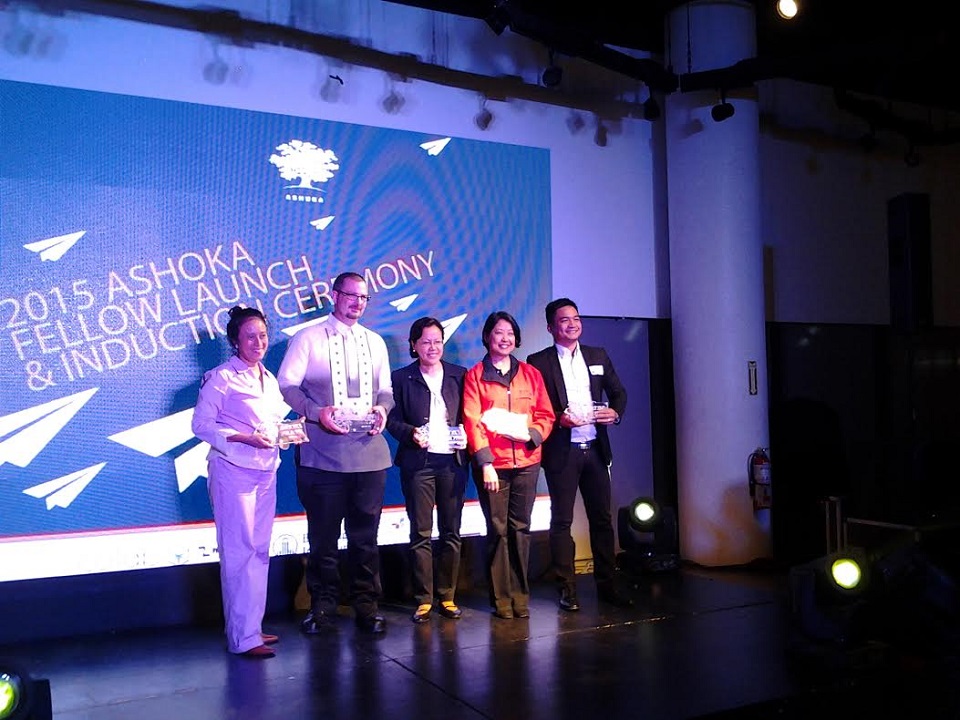
The Ashoka Fellows from the Philippines: Arugaan's Ines Fernandez, A Single Drop for Safe Water's Kevin Lee, Leadership and Social Entrepreneurship Program's Cristina Liamzon, Kythe Foundation Inc. Ma. Fatima "Girlie" Garcia-Lorenzo, and Gualandi Volunteer Service Programme Philippines' John Paul "JP" Maunes. Trisha Macas
Ines Fernandez of Arugaan, Kevin Lee of A Single Drop for Safe Water, Cristina Liamzon of Leadership and Social Entrepreneurship Program, and John Paul "JP" Maunes of Gualandi Volunteer Service Programme Philippines are the newly elected Ashoka Fellows from the country.
They joined the country's first Ashoka Fellow, Kythe Foundation Inc. co-founder and executive director Ma. Fatima "Girlie" Garcia-Lorenzo, who was inducted in April 2014, and nearly 3,000 other Fellows in 70 countries.
As an Ashoka Fellow, the chosen social entrepreneurs will receive benefits suchs as start-up financing and professional support services. But the biggest perk of being an Ashoka Fellow is the access to a network of social entrepreneurs from all over the world. This way, the Fellows can find possible partners to advance their causes.
The road to becoming an Ashoka Fellow was long and winding, as explained by Ashoka Philippines' Country Director Tony La Viña. He said the process of choosing Ashoka Fellows took at least long and rigorous nine months to make sure the programs the social entrepreneurs work on are original and sustainable.
Get to know the newest Ashoka Fellows below.
The importance of Arugaan for Nanay Ines
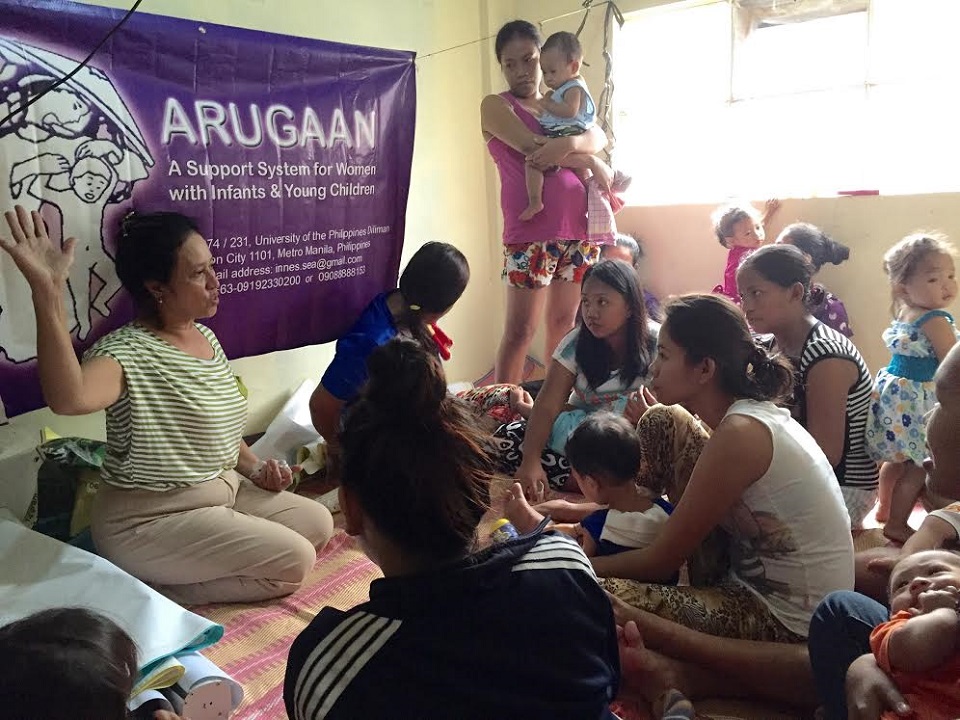
Fernandez with mothers and their children. Photo from Ashoka Philippines. Ashoka Philippines
Fernandez with mothers and their children. Photo from Ashoka Philippines.
Fernandez leads a mother-driven organization called Arugaan, which aims to inform parents, especially mothers, on the benefits of breastfeeding and healthier indigenous food choices in an age where baby food companies push for commercial alternatives.
"'Yung suso, may mammary gland, may purpose 'yan. Hindi 'yan dekorasyon," she said in an interview with GMA News Online.
Nanay Ines, as she is fondly called, has been in the know of this issue since the 1980s. She was one of those who pushed for the passage of the Milk Code, as signed by President Corazon Aquino in 1986. But she continued her fight in different communities through her organization Arugaan.
Aside from teaching mothers to breastfeed and give their children with nutritious food, Arugaan also teaches singles and mothers-to-be to prepare for childbirth and family life.
"Kailan ka ba magpe-prepare? Kung nandiyan na? Before you make a choice, dapat alam mo na," she said.
Former US Peace Corps asks for A Single Drop for Safe Water
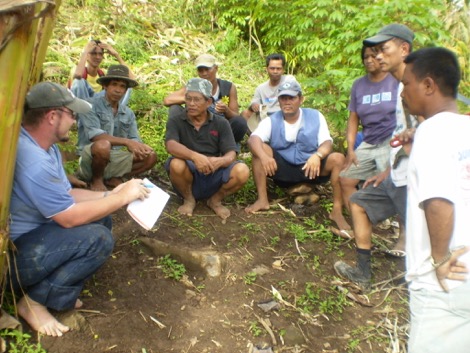
Lee talks to community members about WaSH. Ashoka Philippines
Lee was born in Johannesburg in South Africa to American parents, but he was raised in New Zealand. He first arrived in the Philippines in 2004 as US Peace Corps member. Today, he is a permanent resident in the country, leading an organization that provides safe water for vulnerable communities.
Before his stint with the Peace Corps was ending, Lee discovered that many communities in the Philippines do not have access to clean water.
"WaSH (water, sanitation and hygiene) should be a priority but it isn't," he said during his acceptance speech.
Lee goes beyond the usual help, his team also ensures that the community helps themselves by partnering with local governments. To date, he has provided quality water to communities in Benguet, Camarines Sur, Maguindanao, Sultan Kudarat, Eastern Visayas, Palawan, and Panay. A Single Drop for Safe Water is also planning to reach out to more conflict areas in Mindanao.
"Superman can't fix it, the communities should do it," he said.
Lee's efforts will also be supported by Boehringer Ingelheim Pharmaceuticals.
Empowering fellow Pinoy migrants

The graduates of LSE Program as headed by Liamzon. Ashoka Philippines
According to Liamzon, one of the problems of overseas Filipino workers is financial management because of the lack of financial literacy. Because of this, many Filipino migrants go back home thinking they can finally taste the fruits of their years of labor, only to find out that they have to go back to step one.
"OFWs take it upon themselves to take sole responsibility of the financial upkeep and future of the immediate and extended family, which shouldn't be the case," she said.
This pushed Liamzon to start the LSE Program, which aims to empower the migrant workers to take control of their finances to have a better quality of life for their families and even relatives. OFWs also learn about leadership and entrepreneurial skills to help them attain a good life even after working abroad.
Being a resident of Italy for years before coming home to the Philippines, Liamzon's program has been active in five Italian cities of Rome, Naples, Milan, Florence, and Turin since 2008. Now, the Program has branches in Hong Kong, Dubai, Paris, Brussels, The Hague, and Macau.
Maunes wants the deaf community to be heard
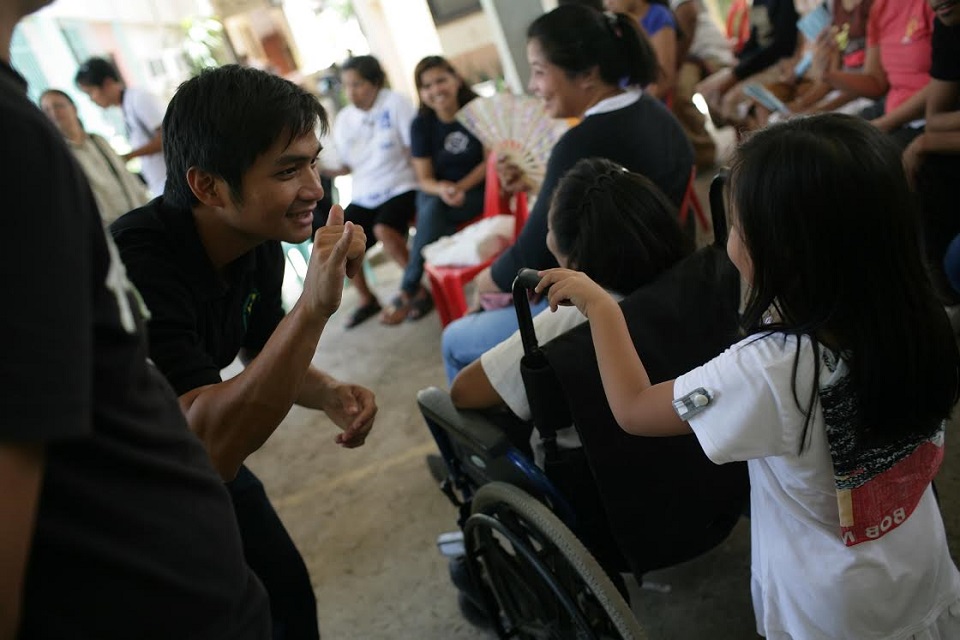
Maunes speaks in Filipno sign language to a young girl. Ashoka Philippines
All Gualandi Volunteer Service Programme Philippines—the organization that Maunes co-founded—wants is for the deaf community to be included.
Maunes said that deafness is considered as one of the most invisible disabilities; thus, the people who suffer from this condition are usually set aside.
"There are people who cannot fully participate because of language barrier," he explained.
He also said that his organization does not demand for the entire Philippines to learn the Filipino sign language. The group just wants for local government agencies as well as the media—especially in newscasts—to provide sign language interpreters, which can be useful during disasters.
"All we're asking is to provide sign language interpreters... Without sign language, the deaf will always be excluded," he said.
Maunes added that one of the reasons there is a big gap between the deaf community and the hearing society is because the government does not recognize Filipino sign language as the natural language for the deaf. There have been some small steps toward progress, however; for example, Senator Bam Aquino authored Senate Bill 2118, which declares Filipino sign language as the national sign language of the deaf.
"The Philippines is one of the few countries that does not recognize sign language... As long as the Philippines recognizes Filipino sign language as the natural language of the deaf, Filipino deaf people will always be disenfranchised," he said. — BM, GMA News
To nominate an Ashoka Fellow, visit philippines.ashoka.org/nominate.

