

 GMA Brandtalk
 Tracking
 Archives

Getting to the root of the problem: Kili-kili care
Who’s ready for summer? Ladies, raise your arms high, higher, higher still! How much underarm exposure can most people take without shame or hesitation? Not much, unfortunately.
People care a lot about underarms. A few days ago, actress Ina Raymundo became a popular topic on social media when bashers criticized her supposedly dark underarms. Raymundo's cool response was to dare them to bare their own kili-kili.
The underarm and its care continues to be one of the most popular topics of local beauty blogs, advice columns, skin centers and dermatologists’ clinics. In fact, according to Dr. Jean Marquez, resident dermatologist of GMA's "Pinoy M.D.," "Most women will encounter an underarm concern at varying points in their lives, may it be during puberty, pre- and post-maternity, weight gain, or even just as a result of the everyday grind.
"The underarm is one of the most frequently consulted skin concerns in my clinic, next to the face."
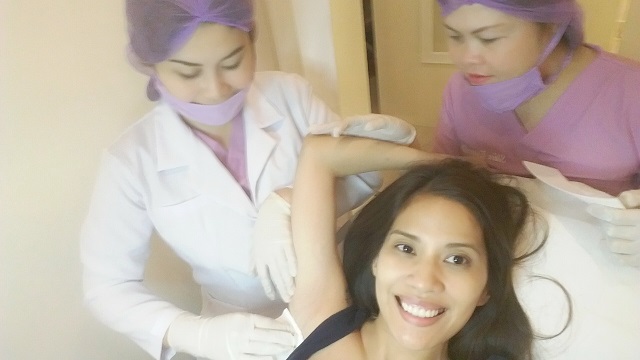
And so, aside from my regular hair removal procedure, I subscribe to products and services that will address my issue. I have also been a patron of almost all these depilating methods for more than a decade and can vouch for their efficacy based on personal experience.
Below, common underarm problems and some ways of dealing with them.
Underarm problem: Unwanted hair
Solutions
1. Tweezing.
Pros: It's cheap, easy and can be done at one’s convenience, anytime. It gets hair from the roots so that it takes a longer time for hair to grow.
Cons: It can cause chicken skin (bumpy skin), slight burning and itching.
2. Shaving.
Pros: It's cheap, easy and (unlike tweezing) painless. It can even be done as frequently as possible.
Cons: Nicks and cuts may result from improper shaving. Shaving can also cause ingrown hair. Hair re-growth tends to be "spikey," and shaving is a short-term solution.
3. Depilatories. These are chemicals in the form of gels, foams, creams or liquids applied directly to the underarm and wiped off (together with the unwanted hair) after a few minutes.
Pros: With depilatories there is no risk of nicks or cuts. Hair re-growth is softer compared to shaving and it takes longer. New products continue to appear in the market promising less waiting time.
Cons: Veet, the most common brand in the local market, costs around P180 to P500. The chemicals can also irritate skin and cause allergic reactions. The process can be messy and smelly.
4. Waxing. Hot or cold wax is applied to underarms in the same direction of the hair's growth. Once it solidifies, the wax is stripped away in the opposite direction (wax strips are used if the wax is hot), pulling out the hair with it.
Pros: Waxing exfoliates skin in the process. It can give you up to four weeks of smooth underarms, and hair re-growth is smooth. Hair re-growth also lessens when waxing is done frequently.
Cons: Waxing can be painful to some people. You must also allow hair growth to be able to wax it. Waxing can leave skin irritated, and hot wax, if not managed well, can cause blisters. It is advised that waxing be done by professionals, which will mean added expense: Lay Bare, a leading waxing salon, charges P170 for underarm cold waxing. Skin Essentials (Gateway Centre, Paseo de Magallanes, Makati City) charges P300 for hot wax.
5. Intense Pulse Light (IPL). Pulsed light is used to impair the follicle. The pulse energy is absorbed by the hair and effectively curbs further hair growth.
Pros: The procedure destroys the hair follicle, resulting in a longer period of hair growth and eventually minimal hair growth.
Cons: It is a time-consuming process, and those who undergo it can expect redness, swelling and skin sensitivity after the procedure. The initial pain and discomfort can be likened to a whip lashing the skin, but this lessens as hair decreases. The procedure must be done by a dermatologist or trained professional, as topical anesthesia is applied before the procedure. Skin Essentials charges P350 to P500 per IPL session.
6. Diode. The intensely concentrated diode laser works by gradually heating and destroying hair follicles with gentle pulses of laser energy.
Pros: The treatment is virtually painless; the diode feels like a warm roll-on deodorant. No anesthesia is needed, and the treatment only lasts for 15 to 30 minutes depending on amount of hair. Long-term treatment may result in minimal hair growth.
Cons: The procedure is expensive and must be done by a dermatologist or trained professional. The Skin Specialist (ESNA Building, #30 Timog Avenue, Quezon City) charges P3,000 and above per session.
The IPL, being the first laser treatment to be introduced in the market a decade or so ago, was responsible for majority of my underarm hair loss. Though painful and needing to be done regularly, it is effective.
Five years ago I switched to diode. It is my current preferred treatment and since I am almost hair-free, I only need the procedure once or twice a year. As for the non-laser methods, I am a fan of hot waxing. I find hot wax more hygienic than cold waxing since the hot wax is thrown away after one application, unlike the cold wax procedure in which one ball of wax is used and reused for all areas.
Dr. Marquez says: "All these hair removing methods are effective if done properly. It is good to try them to decide what’s best and what suits a person most because no two underarms are alike. Alternating these methods may also work. For laser procedures, strictly follow the advice of your dermatologist to achieve desired results. For manual procedures, always do so with care."
Underarm problem: Excessive sweating
We all sweat from the armpits, but when the sweat is excessive, you may have a condition known as axillary hyperhidrosis.
Solutions
1. Antiperspirants.
Pros: They are affordable and easy to use.
Cons: Antiperspirants do not address the root of the problem. They will be effective for only a few hours, after which the sweating resumes immediately.
2. Botox. While Botox injections are more commonly known as a cosmetic treatment, injecting the botulinum toxin into the underarms is often done to combat excessive sweating. The Botox acts like a roadblock and prevents the release of acetylcholine, the chemical transmitter used by the nerves to activate the sweat glands.
Pros: The results are expected to last four to six months. Sweating is immediately reduced, if not stopped, during the period.
Cons: It does not remove sweating in the area permanently, and it is also an expensive procedure: Botox costs around P450 per unit, and each underarm requires around 25 to 50 units, depending on the person. The Botox injection must be administered by a dermatologist.
3. SweatX. In this procedure, a laser delivers precisely controlled thermal energy to the armpit area, selectively deactivating the sweat glands.
Pros: SweatX promises to permanently eliminate excessive sweating and body odor. It is painless and there is no downtime. A 30-percent sweat reduction can be seen after one treatment, but results vary per person. The treatment does not use drugs, toxins or surgical incisions.
Cons: The procedure is a pricey one: Skin Specialist charges P8,000 per session, with 4 to 6 sessions normally required to eliminate sweating. An annual session is required to maintain the armpits sweat- and odor-free.
Here's the testimony of someone who has tried SweatX, Alma Concepcion:"I’ve battled excessive sweating since I was 5 months old. I shower twice a day and even use Betadyne Blue. I also have a special deodorant from the States. I’ve had Botox injections in the past, but the results were temporary and unsuccessful. I have considered surgery but I am scared to go under the knife. SweatX has surprisingly addressed my concern. There’s very evident sweat reduction. Now on my fifth treatment, the sweating has minimized. I’ve started to wear sleeveless and have gone on days without deodorant.”
Dr. Marquez says: "New research and technology always provides patients with concerns like excessive underarm sweating options to choose from. To know the treatment that will best address the patient’s problem, a dermatologist will need to assess his or her health history, lifestyle and other contributing factors. After consultation can only a doctor diagnose an approach that will best suit a person."
Underarm problem: Discoloration
There are many reasons for having discolored or dark armpits. It can be due to genetics, or it can be due to factors such as obesity; friction between clothes and the armpit; excessive sweating; post-inflammatory hyperpigmentation from injury, allergy or surgery; shaving; dead skin build-up; the presence of alcohol and strong fragrances in deodorants; and the intake of androgen-based contraceptives.
Solutions
1. Chemical peels. A chemical solution is gently brushed on the underarms, after which the skin peels off after a few days or weeks. Chemical peels can be expensive, and there's a risk of irritation or even scarring.
2. Bleaching. Bleach is applied to the underarm and later rinsed away. Succeeding treatments are advised to see visible lightening results.
3. Whitening deodorants, creams and other products. If you want to try these, look for products that contain licorice, arbutin, vitamin C and niacinamide and apply them to the underarm area. Most can be purchased in supermarkets, drugstores, aesthetic centers and dermatologist clinics, but their use remains controversial.
4. Laser. Pixel and Fraxel lasers are commonly used to lighten and minimize the underarm’s pigmentation. These machines usually have a downtime period and the treated area is not allowed to get wet until after a certain number of hours.
5. Home remedies. Homemade treatments for dark armpits include using lemon or calamansi (Vitamin C supposedly lightens skin, as well as contains anti-bacterial and antiseptic properties); tawas (potassium alum), which has the added benefit of eliminating odor; and baking soda, which is used as an underarm scrub and is said to prevent body odors and rid dead skin cells.
For me, the laser was the fastest in lightening my underarms. I also use a whitening cream concocted by my dermatologist to aid in the process and to maintain my underarm’s complexion. I tried chemical peel and would still subscribe to this provided there is a long interval from my laser treatment. Wearing sleeveless tops as the skin peels is not advised because it is quite unsightly.
Dr. Marquez says: “So many factors contribute to the darkening of underarms. The underarm skin is [so] sensitive that even deodorants and other products can easily cause reactions, leading to irritation and more pigmentation. Avoid exfoliants like retinol, glycolic, AHA and hydroquinone. Put whitening creams only at night as these are occlusive; using them in the morning contributes to sweat. If you are not prone to sweating and body odor, you may do away with deodorants. Also look for alum-free antiperspirants.”
Above all, Dr. Marquez urges readers to check with their doctor first before trying any treatments. "Consult your dermatologist. It might save you the fuss and cost of experimenting with these procedures and products," she said.
"Be gentle with your underarms. Any pressure exerted, whether by mere application of products or treatment, can cause adverse reactions. Most importantly, be patient, as results take time and each skin reacts differently from another." — BM, GMA News

