

 GMA Brandtalk
 Tracking
 Archives

Theater review: Friendship, promises, and virtual reality at Virgin Labfest XI
Adolescent friendships, broken promises, and disenchantment with painful physical reality are explored in the third cluster of the ongoing festival of one-act plays, formally called Set C of "Sariwa 11," the 2015 Virgin Labfest at the Cultural Center of the Philippines.
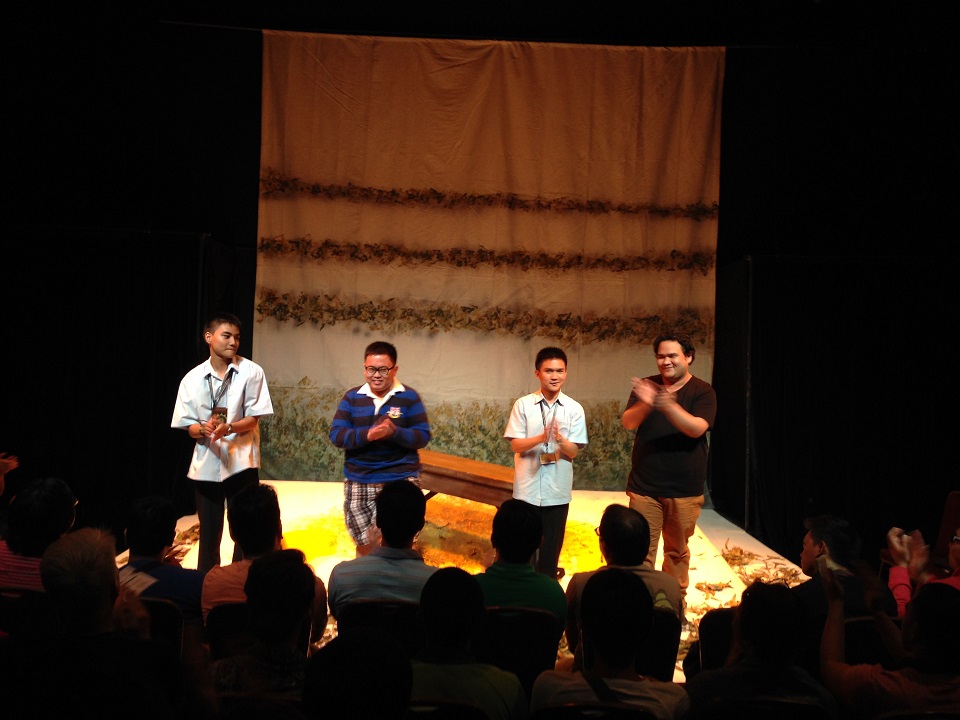
In “Kublihan,” written by Jerome Ignacio and directed by Guelan Luarca, freshman student Mike (Joshua Tayco) and senior student Julio (Abner Delina Jr.) retreat to their favorite “kublihan” (place of refuge or solace) overlooking a cliff in Marikina one late afternoon during an eclipse.
At this particular meeting before Julio’s graduation separates them, the two boys recall the birth and blossoming of their friendship, which started during freshman orientation day barely a year ago.
In a 45-minute raw and roller-coaster exchange, at times wrenching or witty, Julio and Mike celebrate the past, mourn their failures, grapple with the demons of growing up while dealing with excessive parental expectations, and then they finally resolve to quell their fear of the future.
Parents may benefit from watching this one-act play. It will give them a glimpse into the turmoil their children undergo due to their nagging and demands to excel.
“Kublihan” may be mistakenly read as the journey of two high school friends in search of their sexual identity. Watching it for the second time, however, reveals that the play is solely about a beautiful and pure friendship of two boys negotiating with youthful emotional issues, parental impositions, and the daunting challenges the future brings.
The narrative is exquisite in its deceptive simplicity.
The use of a stationary concrete bench as the center of the action where Julio and Mike sit, lie, bounce, revel, and savor memories of the past 12 months was striking.
Two souls snared by their past, embroiled by their present, and perplexed by their future (and soon to part ways) are fastened together symbolically by this quiet hard bench: their stable anchor in the middle of their hurts, joys, struggles, and uncertainties.
“Kublihan” is about understanding and accepting the crushing heaviness of saying goodbye to a best friend, and at the same time the compelling need to move on and not wallow in sorrow, for friends eventually meet again.
Delina and Tayco brutally immerse themselves in, and bring the audience to, the vortex of the fury caused by bidding farewell and facing the world alone, even briefly.
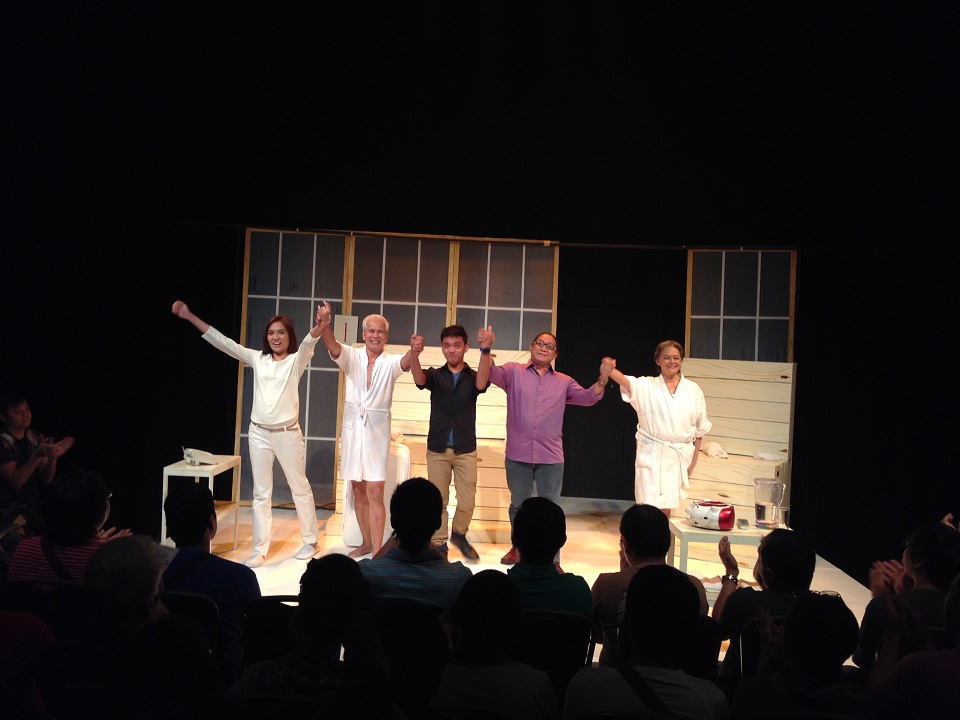
“Hintayan ng Langit” written by Juan Miguel Severo and directed by Raffy Tejada, features real-life couple Edna Vida and Nonoy Froilan, two of the country’s most brilliant and gifted ballet dancers and choreographers.
“Hintayan ng Langit,” which may be translated as “waiting for fulfillment,” revolves around Lisang’s bid to tarry in a particular state. She is waiting for Manalo to arrive so she can finally conclude some personal business that has been pending for decades.
The Froilans, despite a few forgotten lines here and there, are a true delight to watch successfully conquer a new stage without their customary tutus, leotards, and tights. If only to catch the Froilans’ foray into the straight play genre, this is a must for serious theater-goers.
Ballet fans who are interested in discovering how ballet dancers act on stage plays should also watch “Hintayan ng Langit.”
Ronna Sabellina ably assisted the Froilans in making this rom-com in another realm work convincingly.
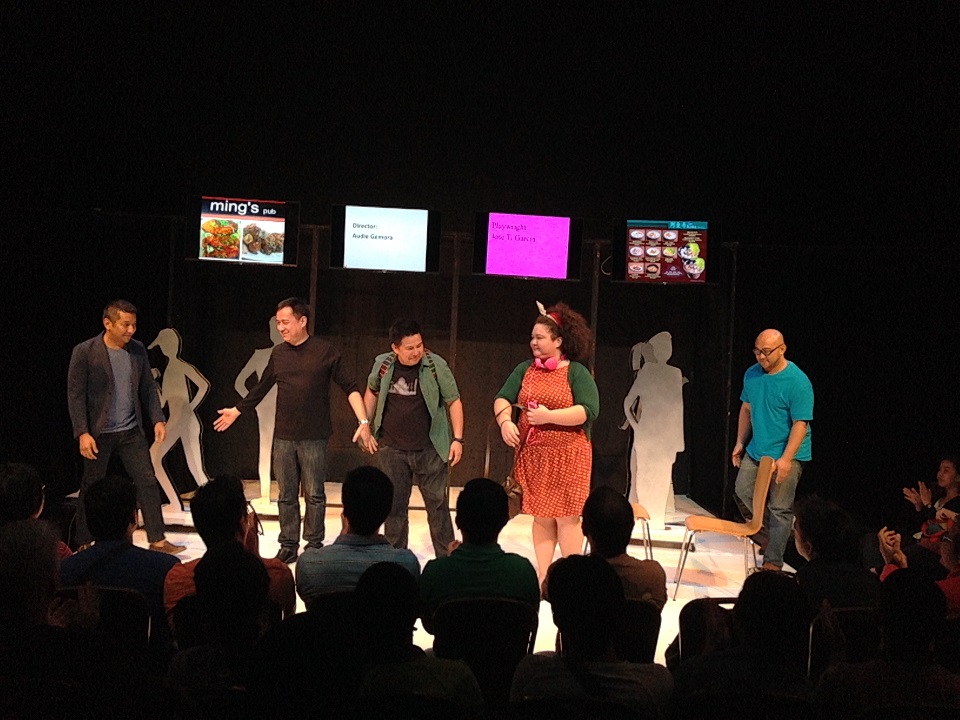
Of the three plays in Set C, “Birtwal” is unique and innovative in that the actors do not deliver their lines. The exchange of lines among the characters is flashed on the four screens (make-believe cellular phone screens) dominating the stage.
Joining the main characters Babae (J-mee Katanyag) and Lalake (Ron Capinding) inside the food court of a mall are several cardboard cut-outs constantly moved by unnamed stage-hands.
Director Audie Gemora said actors Serafin Murillo and Rhed Sandico, although not appearing on stage, are crucial in the timely flashing of the lines on the screens.
Gemora said real stage actors are needed to handle the computers as they are able read their fellow actors' body language.
Katanyag and Capinding should be praised for their sterling and skillful acting, doubly made more excruciating by their non-speaking roles.
“Birtwal,” written by Jose T. Garcia, is a searing look into the mindset of the tech-savvy generation and how their gadgets, cellular phones in particular, heavily mediate and inform their concepts of “truth” and “reality.”
As the play develops, the audience is able to pierce the characters' minds, eventually discovering their disenchantment with their physical bodies.
The characters’ “dislike” for their physical attributes prompts them to chisel Greek god- and goddess-like or romanticized digital identities of themselves, which populate their invented and technologically-mediated myths and far-away terrains inside their smart phones.
For its coruscating and sharp ideas on the youth’s social media-influenced “realities” and “truths” and how technology further distorts the murky divide and shifting seams of “virtual reality” and “real reality,” playwright Garcia deserves a loud bravo.
It is hoped that “Birtwal” will metamorphose into a full-length play that discusses how the Internet or technology is arbitrating and informing initial digital perceptions and online ideation of personas of real people.
Under Gemora’s adept and slick direction, the tempo and sound of the play unfolded from initially a quiet, dull drumbeat to a soaring crescendo of violent mental exchange. The rhythm kept ratcheting up as the characters made their choices. — BM, GMA News
The 2015 Virgin Labfest runs until July 12. For inquiries, call the CCP Production Management Services Division at 832-1125 locals 1606 to 1607, or visit www.culturalcenter.gov.ph. Tickets are priced at P300, with festival passes at P1,200.

