

 GMA Brandtalk
 Tracking
 Archives

Taunts, punches and depression: The sad world of a bullied kid
Here’s a confession: I was a bullying victim.
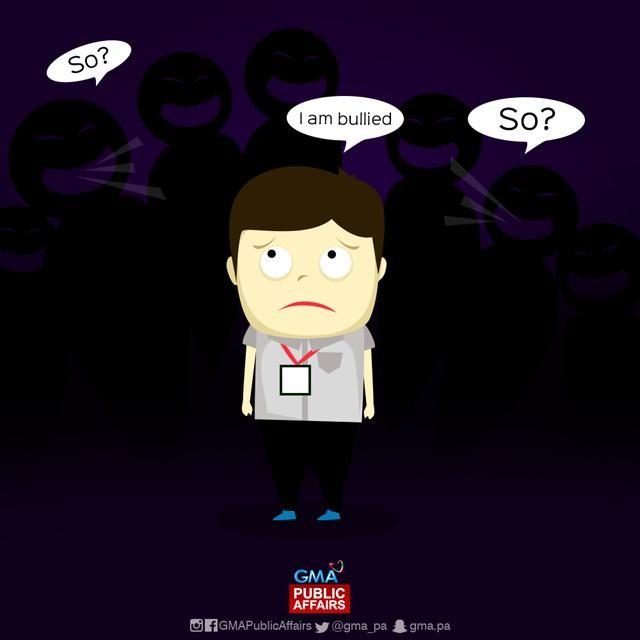
Fine. I know what you’re probably thinking. “So? Why should I care?” Well, if I were an actor, athlete, politician, or social media star, maybe my confession would make a stronger impact on you. But because I am just a nobody, nobody also cares about my bullying story. Bullying, after all, is so common in schools (you probably have no idea how common it is underground) that not many people think it’s a big deal.
Those who do, of course, are those who were or are bullied, myself included.
Where it all started
I was 14 years old when I transferred to a non-sectarian high school. It was culture shock for someone coming from a private Christian school. But I continued walking in the dark school corridors confidently, looking for my homeroom. I was excited yet scared.
My bullying story started when I was elected class president a few weeks later. As head of the class board, I was always in touch with our then class secretary (who was really pretty). We would meet after class with our fellow officers for meetings, until we kind of reached the point where we would go to a nearby mall after class, text each other all night long, and do all that mushy high-school stuff.
One chilly August night, as we were dancing during our school’s acquaintance party, two boys came up to me. “Umalis ka na dito. Magtago ka na. Mainit na ang ulo sa’yo ni ano…” they said.
I couldn’t understand them. “Why are they shooing me away?” “Who is ‘ano’?”
Later that night, I learned that the girl I was wooing was already in a relationship with a guy who was six years older than I was. I was a lanky 14-year-old dork while he was a 20-year-old giant who was apparently the star athlete on campus.
A few days later, I bumped into him during recess. He asked me to follow him to the comfort room. Paralyzed, I did, my heart beating so fast I felt that my chest was gonna blow up. He locked the door and pushed me up against the wall.

“Bakit mo pinopormahan girlfriend ko?” he said while slowly, softly punching me in the chest.
“Hindi mo ba alam na ako ang boyfriend niya?” he added, punching me in the chest again, but this time a bit harder.
“Kabago-bago mo rito, akala mo kung sino ka!” His punches were already causing me to choke up by this time, but I didn’t want him to see me in pain.

That was just the first of a series of bullying episodes. There were some days when I would go home with a limp because my legs had fresh wounds on them. I would wear jogging pants at home to hide my wounds from my family (my excuse: “Tinuruan po kasi kami sa school na mag-jogging pants para hindi magka-dengue”).
And it continued to get worse in the following weeks, much to my fright.
The horror of bullying
Republic Act No. 10627 or the Anti-Bullying Act of 2013 defines bullying as “any severe or repeated use by one or more students of a written, verbal or electronic expression, or a physical act or gesture, or any combination thereof, directed at another student that has the effect of actually causing or placing the latter in reasonable fear of physical or emotional harm or damage to his property [and] creating a hostile environment at school for the other student...”
This includes unwanted physical contact like punching, pushing, shoving, kicking, slapping, tickling, headlocks, inflicting school pranks, teasing, fighting, using available objects as weapons, making any slanderous statement or accusation, name-calling, tormenting and commenting negatively on victim’s looks, clothes and body, and cyber-bullying.
But the reasons for bullying has more to do with the bully than the person he is bullying. According to psychologist and child play therapist Lillian Ng Gui, “Adolescents are not bullied because of their personality. They are bullied because the bully made a choice to target them and this made them feel afraid to fight back because of fear.”

It reached the point where I decided to ditch my classes for four months. I would leave the house wearing my school uniform, looking like a smart kid excited to learn new things from school. But nope, I would just get on a jeepney and alight somewhere else.
Sometimes, I would go to the CR of a gas station and change into casual clothes so I could enter a giant mall’s premises (students were prohibited to enter during school hours). That mall became my second home. I would stay there until 2:00 p.m. and I arrive home late afternoon—in my school uniform again this time.
Yes, I ditched my classes for four months. Yes, I lied when I told my parents that I was having a good time in my new school. Yes, I looked stupid when I pretended to be working on homework in the living room when, truthfully, I was writing down all my thoughts that I simply couldn’t share with anyone else.
See? That’s what bullying can do to you. You become aloof and afraid to be with people because you feel that the bully will just come out from the crowd at any time. It can be really terrifying.
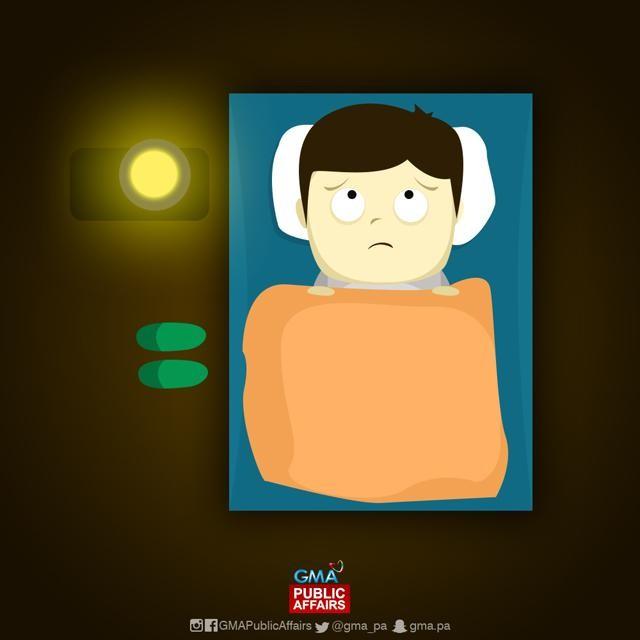
I never really talked about how I was bullied in high school (this happened in 2006—a decade, everybody) because, for one, I always feel that people will not really be genuinely concerned and sorry and instead see me as weak and defenseless.
What people don’t know is defending yourself when the bullying has already started is hardly easy. You know in yourself that you want to fight back but you simply just can’t because you become paralyzed by the horror from the bully’s eyes. You want to answer back, to punch him back, to tell him how bad he is… but nope, it’s not as easy as that.
Why it happens
According to Gui, bullying is characterized by three factors.
First: It is repetitive. It is not a one-time event but a regular ongoing behavior.
Second: it is unwanted. It is not a two-way exchange where both parties are having fun, but instead a situation where someone is on the receiving end of taunts and aggression.
Third: It takes place in the context of power imbalance. Say, a bigger kid against a smaller kid (which was my case), or multiple kids against a single kid, or a kid with more social capital against a kid with less.

Furthermore, the bully probably wants to feel powerful—and be recognized as such, so he resorts to showing his peers that he can easily topple others down. The fact that the bullied kid and other people are not speaking up about it fuel the bully’s harassment.
Gui says, “When a group of people keeps quiet like this, the bully’s reach is extending beyond just one person. He or she is managing to intimidate lots of people.” Thus, not talking about bullying doesn’t silence this bad behavior but instead only worsens it.
“It takes confidence to stand up to a bully, especially if he or she is one of the established group leaders,” says Gui. “But chances are the other students witnessing the bullying behavior feel as uncomfortable as [the bullying victims] do. They may just not be speaking up [because] they feel that they’re not popular enough to take a stand or worry that they’re vulnerable and the bully will turn on them.”
Save yourself
Every time I hear about another case of bullying in the news, I freeze in my seat and feel very sorry for the kid. It’s like I want to go to him and say, “I feel you, bro” so that he can open up to me about his fears. I think that one thing bullying victims share in common is we feel that nobody can ever understand the kind of fear that we experience.

Here is my message for other bullied kids: try your best to not isolate yourself from people. I know, I know; I said earlier that one thing bullying victims share in common is wanting to be alone. But that’s what makes the bullies continue their bad actions; they see that we’re alone so they can easily bully us.
Gui also advises that you follow the Golden Rule, a formula for win-win situations. “Our nature is to treat others the way they treat us. When others are nice to us, we feel like being nice back,” she says. “The Golden Rule puts you in control. If you treat them like a friend, before long they will stop treating you like an enemy because they are programmed to treat you the way to treat them. And that’s a win-win.”
I am writing about this because I want to help other bullied kids in my own way. As much as I wish that I learned about all this back when I was still being bullied, it’s obviously too late now.
But it’s not too late to save those who are currently being bullied. I hope that schools and organizations continue their growing anti-bullying campaigns. In the school where my friend is working as a special education teacher, they have a campaign titled “Don’t be a bully. Be a buddy.” That’s really nice. Everybody, after all, just wants a good friend. — BM/AT, GMA News

