

 GMA Brandtalk
 Tracking
 Archives

The night the Devil spoke to me
It's back! Midnight Stories will be posted throughout October to celebrate the month of ghosties and ghoulies and things that go bump in the night. Here's our next installment. Enjoy!
As a child, I was a firm believer in the supernatural. Ghosts? Vampires? Aswang? They all shared the same plane of existence with us, and I, fearful for my life, cowered from the shadows where they lurked.
But as I grew older, I learned to ask more questions. I read more books. I emerged from my youth armed with the knowledge that for every spooky encounter, there exists a perfectly rational explanation.
Then, one night, the extraordinary happened.
I was rudely awakened from sleep by someone – something – whispering in my ear. Which was an impossibility, because at that time, I lived alone.
The whispering… it didn’t even sound human. It was vicious, like the guttural snarling of a beast. And yet somehow, I knew words were being spoken to me – words filled with malice and rage and everything in between. Only they belonged to a language I’d never heard.
The language of demons.
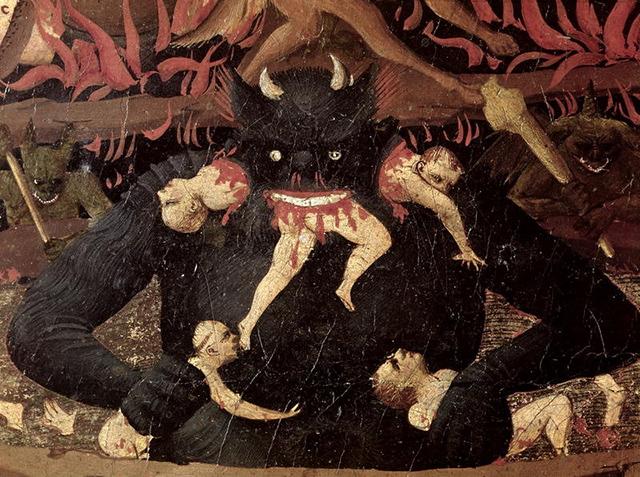
I would’ve jumped out of bed and bolted out my apartment if I could have. But I couldn’t move an inch. All my muscles were paralyzed. The only things I could move were my eyes. With them, I frantically searched the room for any signs of my intruder.
But I was alone.
The first rays of light peeked through the window. And as the sun chased away the shadows in my room, the voice softened until it finally vanished.
It was one of the most frightening experiences I’ve ever had. But was it real? Did I truly have an encounter with the Devil?
What really happened?
In the phenomenon called sleep paralysis, you “awake” but are unable to move anything but your eyes. Occasionally, the experience is accompanied by frightening hallucinations. Some report seeing vague, ghostly shadows. Others see more specific visitors, such as masked murderers, witches, demons, even aliens. And yes, the hallucinations can be purely auditory, as people have also reported hearing footsteps, gunshots, growling, screams, and voices speaking in strange, foreign languages.
So did I have a sleep paralysis episode? The answer is “yes.”
Sleep paralysis, dreams, and hallucinations are very much intertwined.
First, let’s talk about hallucinations. What exactly is a hallucination? Simply put, it’s when you sense (see, hear, smell, taste, or feel) something that isn’t really there.
The myth is that only people with mental disorders, such as schizophrenia, hallucinate. However, in his book, “The Demon-Haunted World: Science as a Candle in the Dark,” the late great Carl Sagan corrected this false notion.
“If you have [a hallucination], it doesn’t mean you’re crazy,” stated Sagan. “Hallucinations may occur to perfectly normal people under perfectly ordinary circumstances.”
But here’s what’s most interesting: “Hallucinations can also be elicited: by a campfire at night, or under emotional stress, or during epileptic seizures or migraine headaches or high fever, or by prolonged fasting or sleeplessness or sensory deprivation… or through hallucinogens such as LSD, psilocybin, mescaline, or hashish. There are also molecules, such as phenothiazines… that make hallucinations go away. It is very likely that the normal human body generates substances… that cause hallucinations, and others that suppress them.”
In other words, seeing, hearing, smelling, or even feeling a “ghost” doesn’t necessarily mean we’ve just made contact with someone in the afterlife. It could simply mean we’re hallucinating due to stress, illness, drugs, or a host of other non-supernatural reasons.
Let’s go back to how hallucinations are related to sleep and dreams. There’s a stage of sleep called rapid eye movement (REM) sleep. This is when the brain experiences heightened activity, allowing us to have intense and vivid dreams. During this stage, the muscles are paralyzed to prevent us from acting out what we see in such dreams.
Many scientists have been able to induce hallucinations in their subjects by disrupting their REM sleep.
“Experiments have been performed in which sleeping subjects are awakened whenever the REM state emerges, while members of a control group are awakened just as often each night but not when they’re dreaming. After some days, the control group is a little groggy, but the experimental group – the ones who are prevented from dreaming – is hallucinating in daytime,” wrote Sagan.
The sleep paralysis connection
Interestingly enough, sleep paralysis has also been induced in the lab by performing experiments similar to the one described above. In one example, Japanese scientists deprived volunteers of REM sleep. The results are exactly as what you would expect – they woke up paralyzed, and experienced visitations by “strange entities.”
It seems, then, that the key to sleep paralysis – and the hallucinations that come with it – is the disruption of REM sleep. In simpler terms, if you’re disturbed during REM sleep and wake up as a result, there’s a good chance you’ll end up hallucinating. And because your muscles are paralyzed due to said stage of sleep, you won’t be able to move, either. This creates the illusion that a supernatural force is exerting some form of control over you.
In an article in Psychology Today, researcher Michelle Carr summed up the phenomenon best: “During sleep paralysis, the mind is still clouded from the sensory spill of the dream world, which may cause a person to perceive hallucinations… Whereas normally we wake up and recognize a dream as just that, a dream, when these hallucinations seep into wakefulness our ability to contextualize the experience grows thin. A matter of seconds in sleep paralysis is enough for the fearful mind to spiral illusions of being strangled or possessed. But, it is your fear that is the true menacing presence here.”
In some of the worst cases, sleep paralysis is accompanied by the sensation of a great weight crushing your chest – which explains the abundance of stories about sleep-related demons (such as our very own bangungot) in various cultures.
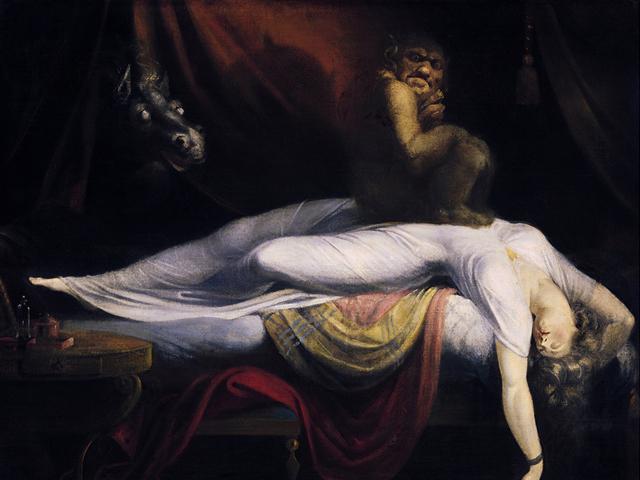
But again, science has an explanation for this.
“It’s possible that our sense of threat plays a role in converting the physical experience of sleep paralysis into the illusory narrative it often becomes,” wrote Carr. “For example, breathing difficulty is a true physical element of sleep paralysis, due to the controlled respiration of REM sleep. However, with growing fear, shortness of breath may be transformed into hallucinations of a malevolent shadow figure sitting or pressing on the chest. In other words, fear creates the perception that someone or something is responsible.”
The truth is out there
There is a glut of scientific data about sleep paralysis and hallucinations if you know where to look. Here are just a few more tidbits about these phenomena.
Sleep paralysis has been around for as long as humanity has existed. In our scientific ignorance, we often attempt to explain the phenomenon with the supernatural. This is why different cultures have their own unique explanations for it. We’ve already mentioned the Philippines' bangungot. Then there are those who believe succubi or incubi are responsible for the terrifying occurrences. Some in rural Russia are more likely to attribute it to the regional bogeyman, Baba Yaga.
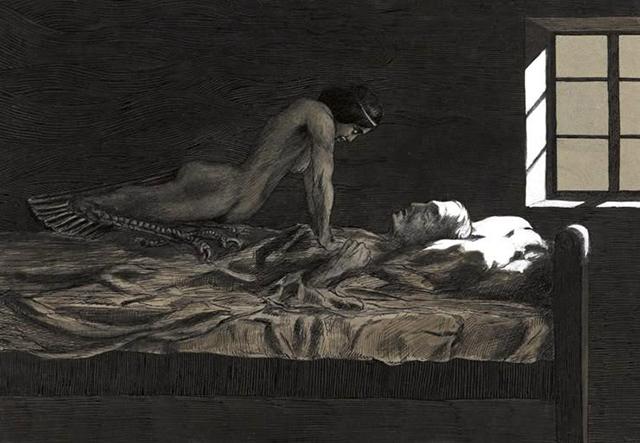
What you see in your dreams and, by consequence, your sleep paralysis hallucinations, are more likely to take the form of what leaves the strongest psychological impact on you. Several users on Reddit have seen a mysterious “Hat Man” during sleep paralysis, and proclaim him as “evidence” of the supernatural. Well, a hundred people watching “Ringu” could end up dreaming about Sadako, too; this doesn’t mean she’s real. The Hat Man could be the product of one or two stories that went viral, and that proceeded to bother so many people that they all dreamed about or hallucinated the same entity.
Sleep paralysis hallucinations are as varied as they come. One of the weirdest hallucinations is the out-of-body experience, in which you find yourself floating above your own body. This could explain why some UFO-obsessed North Americans come forward with claims that they’ve been abducted by extraterrestrials – the modern-day equivalent of bangungot and Baba Yaga.
Sleep paralysis is more common among people taking medication for anxiety. Around the time I had the sleep paralysis episode described above, I was under medication for depression. In other episodes, I have seen shadowy figures and, at one point, a 7-foot, 60’s-style robot standing beside my bed.
For further reading about sleep paralysis, click on the links above or go to The Sleep Paralysis Project.
Also, try to get a copy of Carl Sagan’s “The Demon-Haunted World” if you can; it’s an eye-opener. — BM, GMA News

