

 GMA Brandtalk
 Tracking
 Archives

Traslacion: The narratives of devotees of the Black Nazarene
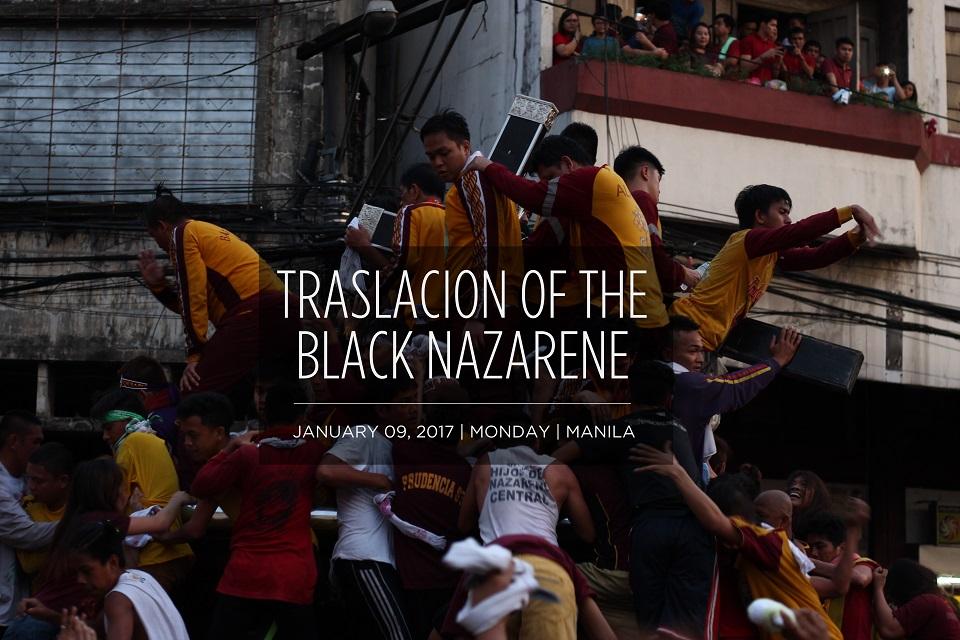
Roads in the country’s capital city turned into a vast sea of maroon and yellow as a million and a half barefoot devotees frantically braved the blistering heat and overcrowded streets to celebrate the annual 6.9-kilometer journey towards Catholic faith: the Traslacion.
On the 9th of January, devotees from across the country gathered in the streets of Manila, jostling to touch what they deem to be a “miraculous” statue of Christ and singing a hymn of praise while waving their towels and handkerchiefs.
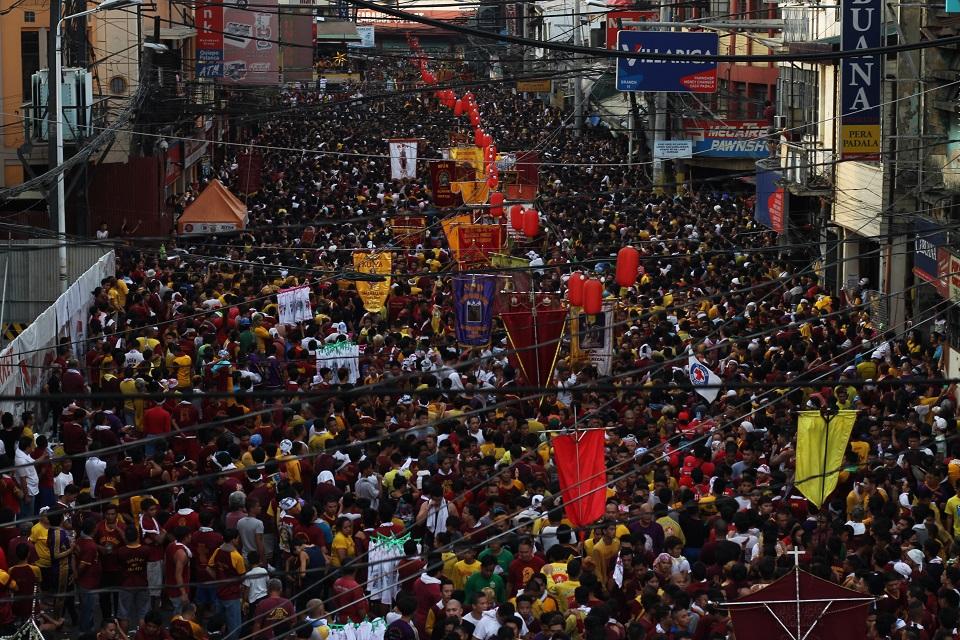
“Viva, Nuestro Padre Jesus Nazareno!” shouted the crowd.
Nothing could dissade the staunch devotees from observing this annual religious tradition: not the heat, the discomfort and the crowds, not the possibility of violence or terror, not even old age and physical disabilities.
Mother and child devotion
In front of the Sta. Cruz church where the Black Nazarene resides, a young lady in yellow gown caught the attention of other devotees. With a head the size of a small melon atop a small, thin body, she does not speak. She does not walk. She traveled to the event pushed in a stroller.
She is Salvacion Penario, 28 years old.
“She has a growth problem— a hereditary disorder characterized with unusual size and shape,” said her mother Conchita, 64.
The two travel from Antique every year, navigating the seas and conquering the bumpy roads on a more-than-24-hour journey just to get to Manila and take part in the annual Traslacion.
“We have been attending Traslacion for 23 consecutive years now—Salvacion was five when we first joined,” Conchita said.
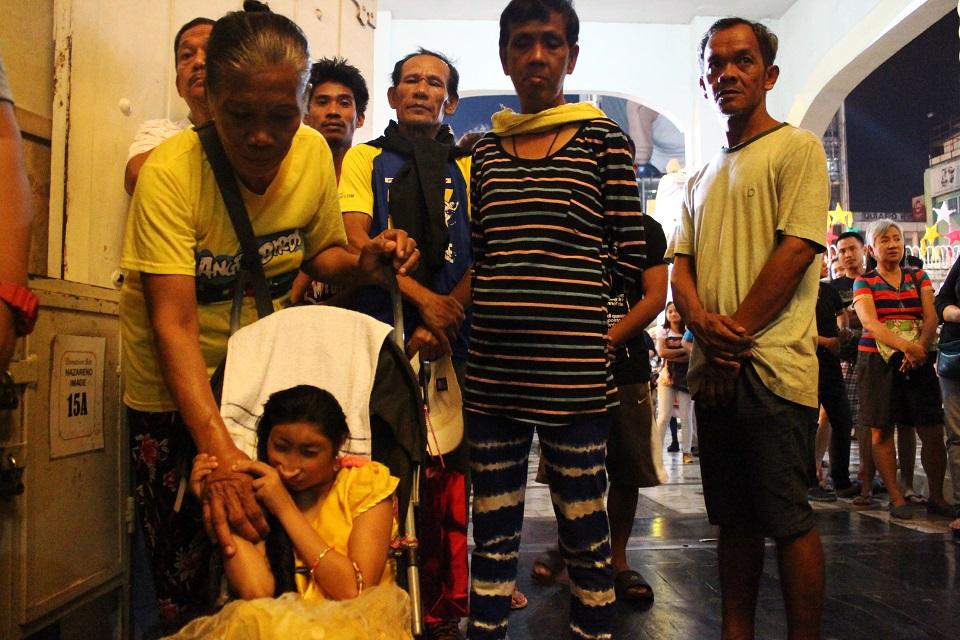
Other churchgoers gave them donations which, said Conchita, they would use to pay the fare back to their hometown and to buy her daughter’s vitamins.
More than the money, Conchita said she was thankful for the good health that the Black Nazarene confers on her family.
“Since day one, all I have been asking for is good health for my family, especially for my daughter, Salvacion,” Conchita said. “I can’t stand to see her in pain.”
Against all odds
A middle-aged man sat on the sidewalk, tired but fulfilled.
Jesus Flores is 58 years old. Despite his weak muscles and aching joints, he still managed to come close to the carriage lifting the ebony statue.
“Joining the procession is tougher now given my age,” he admitted. “But I vow to continue living up to my promise as long as I can.”

Flores’ devotion to the Black Nazarene began more than 20 years ago. His sister, an epileptic, would suffer multiple and intense seizures. His perfect attendance at the Traslacion since the 1990s is a sign of his deep gratitude for the physical wellness his sister and the rest of their family are enjoying today.
Was he worried about the possibility of terror attack at this event? “God is in control of everything. He sure won’t let his followers be put in danger,” he said.
With a faithful heart
Among the younger devotees of the Black Nazarene are the middle-aged couple Melona and Ernesto Diepana.
Four years ago, Ernesto was on the streets, looking for money and food for his starving family. The Diepanas were mired in poverty. They were literally starving, day in day out.

One day, a friend told Melona about the miracles of the Black Nazarene. She urged Ernesto to attend the feast and ask for help. Since then, they said, they have never caught themselves staring at an empty dining table again.
They now have their own house, a car, and are financially stable.
Melona said that they are often questioned, even mocked, about their belief in the Black Nazarene. They have an answer: “We don’t praise the statue. We praise God.”
They say their attendance will be a lifetime devotion as thanksgiving for an answered prayer. “We will attend Traslacion until our last breath.”

Sociology professor Bro. Clifford Sorita said that such devotion “comes from a deep-rooted personal experience with the Divine.” Such is true, at least, for these devotees, who are willing to face danger and hardship before and during the raucous Traslacion just to express their gratitude to the Nazarene.
Critics say the passion for the Black Nazarene Feast is an obsessive fanaticism. For these devotees, however, attending the annual procession is nothing but a display of immense love and worship of God. — BM, GMA News

